



BEFORE putting money into an investment, there is one simple question investors should ask themselves: Where exactly is my money going?
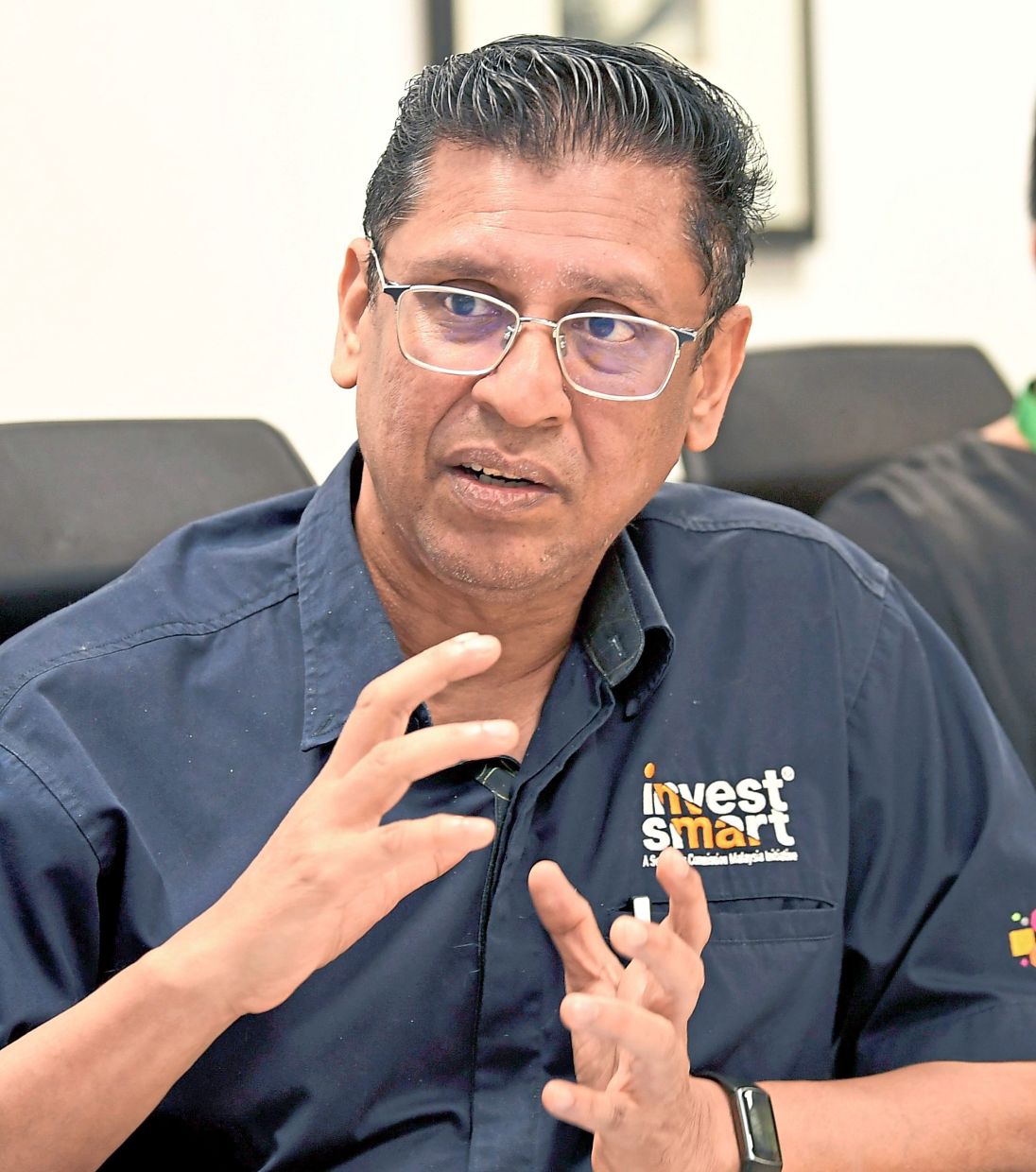
For Securities Commission (SC) Investor Protection and Literacy general manager Jawahar Ali Ameer Ali, the answer can reveal something that even increasingly convincing fake documents, social media advertisements and artificial intelligence-generated content cannot disguise; that is whether the investment follows the basic processes expected of a legitimate product.
Someone legitimately trading equities, for example, would have to open an account, undergo know-your-client checks and transfer investment funds to the relevant licensed entity.
Being asked instead to download an APK file and transfer thousands of ringgit into an individual’s bank account should immediately raise red flags.
“When you transfer your money for the purpose of investment, where are you transferring it to?
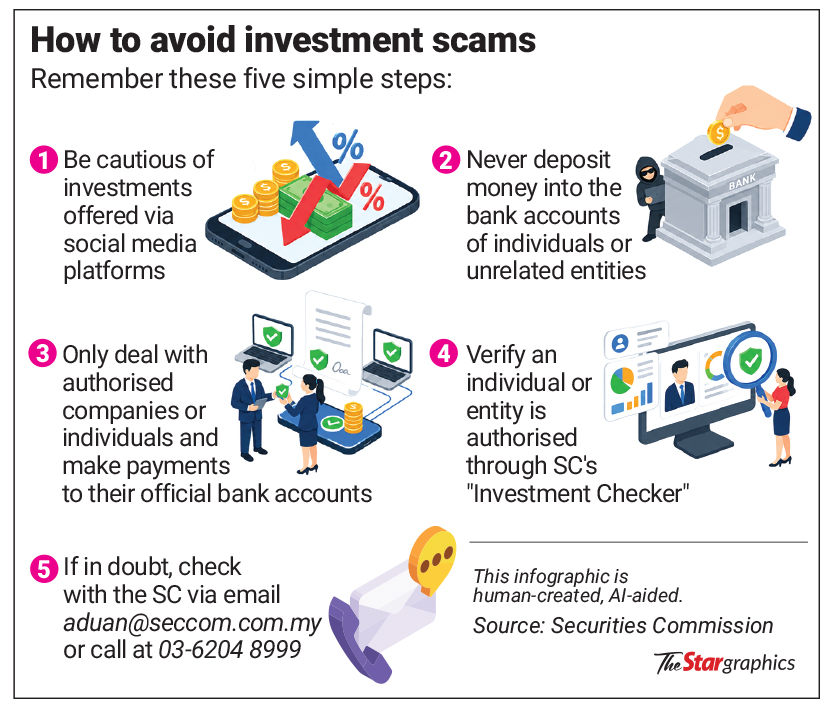
“Make sure it is not an individual or unrelated bank account, but a legitimate bank account of an entity licensed or registered with the SC,” Jawahar says.
This understanding of how legitimate investments work is becoming increasingly important as scammers acquire more sophisticated tools to make their schemes appear more convincing.
“We see the deepfakes now are getting more and more real. It’s actually mind-boggling how accurate and how good they are,” he says.
“If one is aware of the fundamentals of how a legitimate product works, then you’ll be able to avoid this,” he adds.
It is especially vital for young Malaysians who are making up a growing share of investors entering the capital market.
According to Bursa Malaysia about 60% of new Central Depository System accounts are being opened by investors aged 35 and below.
These new account openings rose from 477,000 in 2024 to 522,000 last year, with another 337,000 opened in the first half of this year alone.
Check before buying-in
Common scams that the SC has tracked in recent years, he says, include clone scams that impersonate legitimate entities as well as “WhatsApp grooming”, where scammers take time to establish credibility with potential victims.
In WhatsApp grooming, a person may be invited into a group where they are given advice about how the market trades and ostensibly taught how to invest.
Only after trust has been established are they directed towards an APK file or fraudulent platform.
Aside from asking oneself where the money is going, another way investors can distinguish between a genuine investment opportunity and a sophisticated scam is to check with SC’s Investment Checker portal.
The portal allows investors to check whether an entity or individual is licensed or registered with the SC and whether the entity or the individual has been included on the Investor Alert List.
Jawahar urges investors to make such verification part of their routine before parting with their money.
“If you are going to part with your money, going through our list is going to only take less than a minute.
“I think it’s really worth your time to do it,” he says.
Exercising such scrutiny and scepticism should also extend to people dispensing financial information online, he adds.
Jawahar says there is nothing inherently wrong with obtaining information through online groups, forums and other sources, but investors should ultimately make their own decisions rather than simply following advice found online.
Financial influencers may also produce educational content, but there are regulatory lines they cannot cross.
Under the SC’s guidelines, promoting an unlicensed investment platform can constitute a breach, while giving specific investment recommendations without the required licence can amount to unlicensed investment advice.
Jawahar also advises investors to avoid trusting information online or trends blindly but to build up their knowledge of the investment market and their own risk profile.
“We are not saying that you can’t use all this information out there, but what’s important is that you cannot exclusively rely on that without having sufficient knowledge of the products and services that are out there, the nuances of those products and whether it matches your risk profile,” he says.
Building investment literacy
With more and more younger Malaysians increasingly participating in the capital market, Bursa Malaysia is also trying to build investment literacy among the youth before they begin making investment decisions with their own money.
Bursa Malaysia Group Commercial and Market Coverage director Stephanie Tan Kar Mun says they have been working with universities through initiatives such as the Bursa Inter-Varsity Stock Challenge and Bursa Young Investor Clubs.

Under the stock challenge, university students are guided by licensed research analysts and learn how to assess companies by examining factors such as their financials, outlook and the sectors in which they operate.
“When you think about how to write a research report, you start by breaking it down and asking: what are the things I look for in a company?” Tan says.
The programme is intended to teach young investors the fundamentals behind an investment decision rather than simply following market trends or recommendations.
Such education is crucial as the regulators do not want the fear of scams to discourage Malaysians from investing altogether.
Jawahar says surveys have found fear of scams to be among the barriers preventing people from participating in the market.
The objective of investment education is not simply to warn people about scams but to equip them with the information to participate with confidence, he says.
This will be among the areas highlighted at the InvestSmart x Bursa Marketplace Fair 2026, the first joint SC-Bursa Malaysia investment literacy event, to be held at Pavilion Bukit Jalil on Sept 5 and Sept 6.
The event will bring together some 50 capital market participants and related institutions, and will feature an anti-scam zone involving the National Scam Response Centre and Jangan Kena Scam.
Members of the public will also be able to obtain a free one-hour consultation with a licensed financial planner.
