WE’ve all been down this road before.
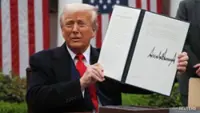
US President Donald Trump issues a blitz of punitive tariffs on allies and rivals, straining trade, rattling bond markets, raising prices and injecting more uncertainty into the global economy.
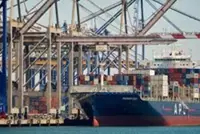
The difference now is that the United States is in a conflict with Iran, key trade and energy routes in the Persian Gulf region are blocked and the global oil price is rising.
“These new trade tensions come at a moment in which the global economy, due to higher energy prices, is in a weaker spot than on Liberation Day last year,” said Carsten Brzeski, an economist at the Dutch multinational bank ING, referring to the day Trump announced the specific rates.
The new import taxes on more than 80 countries, including members of the European Union, are Trump’s latest bid to reimpose tariffs after the US Supreme Court struck down many of his previous levies in February.
The tariffs – which use trading partners’ unfair labour practices as a rationale – replace a similar, temporary set he imposed right after the court ruling. More tariffs are expected to follow.
Brzeski and other analysts said the economy had already absorbed much of the inflationary impact of Trump’s trade war.
“The worst of the tariff-related goods inflation is probably behind us,” said Carl Tannenbaum, chief economist for Northern Trust, a global financial institution based in Chicago. Companies raised prices last year and didn’t roll back those increases after the Supreme Court’s decision.
Both the tariffs and their erratic implementation tend to hamper long-term planning, dent investment and drag down growth as businesses are forced to spend time and resources figuring out how to adapt their production and supply chains.
Even so, at the moment, the escalating conflict with Iran, which began five months ago with attacks by the United States and Israel, is having a much greater impact on the health of the global economy than tariffs are.
In Japan, the government Cabinet Office said companies might be passing on increased costs caused by the Iran conflict at an ever faster pace than they did after the Russian invasion of Ukraine in 2022, the last great global energy shock.
Key energy trade routes in the Strait of Hormuz and the Red Sea continue to be disrupted. Oil prices jumped again recently, as the Iranian-backed Houthi group in Yemen escalated its confrontation with Saudi Arabia and opened a second front in the region’s conflict.
The spike in oil prices sent jitters through the market, leading to a sell-off of government bonds and weighing down stocks. In the United States, gas prices hit US$4 a gallon and mortgage rates ticked up.
“The situation in the Middle East is to me, and from what I can see from the data, very much more worrying for the global economy than this fireworks of tariffs,” said Paola Subacchi, a professor at Sciences Po, Paris.
On the trade front, she said, “it’s more or less the same story”.
Perhaps no region in the world has been hit harder by the double whammy of tariffs and the conflict than Asia, where economies are heavily reliant on both exports and imported energy.
Several major Asian countries have already negotiated aggressively to secure trade agreements with Washington.
It’s not yet entirely clear how the new tariffs imposed by Trump will affect those deals, but representatives from several foreign governments said they had privately been told that tariff rates would be the same as those negotiated last year.
Japan promised US$550bil in American investments as part of a trade deal in exchange for a reduced tariff rate of 15%. South Korea has similarly committed tens of billions of dollars toward shipbuilding and battery manufacturing, while Taiwan has promised tens of billions to expand advanced semiconductor production.
So far, economies in Asia have performed better than expected.
“The biggest takeaway for me has been how resilient these economies have been to all these shocks,” said Sonal Varma, an economist at Nomura, Japan’s largest investment bank and brokerage firm.
How negotiations play out between the United States and China is perhaps the most important arena in Trump’s renewed trade wars.
“The main event in all of this is US v China,” said Tannenbaum.
“China has shown itself to be a very formidable trade bargainer,” he said. “They have been preparing for this for a long time, and they know exactly where our vulnerabilities are.”
Xi Jinping, China’s leader, is planning a state visit to Washington in September. And he has already shown his willingness to withhold minerals that are critical to America’s tech and defence industries to pressure the Trump administration on trade.
Mary Lovely, senior fellow at the Peterson Institute for International Economics, recently met with Chinese analysts as part of a regular exchange programme. She said China’s leaders “are very confident that their chokehold on permanent magnets and rare earths will prevent President Trump from really going much higher than where he already is” on tariff levels.
That could mean China ends up with lower tariffs than some of its neighbours, giving it an economic edge over competitors. — ©2026 The New York Times Company
This article originally appeared in The New York Times
Already a subscriber? Log in
Get 20% OFF The Star Digital Access
Cancel anytime. Ad-free. Unlimited access with perks.