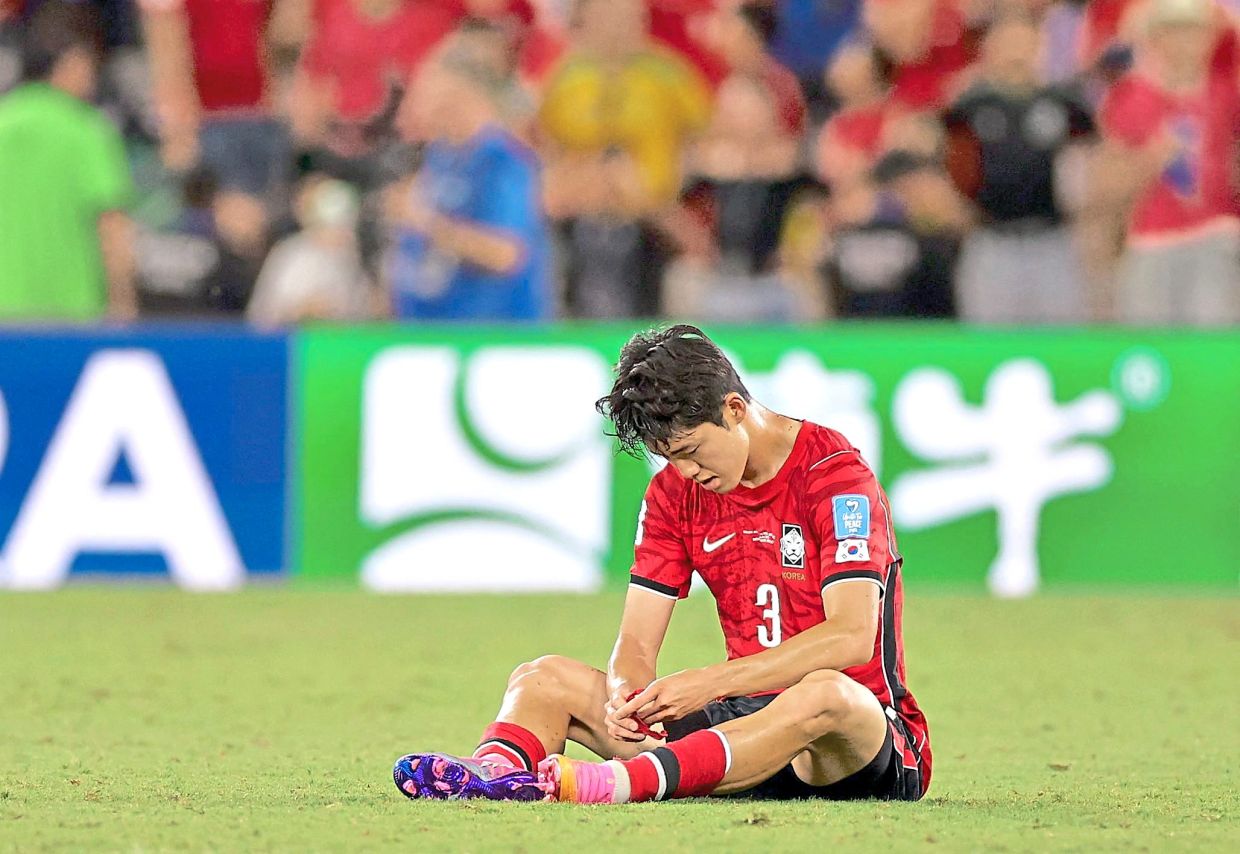
FOREIGNERS often point out that Koreans tend to be hasty and impatient. Watching recent World Cup games, for example, one joked that South Korean football players seemed to follow a strange rule: “Ready, shoot, and aim”, instead of the standard procedure, “Ready, aim, and shoot”.
In foreigners’ eyes, Korean athletes were so preoccupied with scoring a goal that they impetuously kicked the ball toward the net before even aiming.
Such a unique phenomenon may be closely related to a characteristic of Korean society that applauds winners alone. Indeed, in Korea, there is little room for those who fall behind; losers are often treated like social pariahs. If you fail to enter a top-tier university, for example, your future is instantly painted as grim and gloomy.
This intense societal pressure is exactly why Koreans desperately strive to win, turning the nation into a fiercely competitive arena.
In other countries, things are different. Recently, a Korean American YouTuber uploaded a video comparing Korea with America. He pointed out that in Korea, people’s alma mater largely determines the quality of their lives in the future.
In contrast, he noted that people in America can lead a decent, highly esteemed life only if they are competent, even without graduating from an Ivy League university.
Recently, I, too, had a chance to find another difference between Korea and America. On July 4, America celebrated its semi-quincentennial, the 250th Independence Day.
In my town of Lebanon, New Hampshire, a community marathon was held along the Railroad Trail as part of the local festivities. There, I watched the crowd clap enthusiastically for the first few marathoners who crossed the finish line.
However, I also noticed that the spectators applauded the very last marathoner even more eagerly. Perhaps they wanted to praise his resilience and refusal to give up halfway through.
I was deeply touched by the scene because the crowd treated the latecomer with the same respect as the victors. Had this occurred in Korea, the final runner likely would have been completely ignored and forgotten as a failure.
Due to this hyper-competitive atmosphere, the “Ready, shoot, and aim” mentality has become pervasive across Korean society, creating a plethora of problems. For example, when implementing new public policies, our government tends to "shoot" hastily to show immediate success before aiming carefully or ensuring readiness. Naturally, we end up missing the target and watching the policy fail. As the old maxim warns, “Haste makes waste.”
The same logic applies to foreign diplomacy. When ideologically driven politicians stoke hostility against another country for domestic political gain, the public naively rushes to criticise the target nation without pondering the long-term outcomes or justifications.
As a result, we sometimes destabilise valuable international friendships while gaining nothing.
Metaphorically speaking, this impetuousness resembles firing a cannonball at a foreign nation before establishing a clear aim, permanently damaging precious alliances built over many decades.
Once fractured, these international relationships cannot be healed easily; it may take years to restore diplomatic ties, if it is even possible at all. In the meantime, the nation must endure severe diplomatic and strategic self-inflicted injuries.
Likewise, when a political leader disappoints us, we hastily replace them with a candidate from the opposition party without thoroughly evaluating their competence or political ideology, even if those views might endanger the future of our country. Our recent history reveals a repetitive cycle of this behaviour since 2008.
Consequently, the country has suffered unnecessary political turmoil, social disruptions, and diplomatic crises, not to mention economic recessions.
Another dangerous side effect of the “Ready, shoot, and aim” mindset is the toxic assumption that the ends justify the means.
No matter how noble or sacred a goal may be, it is hollow if the methods used to achieve it are not equally admirable. The means must always remain fair and righteous. Otherwise, even massacres or genocide could be justified under the banner of a "greater cause."
Unfortunately, our society seems to increasingly look past flawed methods if the result serves a grand narrative.
To be fair, if we are too cautious and discreet – constantly remaining locked in a state of “Ready, aim, aim” – we risk gridlock, which is a problem, too. Nevertheless, extreme precautions rarely result in catastrophic failure or reckless mistakes. Taking time to aim is far better than shooting blindly to obtain fast results. If we do not aim well, we will never accomplish our goals.
To make matters worse, a failed shot can easily produce a stray bullet that harms innocent people, or even ourselves. We do not need to be entirely flawless, but we must be prudent and circumspect.
Haste and impetuosity serve no one. It is high time that Korean society seriously pondered which path forward it will take: “Ready, shoot, and aim,” or “Ready, aim, and shoot.” — The Korea Herald/Asia News Network
Kim Seong-kon is an emeritus professor of English at Seoul National University and a visiting scholar at Dartmouth College, United States.