
NEAR the village of Myrotske in central Ukraine, a dozen mine clearers moved painstakingly forward in rows, sweeping metal detectors before them in time with one another, like reapers scything wheat.
They are working to make the woods and fields safe from mines and unexploded ordnance left behind after Russia occupied the area, some 40km northwest of Kyiv, early in its invasion four years ago.
Huge areas of Ukraine are littered with mines and other discarded ammunition after years of fighting.
“Unfortunately, Ukraine is the most heavily-mined country in the world,” said Olena Shustova, media manager for demining charity Halo Trust. “Ukraine will not be de-mined in less than 10 years.”
Halo, the world’s largest international mine action organisation, employs 1,350 nationals in Ukraine.
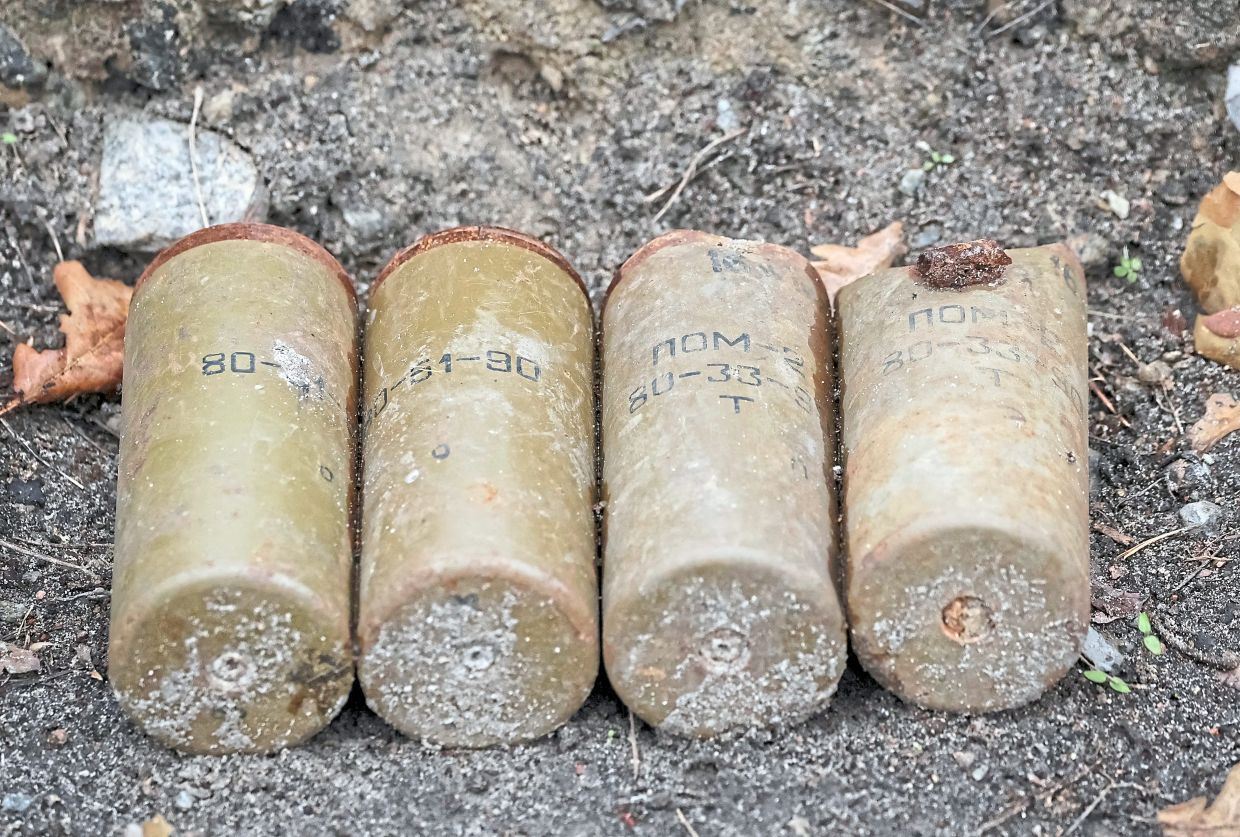
Halo began de-mining operations in Myrotske after a Ukrainian serviceman from a unit stationed nearby stepped on an anti-personnel mine while collecting firewood two years ago, showing the dangers left by the war even when the battlefield moves elsewhere.
“Everywhere where there was occupation, there are minefields and explosive ordnance,” said Shustova.
According to state-run Demine Ukraine, more than 132,000sq km – an area roughly the size of Greece – remain contaminated by mines. So far, nearly 42,000sq km have been made safe, it said.
Given the huge scale of the task, Halo has turned to artificial intelligence to analyse high-resolution drone imagery of contaminated areas and train systems to identify mines and explosive remnants, achieving around 70% accuracy already.
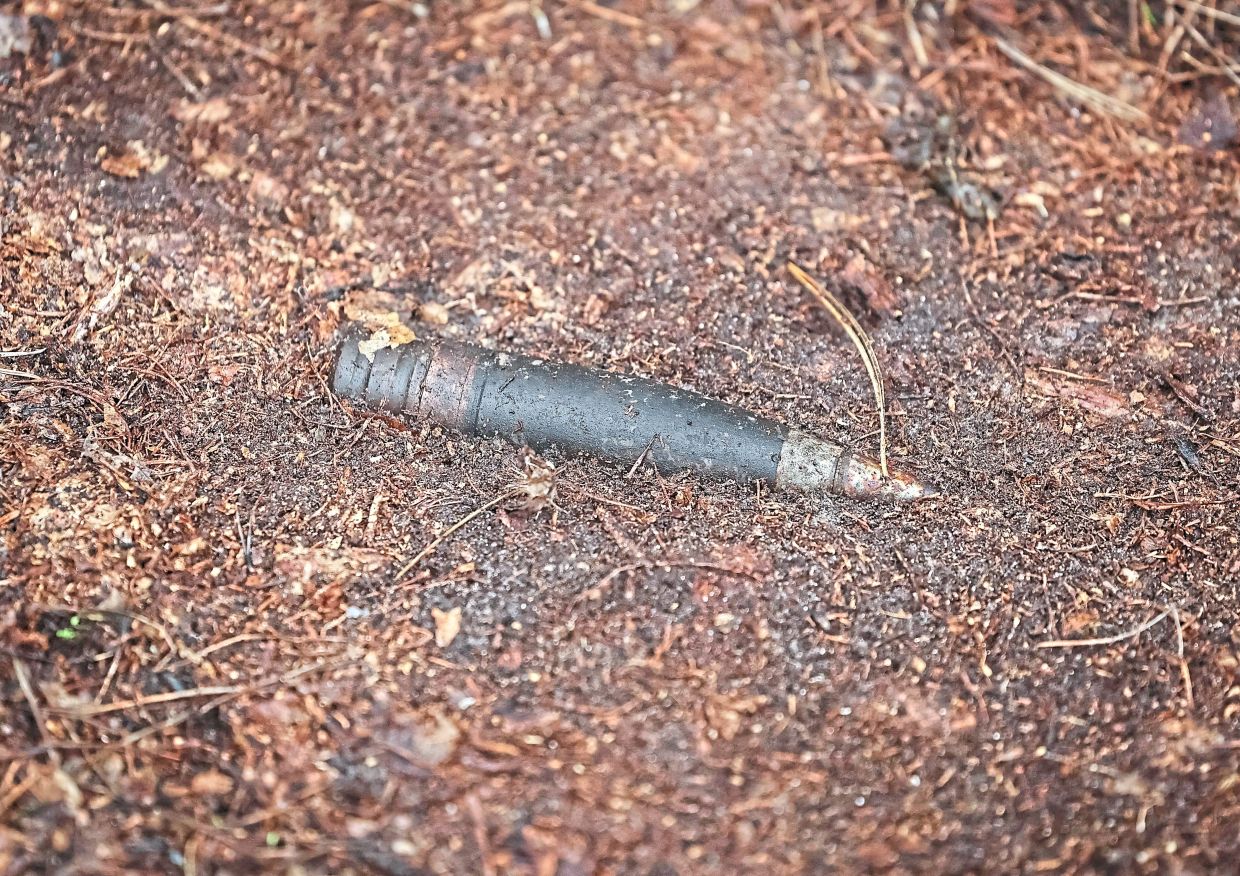
“The process may take decades, but advances in technology are helping to accelerate it,” Shustova said.
At another demining site north of Kyiv, Oleksandr Liatsevych shelters inside a portable steel cage with reinforced windows where he peers into virtual reality glasses and uses a joystick to guide a customised digger a few metres away.
The huge machine excavates earth littered with unexploded ordnance and chews it up in a specialised grinder.
The unmanned excavator is one way in which demining groups are clearing vast areas of contaminated land more quickly and safely, in a conflict where automation, drones and AI are revolutionising warfare.
“The difference between driving from a cabin and driving a remote joystick is big,” said Liatsevych, a 39-year-old former civil servant and farmer from the southern town of Huliaipole, on the front line between Ukrainian and Russian forces.
“As I didn’t play many computer games as a child, it was difficult for me at first.”
In the woods nearby, de-miner Olha Kava wears a protective vest and visor as she crouches to search for a possible anti-personnel mine in the old-fashioned way, by hand.
The former travel agent and mother-of-three applied to work as a de-miner after her friends joined the armed forces following Russia’s full-scale invasion.
“Of course, there is fear,” she said. “It motivates you to do your job correctly and responsibly.” — Reuters