
THE instructions to US Immigration and Customs Enforcement (ICE) agents make clear how to defuse dangerous encounters: use “minimal force”, issue commands in “professional, firm, courteous” tones and never reach into a car unless circumstances require it.
Deadly force, they are told, is only allowed when lives are in imminent danger.
Yet, the fatal shooting of Renee Good, 37, by an ICE agent in Minneapolis on Jan 7 has thrown those rules into question, while the Trump administration swiftly portrayed the officer as a hero and Good as a threat.
Weeks before the incident, a senior ICE official reportedly told agents to take “decisive action” if threatened.
After the shooting, administration figures said Good had tried to run the officer over, although video analysis suggests her vehicle was turning away.
“That guy is protected by absolute immunity,” Vice-President JD Vance said of the agent, Jonathan Ross. “He was doing his job.”
The Department of Homeland Security reinforced the message, posting a clip of Stephen Miller, a White House deputy chief of staff, telling agents: “No one... can prevent you from fulfilling your legal obligations and duties.”
Tensions in Minneapolis flared after Good’s death.
Days later, a federal agent shot a man who attacked him, triggering hours of clashes between protesters and law enforcement.
“The entire Trump administration stands behind our heroic ICE officers,” White House spokesman Abigail Jackson said. “It is not an ‘aggressive tactic’ to defend yourself from an individual using their car as a deadly weapon – ICE officers have a right to self-defence.”
The Department of Homeland Security (DHS) spokesperson Tricia McLaughlin echoed that ICE officers are trained to prioritise safety and use “the minimum amount of force necessary to resolve dangerous situations” and de-escalation tactics.
Still, the Minneapolis shooting highlights the risks of large-scale ICE city sweeps, a strategy that has exposed agents to hostile crowds.
Most ICE officers are trained for targeted arrests, not crowd control, according to a 2021 Government Accountability Office report.
The agency has rapidly expanded its ranks, more than doubling personnel after US$75bil in new funding over four years.
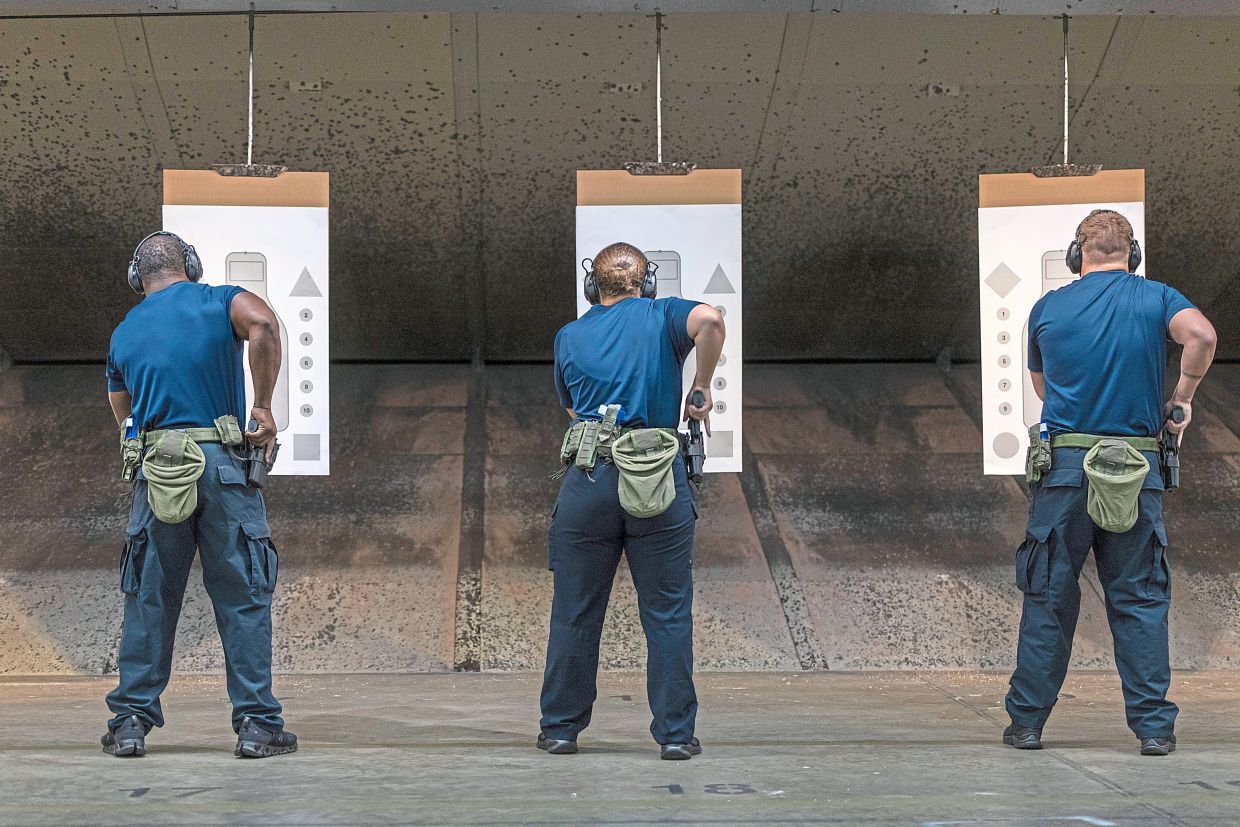
Training has been expedited for recruits, including vehicle-stop procedures, according to a former federal academy official who requested anonymity.
McLaughlin insists training has not been reduced.
Federal officers do not have absolute immunity from prosecution, though the US Constitution makes state cases difficult.
They can face federal charges, but in Good’s case, the Justice Department has chosen to investigate her partner and protest groups rather than open a civil rights inquiry into the shooting.
Internal DHS materials emphasise de-escalation.
One guidance reads: “When feasible, authorised officers must employ tactics to stabilise, slow or reduce the intensity of a potentially violent situation.”
Videos from Jan 7 show agents approaching Good’s SUV, partially blocking the road. An officer cursed as he demanded she exit the vehicle, then reached into the driver’s side.
When Good moved forward, Ross, recording on his phone, fired, killing her.
Ross is experienced – a former firearms instructor and tactical team member who served in Iraq. Tactical team members typically receive crowd-control training.
Yet, documents and interviews with former ICE officials suggest he and other agents may not have followed aspects of their training.
Agents are generally instructed to avoid standing in front of or behind vehicles to prevent being run over. Customs and Border Protection guidance echoes the same precaution.
The Minneapolis shooting comes amid a broader debate over ICE’s enforcement under Trump.
Agents have been encouraged to adopt aggressive tactics and are supported politically for using lethal force.
Internal documents contrast sharply with public messaging from the White House, which frames officers’ actions as heroic and immune from consequences.
The inspector-general’s office at DHS has announced an audit of ICE hiring, training, and investigations into excessive use-of-force allegations.
For now, Good’s death is part of a larger question: whether federal immigration officers are adequately prepared for confrontations in American cities, and how policy directives from the top influence life-or-death decisions on the street. — ©2026 The New York Times Company
This article originally appeared in The New York Times.