WHEN 23-year-old Nurul Aini Arief began job-hunting after graduating as a communications major, she thought she only needed to prove her writing skills to land a role in content and digital strategy.
Instead, she found employers who acknowledged her writing ability but also wanted evidence that she understood analytics, artificial intelligence (AI) tools and audience strategy as well.
Nurul responded by teaching herself how to use AI tools for content research, search engine optimisation and audience analysis. She also ran her own small digital project to track engagement and performance metrics.
“That changed everything. Employers stopped seeing me as just a writer and started seeing me as someone who could think strategically,” she says.
Nurul’s experience reflects a broader shift taking place across the job market.
As AI becomes embedded in the daily work of many sectors, employers are no longer just hiring purely for technical skills.
They are also looking for people who can combine human judgement with an understanding of how to use AI to manage their tasks, workflows and expectations in their jobs.
For many young people who are studying or who have just graduated with their chosen degrees and who may not feel confident about their AI expertise, this raises two urgent questions: Which jobs are still safe from AI, at least in the immediate future, and what makes some roles more resistant to automation than others?
Not ‘safe’, just resistant to automation
While experts caution that the idea of “AI-safe” jobs can be misleading as AI rarely replaces entire occupations outright, there are still some types of work that remain harder to automate than others, particularly those rooted in trust, accountability, unstructured problem-solving and human relationships.
First of all, Prof Chan Chee Seng from the AI Department of Uni-versiti Malaya’s Faculty of Com-puter Science and Information Technology, argues that “being safe from AI” does not equal permanent job security.
Rather, some roles are better described as resistant to automation.
He notes that AI is usually incorporated into the workplace by replacing specific tasks within jobs rather than eliminating roles wholesale.
“Most Malaysian jobs combine routine work that AI can assist with, and higher-value work that requires judgement, culture or trust.
“The real question for the public is, ‘Which parts of my work are automatable, and which parts remain uniquely human?’”
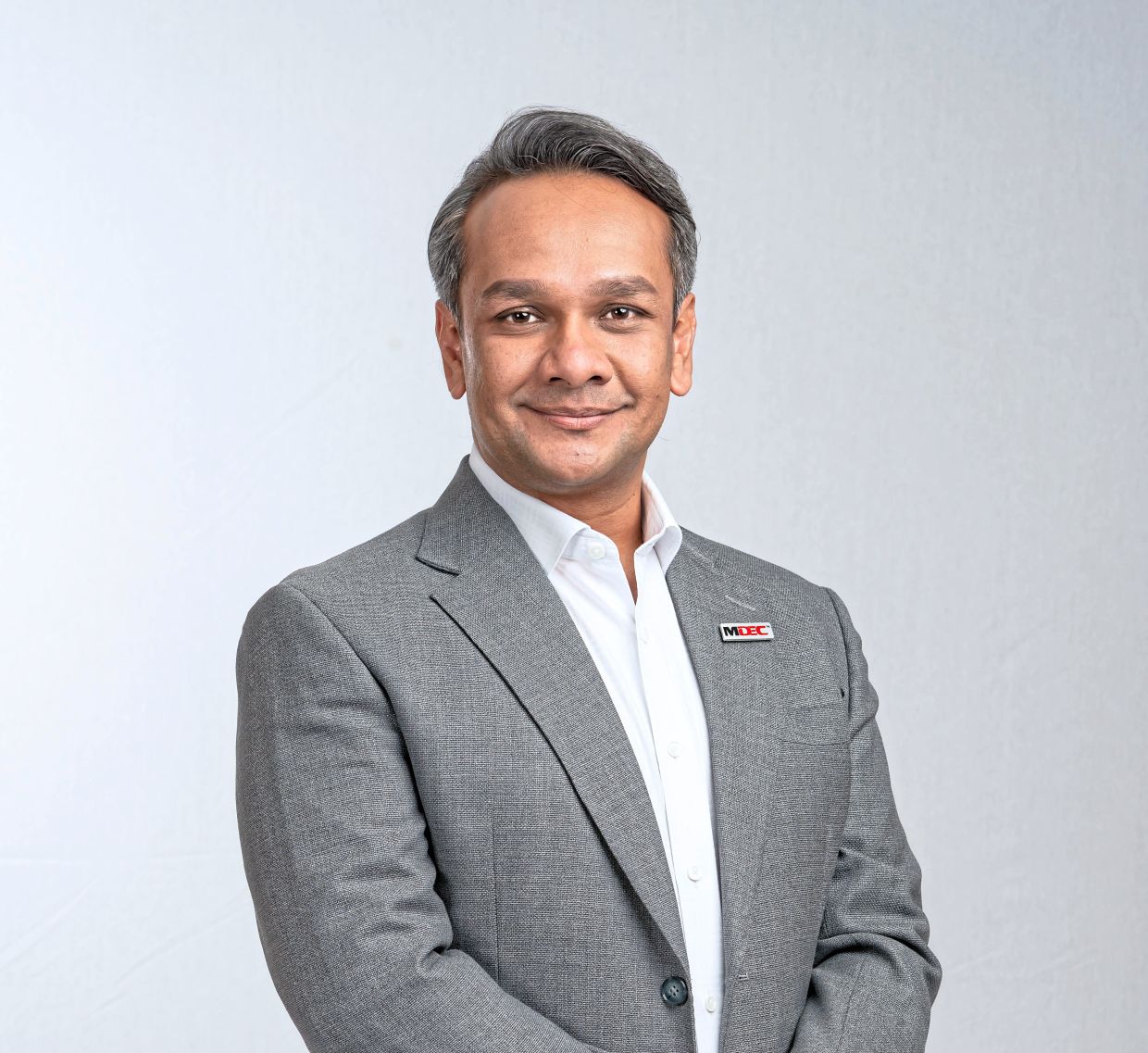
And as Malaysia’s economy is dominated by small and medium-sized enterprises (SMEs), Malaysia Digital Economy Corporation (MDEC) chief executive officer Anuar Fariz Fadzil says the most resilient roles will be those where “the human element is irreplaceable”.
“This isn’t about resisting technology, but about recognising where people are central to value creation.
“These roles generally fall into three areas requiring high-touch interaction, contextual judgement, and physical adaptability – conditions that are costly or impractical to fully automate in the dynamic SME environment,” he tells Sunday Star.
According to MDEC, customer- facing roles like sales advisors and service staff thrive on personalised trust and empathy, which AI cannot replicate.
Anuar Fariz also says that roles requiring deep cultural understanding and community engagement are anchored in local social dynamics that AI systems cannot navigate effectively.
Both Prof Chan and Anuar Fariz agree that skilled trades and hands-on operational roles such as technicians, maintenance, electrical work and logistics personnel will see low impact from AI, as these jobs demand physical problem-solving in variable real-world conditions, making them difficult to automate.
Prof Chan adds that roles in healthcare, caregiving and social services will remain relevant as “trust and accountability sit with humans” in such situations.
AI systems can process vast amounts of data, providing scale, he says, but humans provide the elements that societies and institutions rely on.
Even as AI adoption grows, the need for strong human governance in high-stakes environments is still crucial.
“Human purpose guides AI, not the other way around,” Prof Chan says.
Humanity’s innate edge
Humans still hold an innate edge in things like judgement, empathy and adaptability, says Anuar Fariz.
But these are not just soft skills, he adds, describing them as the foundation of sustainable business, especially within the complex, resource-constrained world of SMEs.
“This includes complex problem-solving in ambiguous situations, emotional intelligence for building trust and resolving conflict, and cultural-contextual judgement vital in Malaysia’s diverse landscape,” he says.
Malaysian Employers Federation (MEF) president Datuk Syed Hussain Syed Husman agrees that accountability remains one of the core reasons that employers will continue to need humans for certain roles.
“Employers need people to exercise judgement in areas such as management, strategy, compliance, industrial relations, safety and ethics.
“AI can provide data and recommendations, but responsibility for decisions – particularly those affecting people, finances or legal outcomes – must rest with humans.”
After all, trust and credibility cannot be generated by algorithms alone, he says.
Beyond accountability and trust, he also points to another area where humans retain an edge: creativity and complex problem-solving.
Syed Hussain says employers will still rely on humans to apply creativity within real-world constraints.
“Innovation requires contextual thinking and original judgement that goes beyond pattern recognition,” he says.
But even in these AI-resistant roles, the ability to leverage AI tools strategically – like Nurul did – can enhance effectiveness, showing that human-AI collaboration is key across industries.
In fact, with the augmentation of AI, some professions are expected to grow and become more in-demand, as Prof Chan says AI can remove repetitive work, creating more space for people-driven functions.
These growth areas include teaching and education, especially in mentoring and personalised guidance; healthcare, with AI supporting diagnostics while humans manage patient care; governance, compliance and ethics, especially with Malaysia’s focus on responsible and sovereign AI use; cybersecurity and privacy engineering, including federated learning and unlearning; as well as domain experts in agriculture, logistics, finance and manufacturing.
“AI strengthens these professions by changing how work is organised, not by replacing them,” he explains.
Of course, other jobs with tremendous growth potential include those that are responsible for governing this new technology that’s taking the workplace by storm, adds Syed Hussain.
“It is becoming increasingly important. Employers need humans to ensure AI is used responsibly. This creates new human-centric roles rather than eliminating them,” he says.
Ultimately, the experts agree that no job is permanently immune from AI. What remains resilient are not job titles, but human responsibilities – judgement, accountability and trust.