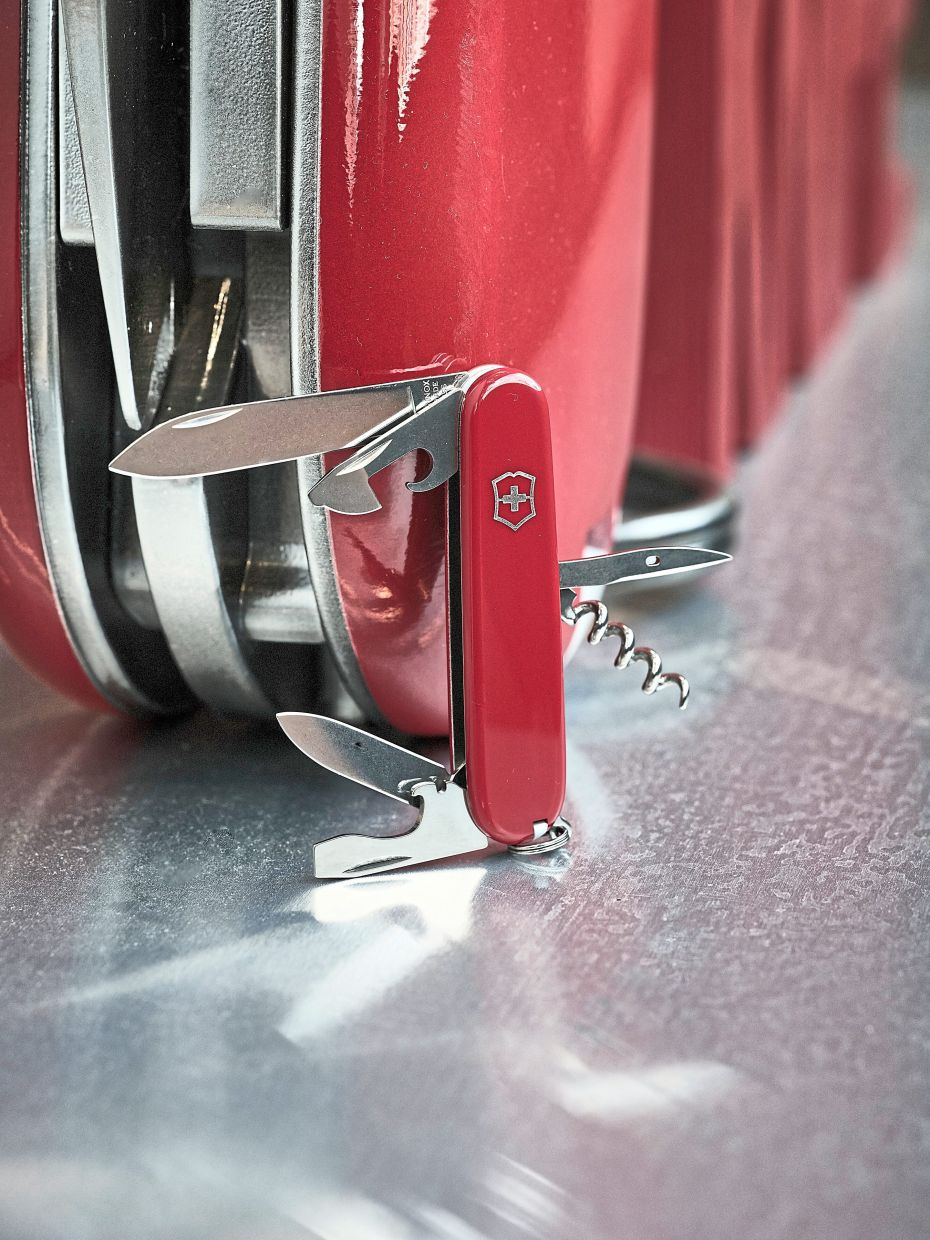
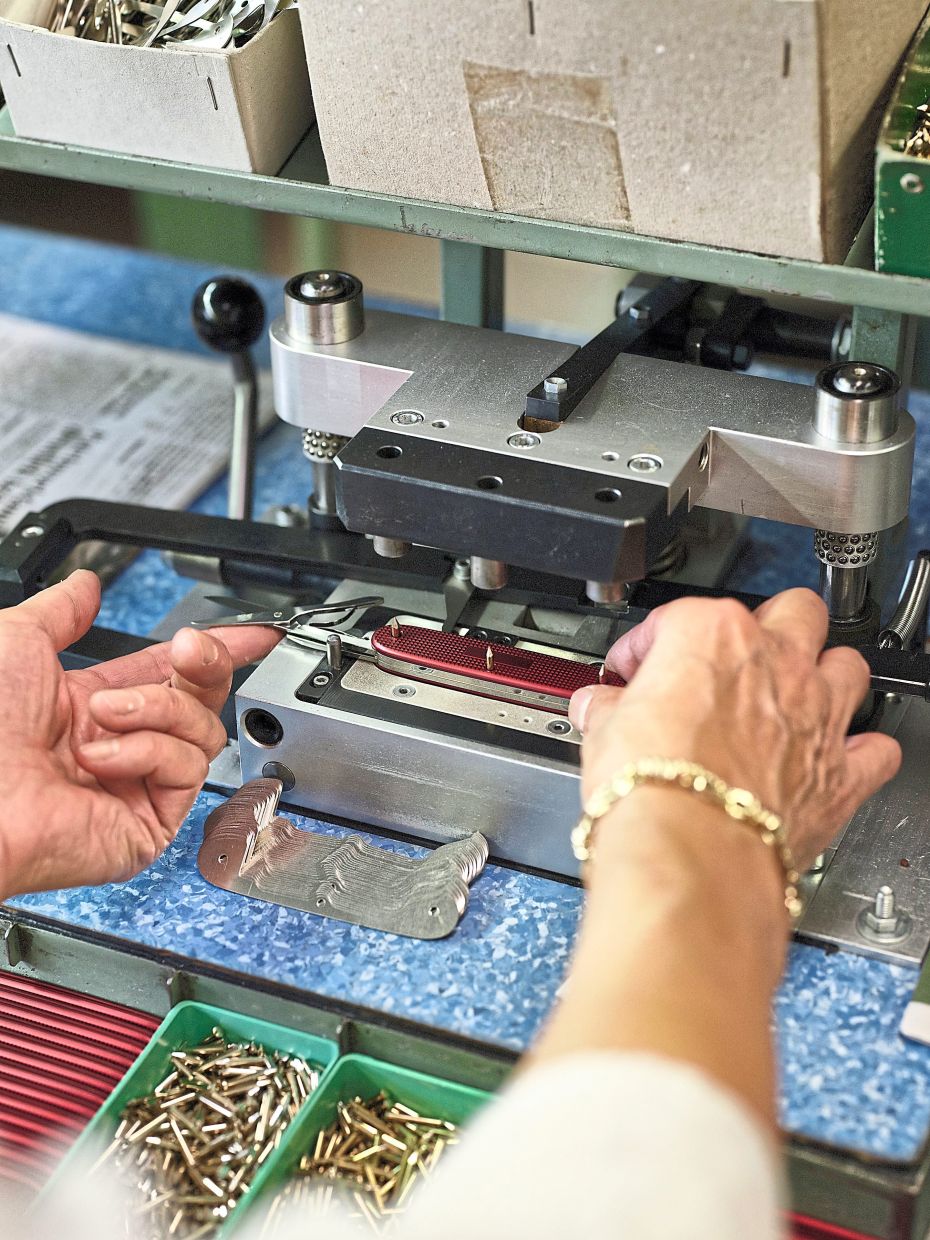
IN the vast Alpine factory where Swiss Army knives are born, workers slot finely- sharpened blades onto stainless steel plates. Corkscrews, scissors and can openers click neatly into place.
Encased in bright red and stamped with a silver cross and shield, an icon of “Made in Switzerland” quality takes shape.
Carl Elsener Jr, CEO of Victorinox, which makes the famed pocket tool, beams at the craftsmanship.
He gestures to a photo of former US President George HW Bush and his wife Barbara, smiling as they assembled knives during a 1990s visit.
The United States has long been Victorinox’s most important market. But after President Donald Trump blindsided Switzerland in August with a 39% import tariff – the steepest imposed on any Western country – that relationship is under threat.
“It was a shock,” said Elsener. “No one had expected such a drastic step.”
Unlike the European Union, which negotiated a 15% tariff, or Britain, which got 10%, Switzerland was hit hard.
For Victorinox, the measure could mean a US$13mil import tax Bill next year. Prices in the US may soon rise.
Professional kitchen knives from Switzerland now cost more than European competitors’ products, and US customs paperwork – once routine – has become a bureaucratic nightmare.
“The new tariffs are hitting Switzerland’s export-oriented economy hard,” said Jan Atteslander, director of EconomieSuisse, a major business lobby. “A swift agreement on reducing tariffs is essential.”
The shock has triggered a national identity crisis.
Swiss companies are asking whether moving some production to the US would preserve sales – and whether such goods could still be called truly Swiss.
Switzerland’s traditions of independence and neutrality are also under pressure, as Bern scrambles to defend its US$39bil trade surplus with Washington.
Economy Minister Guy Parmelin rushed to Washington last month with what he called a “better offer” for a new trade deal.
Even Rolex chief Jean-Frederic Dufour tried soft diplomacy, inviting Trump to the brand’s VIP box at the US Open.
Elsener, the fourth generation to run Victorinox, is more pragmatic.
“I’m hoping for the best, but I’m also prepared for the worst,” he said at the company headquarters in Ibach-Schwyz, a valley town framed by pine-covered mountains and spired churches.
The term “Swiss Army knife” was coined after World War II by US soldiers who brought them home.
The tools’ popularity exploded and their status was cemented in the 1980s by the TV series MacGyver, whose hero carried one everywhere.
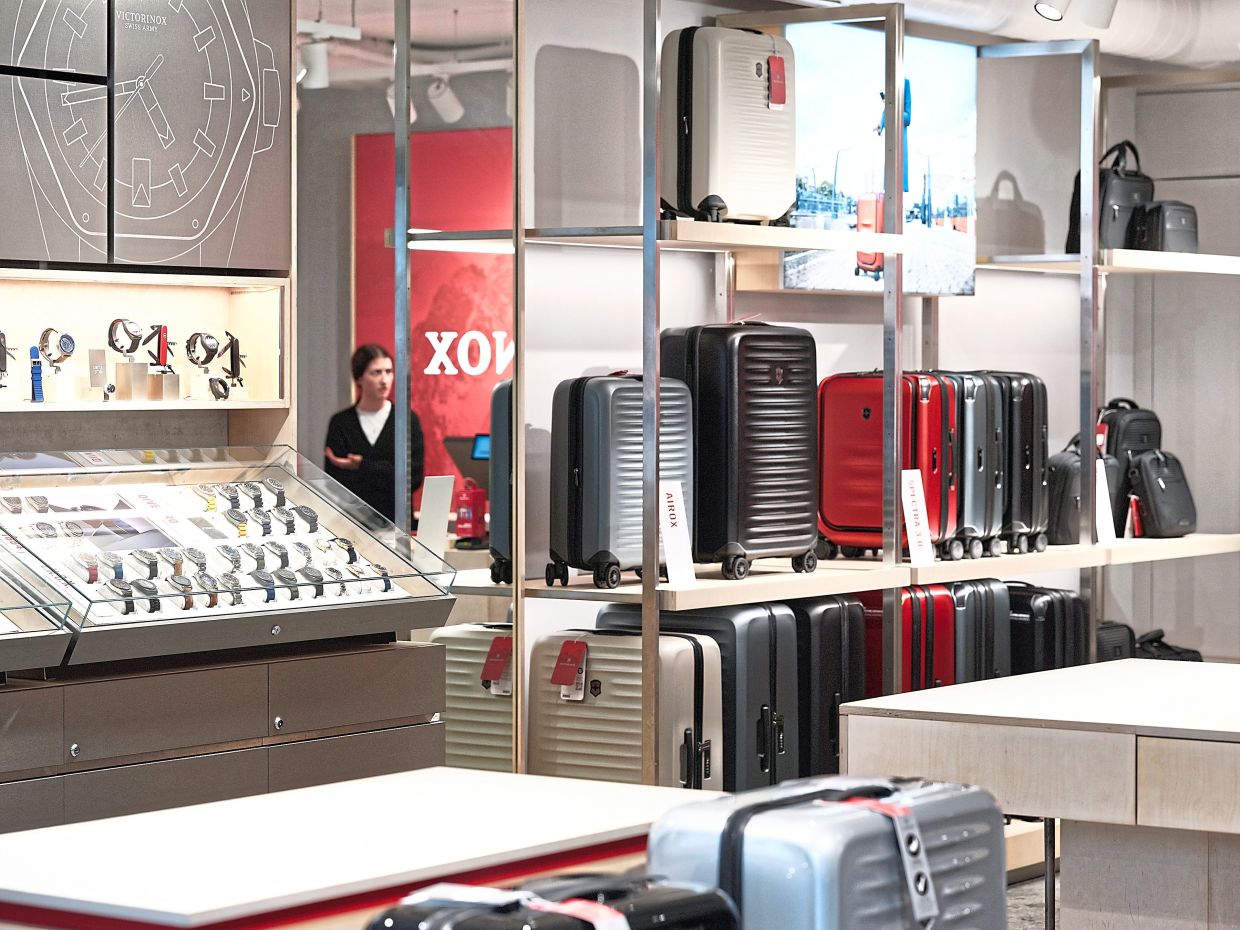
Victorinox now sells to 120 countries, but the US market remains pivotal.
The tariffs, however, have collided with a surging Swiss franc, squeezing profit margins further.
When Trump first floated tariffs in 2017, Elsener was alarmed.
“I immediately ordered our team to put full steam on production and fill up inventory in the United States,” he recalled.
Some US managers resisted, fearing an oversupply.
“I told them, ‘Just do it. If something dramatic happens, at least we will be prepared.’”
That foresight has allowed Victorinox to hold US prices steady for now, but price rises loom for 2026 if no deal is struck.
The company is also looking east, to Asia and India, for growth.
The tariff hike is painful after decades of a modest 4.5% duty. Victorinox now faces a combined rate near 44%.
The Swiss franc has risen 12% against the US dollar since Trump took office, inflating costs further. On top of that, Trump imposed 50% tariffs on steel.
“Now, we have tremendous bureaucracy for every knife,” Elsener said.
Every component – from blades to corkscrews – must be catalogued, with the origin of the steel traced to its melting blocks.
The pain is spreading beyond knives. Watchmakers have furloughed staff, chocolatiers have paused US exports and toolmakers are considering shifting production to Germany, where tariffs are lower.
Victorinox is weighing whether to move some final stages of production, such as cleaning and packaging professional knives, to the US – a shift that could save half a million dollars in tariffs.
But Elsener is adamant about the core product.
“The Swiss Army knife itself could never be made in America,” he said.
“It’s a Swiss icon that is inseparably tied to the promise of ‘Made in Switzerland’ quality. Moving its production abroad would undermine the very essence of our brand.”
For Elsener, and for many Swiss companies, Trump’s tariffs pose more than a financial test.
They strike at the heart of Swiss identity – and the question of what it means to remain authentically Swiss in a world of hard bargains. — ©2025 The New York Times Company
This article originally appeared in The New York Times