
IN arid northern China, dozens of workers prune goji berry bushes that stretch out under the protective shade of thousands of solar panels.
The one gigawatt (GW) facility in the northwestern region of Ningxia is part of a network across northern and western China that uses the bulk and shade of solar panels to stop and reverse the spread of deserts.
Owner Ningxia Baofeng, a major participant in the coal chemical industry, plans to build 30GW of solar generation, some of which will be used to stop desertification, according to Liu Yuanguan, the company’s vice-chairman.
A similar 1GW project in nearby Majiatan is already active, he added.
“All of the panels above are like mini umbrellas,” Liu said during a tour of the facility organised by the Chinese government.
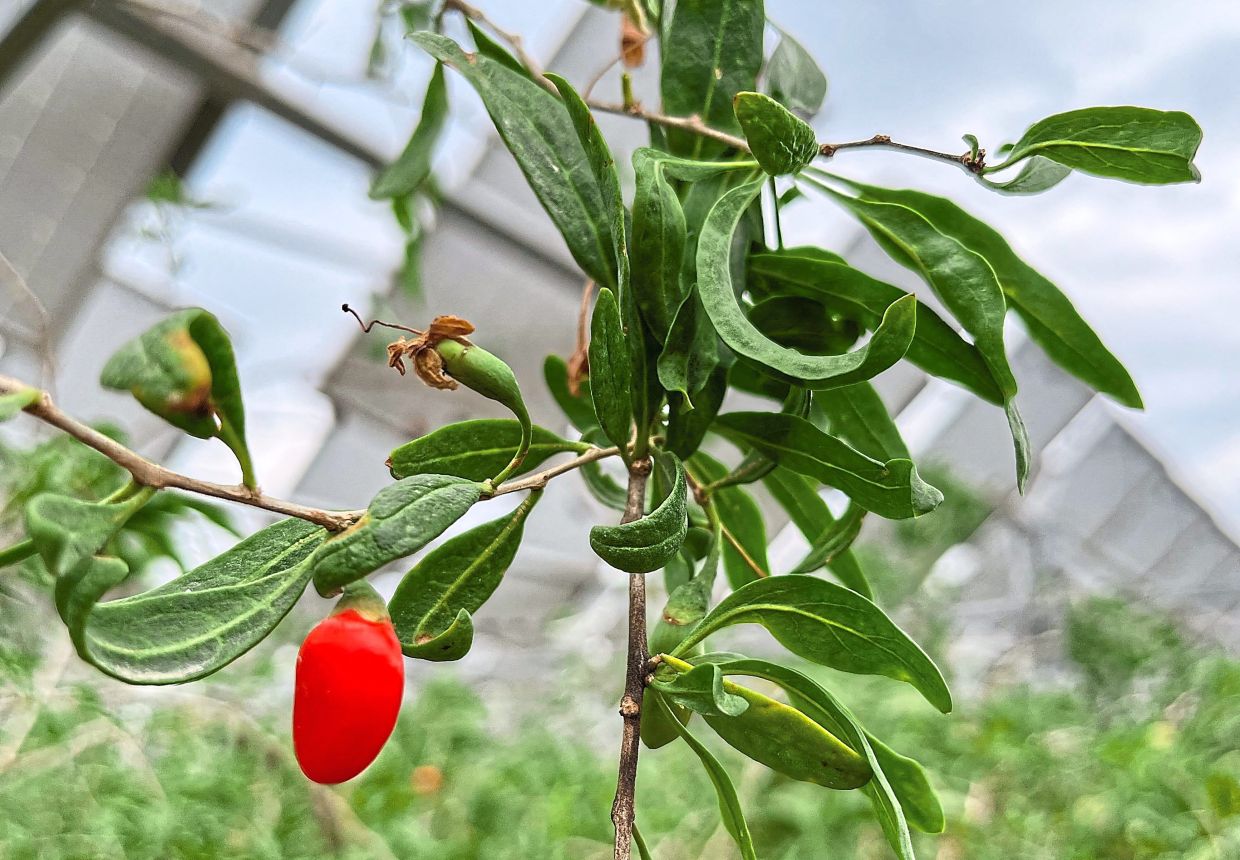
“They are casting shadows on the plants and soil so there will be less evaporation of moisture.”
Roughly a quarter of China is classified as “desertified” and campaigns to contain and reclaim the sands stretch back to the 1970s.
Solar panels installed over the empty, sun-baked deserts are a recent and growing part of the arsenal.
Solar was included in a September revision to the country’s flagship “Three Norths” anti-desertification programme, which began in 1978 and will run until 2050, although the concept has cropped up in other planning documents going back to 2021.
The standard approach is to use panels to provide shade for desert-hardy seeds and shrubs introduced underneath while barriers around the sites slow wind speeds and stop the sand shifting.
It can take up to five years to get results, according to the Ningxia government.
Projects like Baofeng’s remain a tiny portion of the hundreds of gigawatts of solar panels China installs each year, but Beijing has announced plans to rapidly grow the number of projects which use solar to fight desertification.
The construction of solar panels in deserts also preserves farm land.
In 2023, China issued rules barring solar panels from arable land and state media has criticised the construction of solar panels on prime farm land.
Betwee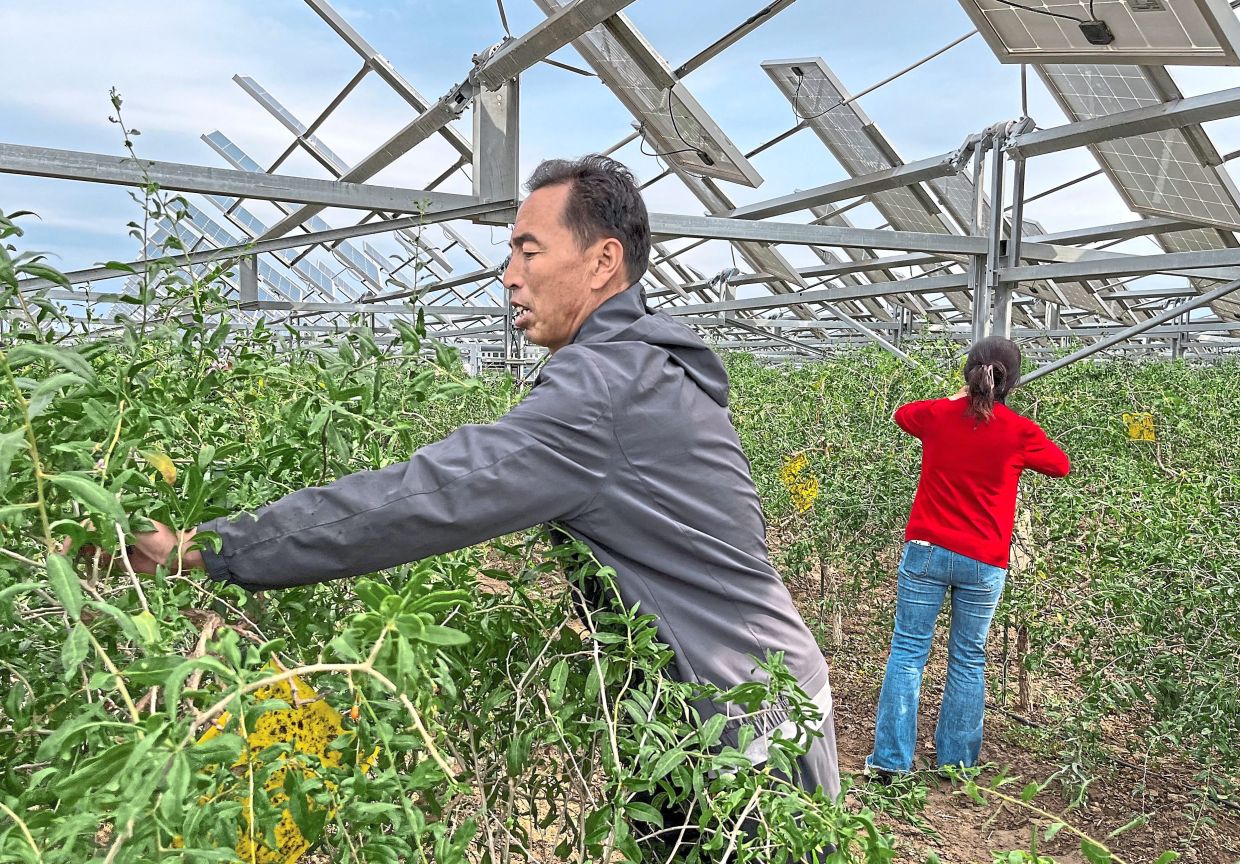
By comparison, the United States installed 50GW of solar last year.
The NDRC did not respond to questions about the plan.
Whether using solar panels or other methods like tree planting, progress is hard-won.
Desertified land was 26.8% of all China last year, down from 27.2% a decade earlier despite massive tree planting programmes.
At the Baijitan nature reserve several hours away from Baofeng’s site, decades of work has reclaimed about 800sq km.
Completely wiping out deserts is not the goal, according to the site’s director, Wang Xiaoling, instead they hope to minimise harm.
“It is a protracted war to control the desert,” he said. “We can’t say that we can wipe it out completely.” — Reuters