



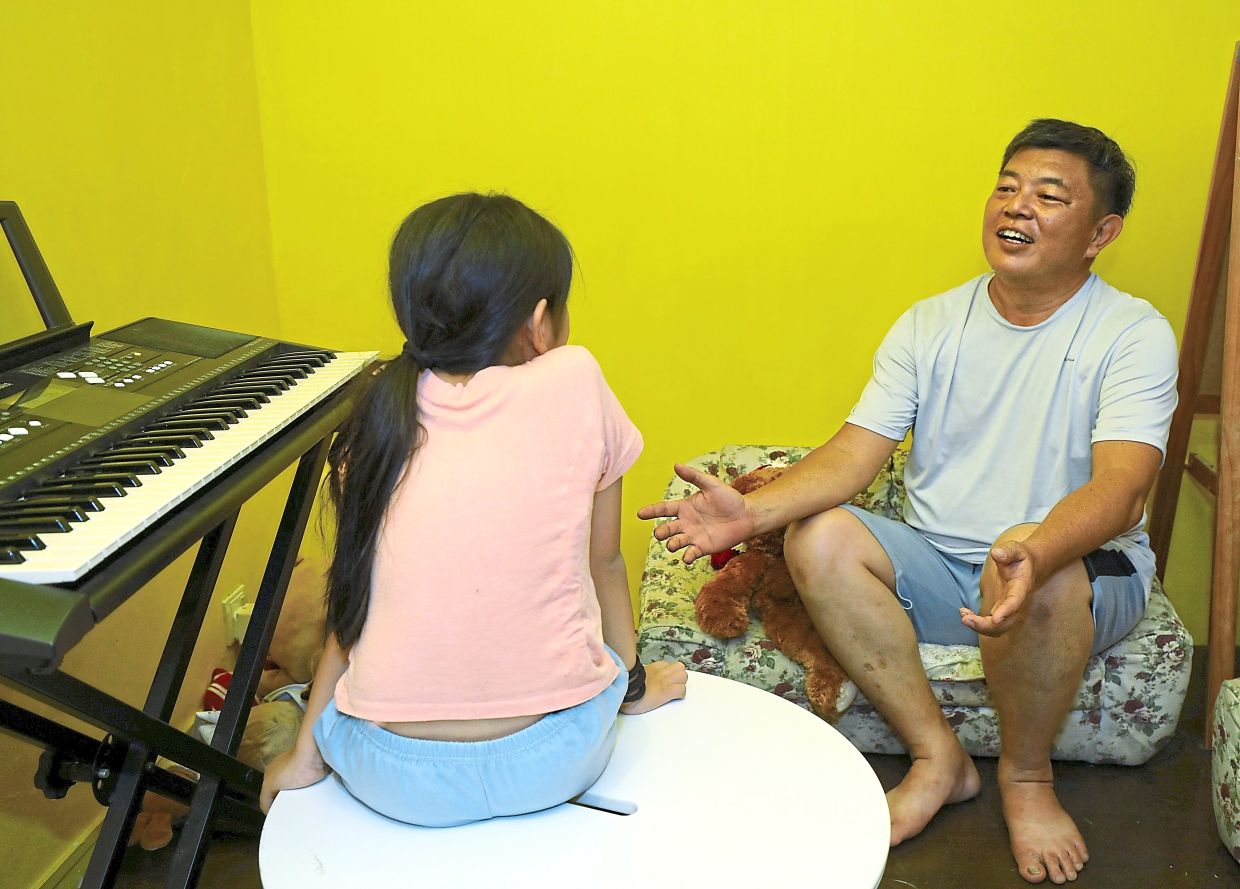
WHEN 10-year-old Emily (name changed) wanted to learn piano at the age of four, Saxon Cai bought her a keyboard so she could practise at home.
It’s not the first time he has stepped up.
For as long as Emily could remember, the 52-year-old has been there to take her to school, cook her meals, watch television with her and buy her the occasional toy or present.
“I cook her breakfast every morning before school, because otherwise, she will have to eat whatever she can at the school canteen,” Cai says.
“My favourite breakfast is fried rice or eggs on toast,” Emily chimes in.
He also encourages her to study hard and often jokes that better grades mean better gifts.
“You have to study hard so that you don’t end up like me,” Cai, who works as a freelancer in renovation jobs, tells the girl.
Yet Cai is neither Emily’s father nor related to her by blood.
Emily’s father died in a freak accident when she was a toddler, leaving her mother to navigate parenthood alone.
However, over the years, Cai, a long-time housemate whom the mother regards as a brother, became one of the most constant figures in the child’s life.
Today, Emily simply calls Cai “Uncle”.
When Cai reminds her that he was the one who bought her first keyboard, Emily doesn’t remember.
He’s been part of her life for so long that the gesture has blended into countless other acts of care over the years.
“It’s normal for me to take care of her,” he says.
Stories like Cai’s serve as a reminder that fatherhood is not always defined by biology.
Sometimes, it is found in the men who show up day after day, through school runs, homework sessions and life’s ordinary moments, especially as fathers are beginning to be formally recognised as caregivers.
Life-changing transition
For 29-year-old Danial Abdul Halim, his journey began when he married Raja Nur Juliana Raja Mohd Zamani and embraced her then eight-year-old daughter, Puteri Maryam Aliyyah, as part of his family.
Danial first met his future wife while helping a friend deliver homemade dumplings to customers.
“Initially, I addressed her as auntie,” he recalls.
But something clicked for him almost immediately.
“That night itself, I felt like I wanted to marry her,” he says.
A few months later, they were married.
For Danial, the fact that Juliana had a daughter from a previous marriage was never a concern.
“It wasn’t anything awkward. She is now my daughter,” he says.
The transition, however, was life-changing for him.
“She taught me a lot in my transition from a single young man to a married man with a school-going daughter.
“I am really grateful that they accepted me for who I am,” he says.
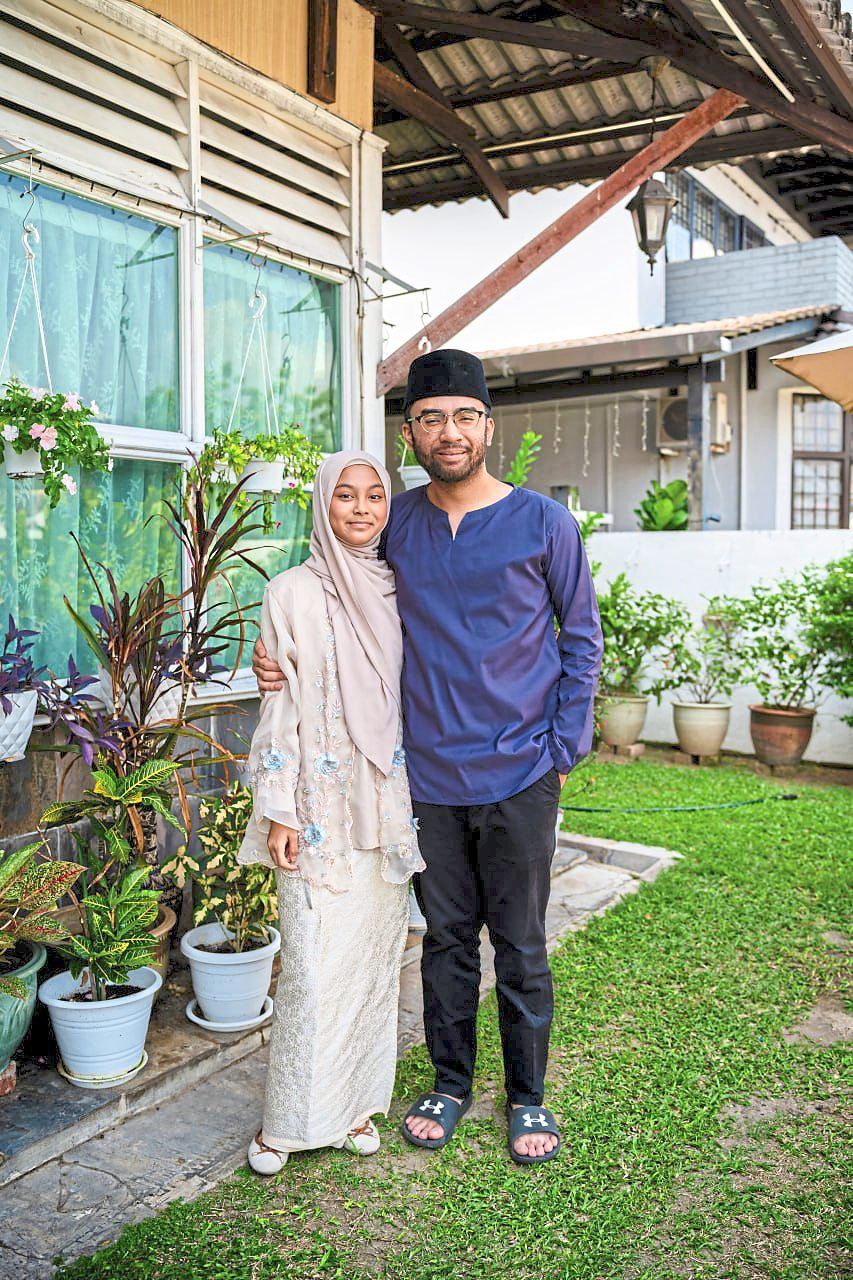
One of the moments he remembers most fondly came shortly before he married Maryam’s mother.
When they first met, Maryam called him “Uncle”, but about a month before the wedding, she began calling him “Daddy”.
“I was very happy when she called me her dad.
“To have someone who is not of your blood but can accept you as family, yes, I was very touched,” he says.
Danial describes himself as being very involved in his 13-year-old daughter’s life today, from school matters to everyday conversations.
“She tells me everything.
“What I practise in my household is, before I hear anything about something, it is better for you to tell me first. How’s your day, who are your friends, who are you talking to online?”
Perhaps no moment tested his commitment as a father more than when Maryam was admitted to the hospital with an adenovirus infection.
For 10 days, Danial remained by her side to look after her.
“I dropped everything to be by her side. I never left. It is a memory I hold on to,” he says.
An unplanned adoption
For Kurian Zachariah, fatherhood arrived through a very different path.
More than 25 years ago, he and his late wife, who did not have children of their own, noticed a bright young boy from their church who was working two jobs to help support his family.
“Something came into my heart. Why don’t we support him?” Zachariah says.
He recalls wanting to bring the matter up with his wife, who actually approached him with the same idea. So the couple ended up helping the boy with his education.
That decision would ultimately shape the rest of his life.
Over the next 25 years, Zachariah, who declines to be photographed, supported more than 25 children directly and indirectly, helping many complete their studies and establish careers.
Today, he continues to volunteer with children’s homes while caring for several young people in his personal capacity.
Among those currently under his care are two young women whom he helped support through diploma programmes after they aged out of a children’s home, as well as a 10-year-old African boy whom he formally adopted.
The adoption itself was never planned, he says.
The boy had been abandoned as an infant in a children’s home where Zachariah volunteered, and eventually he took guardianship of the boy.
But shortly after, during a meeting with the Welfare Department, he was unexpectedly asked what he intended to do about the child’s future.
Without much thought, the answer came naturally to him.
“I said I’ll adopt him,” he recalls.
Today, the child carries his surname.
Yet the 65-year-old says fatherhood was never something he consciously set out to pursue.
“This is nothing of my planning.
“When you walk up a staircase, you don’t think how difficult it is to go to the 10th floor.
“You take it step by step, and the next thing you know, you’ve reached the 10th floor.”
Spirituality, love, education
At one point, he had nine children living under his roof at the same time throughout the Covid-19 pandemic in 2020.
During that time, he says the household stayed busy with swimming sessions, games, movie nights and endless conversations.
More importantly, those moments helped him build relationships.
“I never use my seniority. I like to come down to the children’s level.
“Once I can relate to them, then I have a chance to impart values,” he says.
For Zachariah, providing food, shelter and security is only part of the equation.
The more important task, he says, is helping children develop the values and judgement needed to navigate life on their own.
“If I can help them make good decisions, then that’s my number one thing.
“We provide shelter, food and security, but these are temporary things. For me, spirituality, love and education are the things that go the whole way,” he says.
He hopes the children who pass through his care will not only build successful lives for themselves but also extend the same kindness to others.
Comparing it to what he calls a “good infection”, he hopes the support they received will inspire them to help others in turn.
Today, many of the children he once cared for are adults with careers and families of their own.
The two young women who still live with him, for example, are now working as a home chef and a teacher in an international school, respectively.
“But they have nobody and nowhere else to go to, so they still stay with me,” he says.
Usually, those in his care move out once they get married or if they have to go back to take care of their own elderly parents.
Some have even moved overseas.
But all of them continue to keep in touch and visit him regularly.
“A few of them come back and want to pay me back, and I say no, I don’t want anything monetary from you.
“But I told them, when you have the chance to shape somebody’s life, do it.”
When others try to label him as a “good man” for helping all these children throughout his life, Zachariah says it is more that he feels he is being helped himself.
“As much as people think that I’m helping the children, actually I am helping myself when I help others.
“I hope there are many more people who can be fathers of youths.
He loves being a father figure, he says.
“I want to have a good time with these kids and give them a purpose.
“Every child must have a father or a mother, right? Why not be one?”
