
DRAPED in vines and flanked by half-timbered towers, the castle at Chateau Smith Haut Lafitte near Bordeaux dates to 1365. It’s the kind of legacy that gives its proprietors a sense of permanence.
But a rampaging forest fire west of the city – one of the worst since World War II, forcing hundreds of thousands to evacuate – burned to within 15km of the chateau’s meticulously tended vineyards.
That has shaken both the chateau and Bordeaux’s winemaking industry, which was already staggering under multiple burdens: drought, heat waves, weak sales because of changing drinking habits and US President Donald Trump’s tariffs on French wine.
“For the wine industry, it’s one thing on top of the other. It doesn’t make our lives very easy,” said Ludovic Fradin, the chateau’s managing director. “In the face of that risk, we need to be prepared.”
Fradin, who works for the Cathiard family, which owns both the chateau and a vineyard in California’s Napa Valley, said he is less worried about the clouds of smoke from the fires that have recently blanketed the vineyard.
Bordeaux’s flat landscape and shifting winds, he said, mean that the smoke gets blown away within a day or two.
Fires in the Napa Valley are more damaging for vineyards because the smoke gets trapped between its two mountain ranges and can linger over the grapes. And there are no reports of vineyards being damaged by the fire so far, according to the Bordeaux Wine Council.
Still, Fradin said, the chateau is preparing for a once unthinkable scenario in which a fire could reach its buildings. It has made plans to evacuate its animals, which include horses, chickens, goats and llamas. The chickens and goats, he said, would be sheltered in the yard of his own house.
“The animals are living, breathing beings, unlike the vines,” Fradin said. “The vines are just material.”
In the mythology of French wine, of course, vines are more than just material. They produce the grapes that make Bordeaux wines – the velvety cabernets and sweet Sauternes that have turned this part of France into a mecca for wine lovers, home of world-famous appellations like Pomerol and St-Emilion.
Even before the fires and clouds of smoke, this season was already shaping up as a small harvest, said Jane Anson, an author and wine columnist who lives in Bordeaux.
An extremely rainy winter was followed by record-breaking heat and very little rain, which caused the grapes to ripen early.
The climatic and economic challenges have taken a heavy toll on Bordeaux’s winemakers, Anson said.
“There is a human thing of having one more thing to battle against,” she said. “Like they needed this on top of everything else.”
The winemakers are quick to note that their problems pale next to those of some of their neighbours.
More than 220,000 people have been evacuated across the Gironde region, one of the largest peacetime evacuations in French history. Television footage shows that one village west of Bordeaux, Le Porge, has been ravaged by the fire, with 152 houses destroyed.
Some vintners are doing what they can to help.
Fradin said the chateau had filled several water tanks to give firefighters a backup supply and made its four tractor drivers available for the firefighting effort.
French President Emmanuel Macron, who met with firefighters and local authorities, warned that the coming days would be difficult because temperatures are expected to rise to 41°C.
“The situation we’re in today is the most difficult we’ve ever recorded, the most difficult since World War II,” he told reporters.
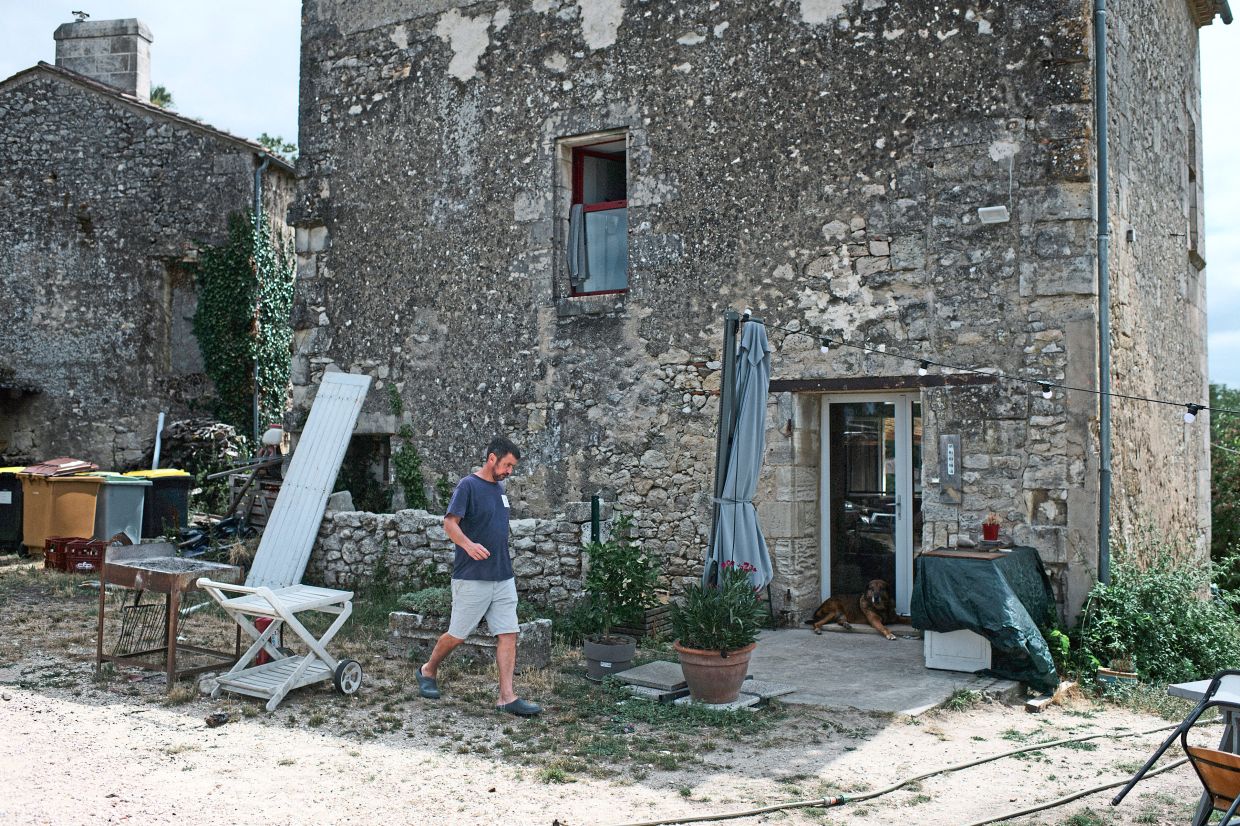
For Gabriel Barre, a small winegrower who, with his wife Edith, produces 25,000 bottles a year of merlot, cabernet franc and malbec, the fires are just another sign of how much the world has changed since he took over the operation from his father Paul in 2016.
Barre, 44, said he wasn’t sure how it would affect his harvest.
“It could have a smoky taste,” he said with a smile.
Other climatic changes, like the record heat, were already problematic, he said.
Higher temperatures produce grapes with higher sugar content. That makes it harder to produce the balanced taste of a classic Bordeaux wine.
“Bordeaux wines are known for their balance,” Barre said. “But in recent years, we’ve been producing sun-drenched wines. What I mean by that is wines that burst on the palate – wines that are sweet, even too sweet.”
For Barre, the economic and social trends are unforgiving. Bordeaux, he said, had an image of “luxury and snobbery”. It has not produced the kinds of boldly flavoured, lower-priced bottles – “rock ’n’ roll wines,” he calls them – that other regions of France do. Its stuffy appellations do not appeal to younger consumers, who, in any event, are drinking less than their parents did.
As Barre spoke, his son Arsene carried out glasses for a wine tasting. His father looked at him ruefully.
Burdened by debt and climate-related challenges, Barre said this year’s harvest would be his last. He does not want to put his son in the position of having to take over a failing business. — ©2026 The New York Times Company
This article originally appeared in The New York Times
Already a subscriber? Log in
Get 20% OFF The Star Digital Access
Cancel anytime. Ad-free. Unlimited access with perks.