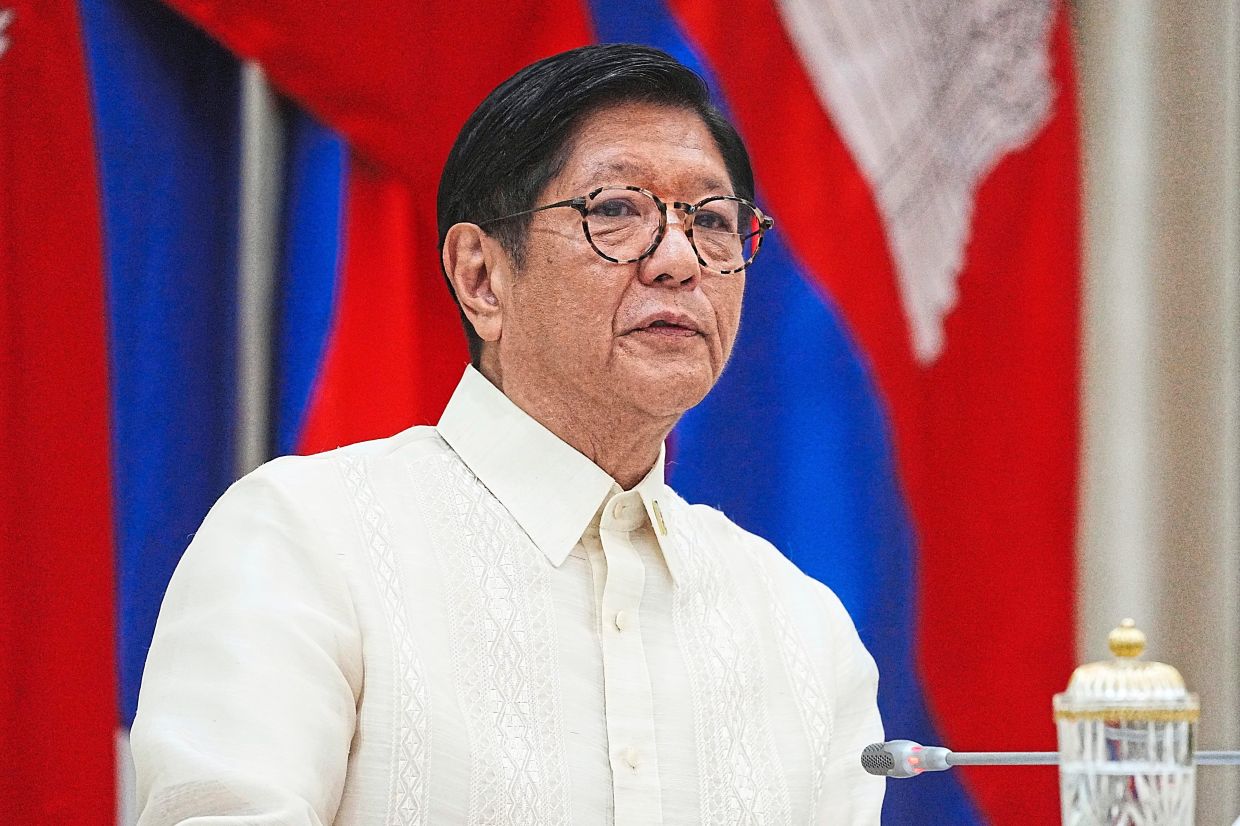
PHILIPPINE President Ferdinand Marcos Jr’s family gained global notoriety four decades ago for the extensive corruption of his late father’s dictatorship.
Now, he’s set in motion an anti-graft drive that could boost his popularity and investor sentiment.
A teary-eyed Marcos appeared in a podcast recently, saying he’s very upset about corruption in flood control projects.
“I have sleepless nights thinking about this. How did we end up this way?” he said.
It’s a surprising campaign for a politician who has faced questions over his family’s alleged hidden wealth for decades.
He started with a warning in his annual speech to Congress in July, then named companies he said benefited from flood mitigation projects such as dykes and river walls.
Now, he has ordered checks on the lifestyles of government officials, personally inspected projects and vowed to go after corrupt officials through a new independent body.
He also plans to remove 250.8bil pesos for flood infrastructure – or a fourth of the public works department’s proposed budget – from next year’s spending plan.
Marcos is tapping into anti-elite anger in a typhoon-prone nation where infrastructure often fails to hold up, making it even more vulnerable to the impact of climate change.
Citizens have vented their angst on social media, slamming public officials, contractors and their relatives with possible links to graft-ridden projects who flaunt lavish lifestyles with Rolls-Royce and Cadillac cars as well as Chanel and Birkin designer bags.
Corruption has been a perennial problem in the region, but even more so in the Philippines, which ranked lower compared to peers in last year’s Transparency International Corruption Perceptions Index.
Street protests themselves have generally been small, and financial markets so far unaffected.
But Marcos, whose popularity has waned, will be attuned to the recent violent unrest in neighbouring Indonesia over what were seen as excessive perks for lawmakers even as ordinary Indonesians struggle to make ends meet.
Marcos’ anti-corruption drive is a “populist project” that could both help clean up his family’s name and potentially give him ammunition against his ally-turned-rival, Vice-President Sara Duterte, said former presidential political affairs adviser Ronald Llamas.
“He has to see this through towards a logical conclusion, which is to charge and imprison corrupt officials of the public works department, contractors and even politicians,” Llamas said.
But Marcos will also need to show he’s willing to target politicians aligned with him.
“Marcos has opened Pandora’s box, and there’s no turning back,” he said.
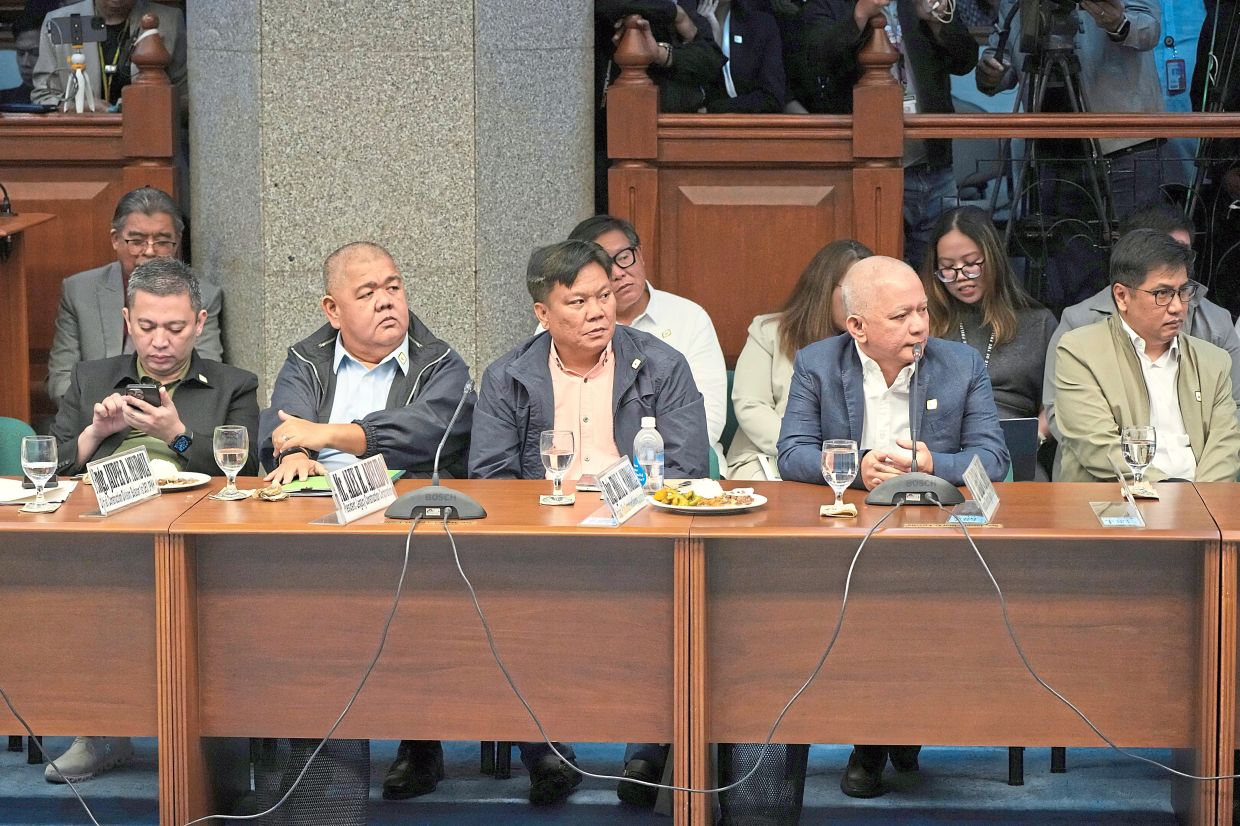
At a hearing at the House of Representatives on Sept 9, a former assistant district engineer at the public works department accused Senators Jinggoy Estrada and Joel Villanueva of receiving kickbacks from flood mitigation projects.
Both denied the allegations, with Estrada describing them as “outright lies” and Villanueva saying these are part of a “demolition job” against him.
A day earlier at a Senate investigation, a contractor tagged Marcos’ allies – including the president’s cousin House Speaker Martin Romualdez – as among the lawmakers allegedly involved in corruption in flood control projects.
Romualdez and other Congress members denied the accusations.
Shortly after, the Senate changed its leadership, with Senator Vicente Sotto III – who was backed by Marcos in midterm elections in May – becoming the chamber’s new chief.
He replaced Senator Francis Escudero, who earlier said that a private contractor donated to his 2022 election campaign, but denied helping the company secure government projects.
Marcos said at a briefing that day that the accusations against lawmakers will be investigated by the independent body he will form within the week.
“These are not revelations; they are allegations,” he told reporters during his visit to Cambodia before he returned to Manila. “We will examine all allegations that have been made.”
The president’s corruption crackdown has led to the resignation of his public works chief.
Investigations by local media have also shown that lawmakers, including those aligned with Marcos, have ties to major contractors that bagged flood control projects.
For Marcos, who is limited to a single, six-year term that expires in 2028 under the Constitution, the challenge is to turn the public angst into an anti-graft legacy and convince investors that he’s serious about plugging leakages in government spending.
The president’s trust rating remains under 50% despite recovering from a low of 36%, according to a June survey by pollster Social Weather Stations.
Scoring a win is even more crucial now for Marcos in the tussle against his vice- president.
Duterte fended off the risk of an impeachment trial that would have put her possible 2028 presidential bid in jeopardy and her supporters outperformed in the midterm elections.
There are already warnings, though, that the anti-corruption drive is causing tensions within Marcos’ political circles, particularly between his Cabinet and the House.
Executive Secretary Lucas Bersamin, the president’s chief administrator, said the Cabinet will not tolerate “any effort to hold the budget process hostage by political theatrics”.
The statement followed a report that House lawmakers were considering tossing the 6.793-trillion peso national expenditure programme for 2026 back to the budget department to fix some problematic entries.
The move, which was eventually dropped, could’ve delayed the budget approval.
Marcos’ resolve to pull the plug on corruption could show most visibility in his upcoming appointment of a new ombudsman, who has to be truly independent if he wants his campaign to succeed, according to Michael Henry Yusingco, a research fellow at the Ateneo School of Government.
Otherwise, “the president’s outburst against corrupt officials and politicians will eventually be dismissed as simply political bluster,” he said. — Bloomberg