IMAGINE sitting down for a seafood meal at a coastal American restaurant. You’re on holiday. The decor is nautical – fishnets, framed boats and even a stuffed marlin or two.
You order shrimp, assuming it’s from nearby waters.
But chances are, it’s from thousands of kilometres away, said Dave Williams at the Louisiana Shrimp Festival in New Orleans last autumn.
“And that’s despicable,” said Williams, a commercial fisheries scientist working to expose what he considers a widespread fraud – restaurants and festivals misrepresenting cheap imported shrimp as premium local catch.
Often, diners are paying top dollar for what they believe is wild Gulf shrimp, when in fact they’re being served farmed shrimp from Asia or South America – products linked to labour abuse and contamination.
A 2020 Louisiana State University study found two-thirds of imported shrimp in Baton Rouge contained banned veterinary drugs.
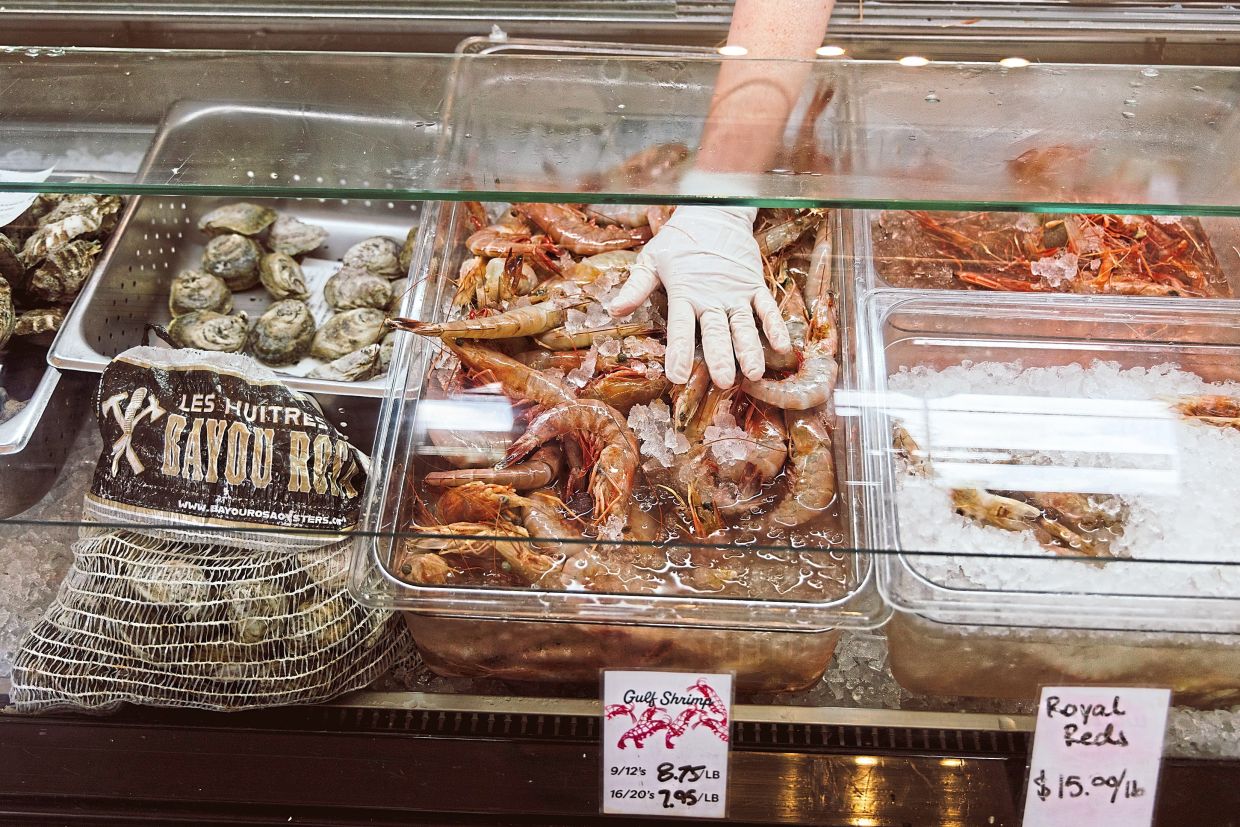
These cheap imports have flooded the US market, driving down prices and devastating local fishing communities along the Gulf Coast.
Once a seafood powerhouse, the domestic industry now teeters on the brink.
In response, Williams founded SEAD Consulting and developed a genetic testing kit to quickly verify the origin and species of seafood.
His goal: to hold accountable those misrepresenting their menu items.
In the 1980s, Gulf waters supplied half of the seafood consumed in the United States.
But last year, over 90% of shrimp eaten in the US – roughly 725,000kg – was imported, according to the National Oceanic and Atmospheric Administration.
“Restaurants are making extra profit by pretending to sell Gulf shrimp,” Williams said. “Shrimpers aren’t getting a fair deal, and customers are being duped.”
SEAD’s test, developed with Florida State University food safety expert Prashant Singh, is simple and portable – relying on tools about the size of toasters.
Williams compares it to a “very sophisticated pregnancy test”.
Their investigations began in earnest last year when they tested shrimp from vendors at two major festivals: Louisiana’s Shrimp and Petroleum Festival and Alabama’s National Shrimp Festival.
Despite both festivals claiming to highlight fresh Gulf seafood, four out of five vendors at each event were serving imported farm-raised shrimp.
“They’re truly awful,” Williams said. “But the bigger issue is with restaurants.”
Dana Honn, a New Orleans chef who founded the Louisiana Shrimp Festival, said he wanted to help the local industry after hearing of shrimpers losing homes and boats. His vendors passed SEAD’s authenticity tests “with flying colours”.
“The industry needs someone like Dave to speak up,” Honn said. “Even a 5-10% shift in market share can make a big difference.”
The Federal Trade Commission (FTC) stepped in last September, warning restaurants that misleading labels – whether implied through imagery or wording – are illegal.
Former FTC commissioner Alvaro Bedoya even wrote to the top 10 seafood chains, including Red Lobster and Legal Sea Foods, promising investigations if evidence of fraud emerged.
SEAD began testing shrimp at randomly-selected Southern restaurants late last year, backed by the Southern Shrimp Alliance.
Of 44 Mississippi Gulf Coast eateries tested, only eight served local shrimp.
This reporter visited five of the tested restaurants in early December. All featured decor suggesting locally-sourced seafood. None of the menus fully complied with FTC rules.
Three menus boasted dishes made with Royal Red shrimp, a prized local species known for its sweet, lobster-like flavour.
Staff, however, admitted the shrimp was actually from Argentina – a cheaper variety.
“Restaurants are paying less but still charging a premium,” said Jeremy Zirlott, a fifth-generation shrimper from Alabama who’s fished Royal Reds for two decades. He hasn’t turned a profit from his boats in three years.
On revisits in April, two of the Mississippi restaurants had amended their menus to state the shrimp’s true origin.
In Louisiana, where shrimping is a major industry, misleading labelling has long been an open secret.
SEAD’s work there is supported by the Louisiana Shrimp Task Force, which advises state agencies.
A 2019 law requires restaurants to disclose imported shrimp or crawfish on menus. But without enforcement powers, the Louisiana Department of Health recorded 4,461 violations through 2024 – without issuing a single fine.
That changed in January when a stricter version of the law came into effect.
As of April, the Health Department had recorded 415 violations and issued 136 fines of US$500 each.
The Louisiana Restaurant Association tells members to display the statement: “Some items served at this establishment may contain imported crawfish or shrimp. Ask for more information.”
Critics say this soft language dodges stronger labelling requirements, such as specifying the country of origin.
Williams accused the association of trying to “weaken the law’s impact”.
Still, Louisiana’s improved laws seem to be working. SEAD’s data shows comparatively lower fraud rates in Baton Rouge (30%), New Orleans (13%) and Lafayette (33%).
Other states are following suit.
Lawmakers in Texas and Georgia are now pushing similar legislation.
In April, SEAD returned to New Orleans to test shrimp dishes at the Jazz & Heritage Festival.
With earlier tests in North Carolina showing a discouraging 77% fraud rate, the team braced for bad news.
But of the 19 dishes tested at Jazz Fest, only one failed.
“That’s a good result,” Williams said. “It’s why we do the tests.” — ©2025 The New York Times Company
This article originally appeared in The New York Times
Already a subscriber? Log in
Get 20% OFF The Star Digital Access
Cancel anytime. Ad-free. Unlimited access with perks.