FOR centuries, the Comarca Embera people bathed, fished and drew life from the Turquesa River, a jungle waterway winding through the biodiverse heart of Panama’s Darien Gap.
They were used to the rhythms of nature – the muddy swells of the rainy season, the sediment that darkened the waters.
But nothing prepared them for the toxic legacy left by more than a million desperate people passing through the forest on their way to the United States.
Now, the river smells of fuel. Children break out in rashes. The fish – once the community’s main food source – reek of gasoline.
“Everyone climbs out of the river with hives on their skin, especially the children,” said Militza Olea, 43, as she examined red sores on her young nephew’s arms. “We have to be careful.”
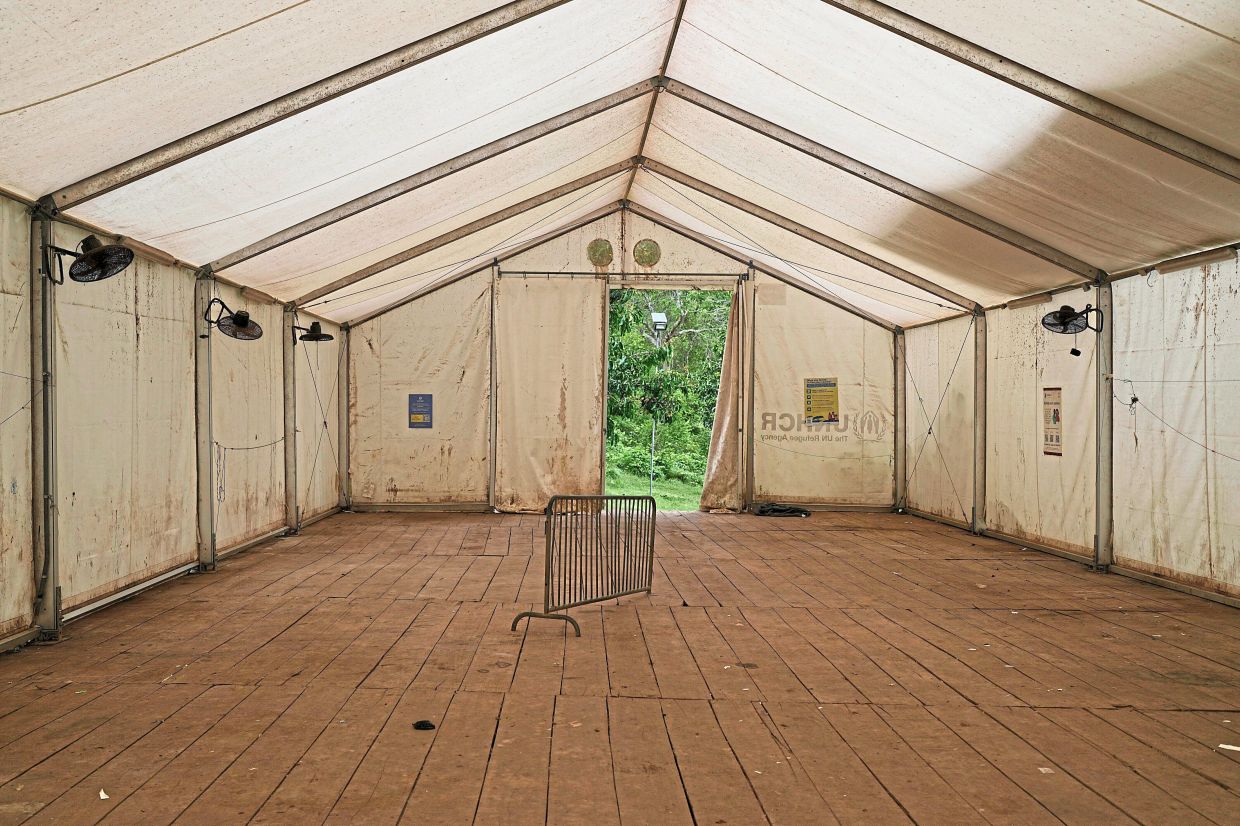
Though the surge of migration through the Darien has slowed, the environmental damage remains acute.
Panama’s government estimates that 2,500 tonnes of trash were dumped in the region – foam mats, clothes, plastic bottles, backpacks – all left behind by exhausted migrants and smugglers navigating one of the most treacherous jungle crossings on Earth.
Cleaning up will cost around US$12mil, and Panamanian authorities say they don’t have the resources.
Environmental Minister Juan Carlos Navarro blames the United States, saying Washington bears responsibility for encouraging migration without accounting for the fallout.
“If the United States is responsible because it opened its borders, then the United States should pay for it,” Navarro said.
He noted that while the Biden administration promised US$3mil in aid, nothing has materialised under Donald Trump’s presidency.
While trash floats visibly downriver past Villa Caleta, the invisible dangers are worse.
Government hydrologists recently found high levels of faecal coliform bacteria, indicating human waste contamination. Some locals report finding decomposing bodies in the water.
And that’s just what’s downstream.
Upstream, where journalists are blocked by border police, lies much of the remaining waste.
The contamination is so widespread that even skin contact with the water appears to trigger painful reactions.
There’s no official medical diagnosis for the community’s rashes, but residents say symptoms emerged around 2021 – when migration through the Darien exploded.
Olea’s family now spends hard-earned money from their plantain crops on antibiotic creams, delivered by relatives who must travel hours by boat.
Others aren’t so lucky.
“Not everyone can afford it,” she said. “The rashes spread.”
Worse, the community’s drinking water – currently supplied by a small aid-supported plant – may run dry during the summer.
“When the time comes, the people here are going to need that water,” Olea said. “The river has to be clean.”
Food security is also collapsing. The fish are no longer safe to eat.
“We can’t fish anymore because you’d practically be eating a fish full of gasoline,” said community leader Cholino de Gracia.
But it’s not just human waste and fuel that threaten this jungle. Criminal organisations followed the migrants, and they’ve stayed behind.
As migration through the Darien soared, Colombia’s Gulf Clan – a powerful criminal group – moved in to control the route.
According to Insight Crime researcher Henry Shuldiner, they’ve since expanded their operations in the region to include illegal logging, coca cultivation and gold mining – environmental crimes that poison rivers with mercury and destroy vast stretches of forest.
“We’re seeing increased land clearings around these municipalities that bordered the Darien, mostly for coca cultivation,” Shuldiner said.
And the destruction has spilled over into Panama.
Authorities in January dismantled a gold mining network involving Colombians and Panamanians operating in federally-protected national parks.
The group had contaminated the jungle with mercury and cyanide.
In other cases, officials say, criminals rent land on indigenous reservations to launder profits from human smuggling and environmental crimes.
There, they clear forest for cattle ranches, driving up deforestation.
After years of improvement, tree loss in the Darien spiked again in 2023, according to satellite data from Global Forest Watch.
For the communities who’ve lived sustainably off the jungle for generations, that loss is devastating.
Navarro says Panama must now attempt to rescue the Darien from what he calls a state of “environmental anarchy”.
But many residents believe the government has already failed them.
“They’ve disrupted the whole system of life in this community and damaged some of them forever,” Navarro admitted.
“Now that this disaster has ended, we’re going to be able to conserve our forests.”
Locals aren’t so sure.
De Gracia and others say the area has long been ignored by Panama City. They feel abandoned now that the migrant crisis has waned and the world’s attention has shifted elsewhere.
Despite promises, no significant clean-up has begun. There are no health clinics, no compensation and no economic recovery plans.
And the people who live along the Turquesa are left to cope.
Olea watches her nephew splash near the riverbank, the rash still burning on his arms.
She knows the water that sustained her community for centuries is now dangerous, possibly for years to come.
“Without water,” she said, “there’s no life here.” — AP