
THE 2026 Asia-Pacific Economic Cooperation’s (Apec) “China Year” will see leaders from 21 member economies gather in Shenzhen, Guangdong, in November – a showcase Beijing is pitching as a response to rising anti-globalisation and trade protectionism.
With its theme of “Building an Asia-Pacific Community to Prosper Together”, this year’s gathering will also be a test of whether Putrajaya Vision 2040 – adopted under Malaysia’s chairmanship in 2020 – can move from words to delivery.
According to Apec 2026 Senior Officials’ Meeting chair Chen Xu, this year’s theme was chosen as “a strong response” to mounting geopolitical tensions, weaker global growth and renewed protectionist pressure.
“Guided by this theme, China will work with all parties to turn the goal of building an Asia-Pacific community into action,” he told a salon in Beijing hosted by the China Public Diplomacy Association on April 27.

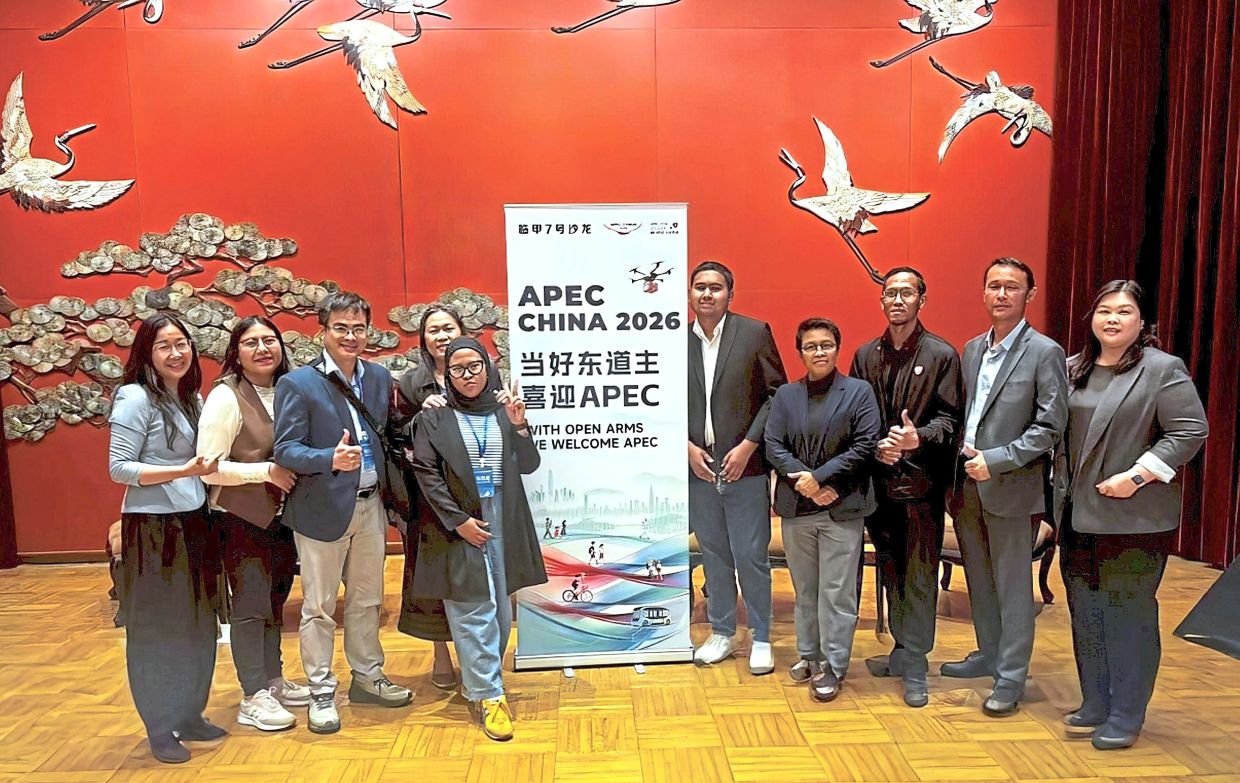
Chen said China would use its term as host to push an “upgrade” of regional connectivity, not only through infrastructure but also via digital links, supply chains and people-to- people exchanges.
“Connectivity is an important issue for Asia-Pacific and global development, and a key means to unlock regional growth potential,” he said.
“It is necessary to take new measures on the existing basis, continue to deepen practical co-operation and further tap co-operation potential.”
With digital technology advancing quickly, he added, emerging areas such as data and artificial intelligence (AI) would be central to Apec’s future work.
More than 300 meetings and events are planned throughout the year, including a series of Senior Officials’ Meetings and 11 ministerial meetings on trade, finance, the digital economy and AI, as well as small and medium- sized enterprises. Key outcomes are expected to be unveiled during Apec Economic Leaders’ Week in Shenzhen in November.

The Putrajaya Vision and the Aotearoa Plan
China’s agenda is closely tied to Putrajaya Vision 2040, which commits Apec to building an “open, dynamic, resilient and peaceful Asia-Pacific community by 2040” and to a “free, open, fair, non-discriminatory, transparent and predictable” trade and investment environment.
The vision was adopted during the Covid-19 pandemic, which forced leaders to meet virtually instead of physically in Putrajaya in November 2020.
Putrajaya Vision 2040 rests on three economic drivers: trade and investment; innovation and the digital economy; and strong, balanced, secure, sustainable and inclusive growth.
China’s 2026 priorities – openness, innovation and co-operation – mirror that structure.
This year will also see the first five-year review of the Aotearoa Plan of Action, Apec’s core strategy adopted in 2021 as the detailed roadmap for implementing Putra-jaya Vision 2040. The review will test how far member economies have moved beyond lofty language towards concrete, measurable action.
For Malaysia, Putrajaya Vision 2040 remains a key legacy of its 2020 host year, aligning with its long-standing support in Apec for regional economic integration, an eventual Free Trade Area of the Asia-Pacific (FTAAP) and efforts to narrow development gaps.
Apec Study Centre at Nankai University director Prof Liu Chenyang was part of the expert group that worked on the Putrajaya text between 2018 and 2019.
Answering Sunday Star’s question at the Beijing event, Prof Liu said implementation in the first five years had been “satisfactory”, but stressed that the next phase will decide whether the vision has real traction.
He noted that every Apec host since 2020 has aligned its core agenda with Putrajaya Vision 2040, and that many committees and working groups have structured their multi-year plans around its three pillars – something he described as a “high degree of unity” in treating the vision as a shared framework.
He drew a line, however, between alignment and impact.
“The declaration cannot be a castle in the air, nor a moon reflected in water or a flower in a mirror,” he said. “It must be backed by some landmark achievements.”
Prof Liu’s main proposal is to use the FTAAP agenda to produce those breakthroughs. Even limited but concrete progress on a specific chapter, sector or deliverable under the FTAAP umbrella would, in his view, create a stronger framework for Asia-Pacific economic integration – and give substance to both Putrajaya Vision 2040 and China’s “community” theme.
He also called for steady, practical work in areas where consensus already exists, such as connectivity, supply chains and the digital economy. Apec, he suggested, should set phased, rolling development paths in these fields, “like laying down a track”, so co-operation advances in a more predictable way.
Beyond economics, Prof Liu argued that Putrajaya Vision 2040 should be read as a collective answer to unilateralism and protectionism.
A more coherent Apec agenda, he said, could help the region balance destabilising trends, and member economies should use the 2026 host year to build a stronger collective voice around the idea of an Asia-Pacific community.
“This is not only a need for China,” he said, “but also something that all Apec members should work together on.”

Prof Liu added that Apec’s three-decade record shows it can still play multiple roles despite strains in the global system.
As a stabiliser, the forum has provided a basic framework for regional co-operation that has survived swings in bilateral ties.
As a pressure valve, it offers a diplomatic stage that is not limited to trade and investment. Prof Liu pointed to last year’s meeting between the Chinese and US presidents on the sidelines of the Apec summit in Busan, South Korea, as an example of how the forum can facilitate high-level dialogue even in tense periods.
As a “rules incubator”, Apec has previously helped shape discussions on environmental goods and trade facilitation. Prof Liu said similar work could now be done for the digital economy and AI governance, where multilateral rules remain thin.
Chinese Academy of Inter-national Trade and Economic Co-operation academic committee vice-chairman Zhang Jianping said he expected Shenzhen to deliver “more consensus” on regional economic integration and digital development, as well as better use of existing free trade agreements to support trade, investment and jobs.
Such co-operation, he said, will help Asia-Pacific manage decoupling pressures, supply chain shocks and geopolitical tensions.
This will be the third time China hosts Apec; this year’s events will be held in Shenzhen, following Beijing in 2014 and Shanghai in 2001. For Beijing, the 2026 “China Year” is a chance to underline its support for openness and regional co-operation at a time of louder anti-globalisation rhetoric.
For the wider membership – including Malaysia, which shepherded Putrajaya Vision 2040 through at a moment of global crisis – it is also the first serious test of whether that vision from 2020 is on track to become a lived reality, or remains just a promise on paper.