EMMETT Burke has noticed something unusual in his Manhattan restaurants. Half-eaten pizzas dot tables and bar space, left behind by those who ordered them.
At Emmett’s and Emmett’s on Grove, Burke’s two Chicago-style pizzerias, diners seem increasingly uninterested in asking for boxes to take home leftovers.
“I will look at the plates coming back to the kitchen and all the food we are throwing out, and I will ask if something is wrong,” he said.
“I would assume most people would love to have a quarter of a pizza in their fridge.”
A number of restaurateurs in New York and other cities have observed this surprising shift in behaviour.
They attribute doggy-bag aversion to a number of factors, including social stigmas, the ease of ordering takeout and a return to sharing food after the pandemic made doing so taboo.
The average American leaves 24kg or US$329 (RM1,458) worth of food on the plate at restaurants every year, according to 2023 data from ReFED, an organisation that works to reduce food waste.
Changes to that number over time are hard to track, said Dana Gunders, the group’s president.
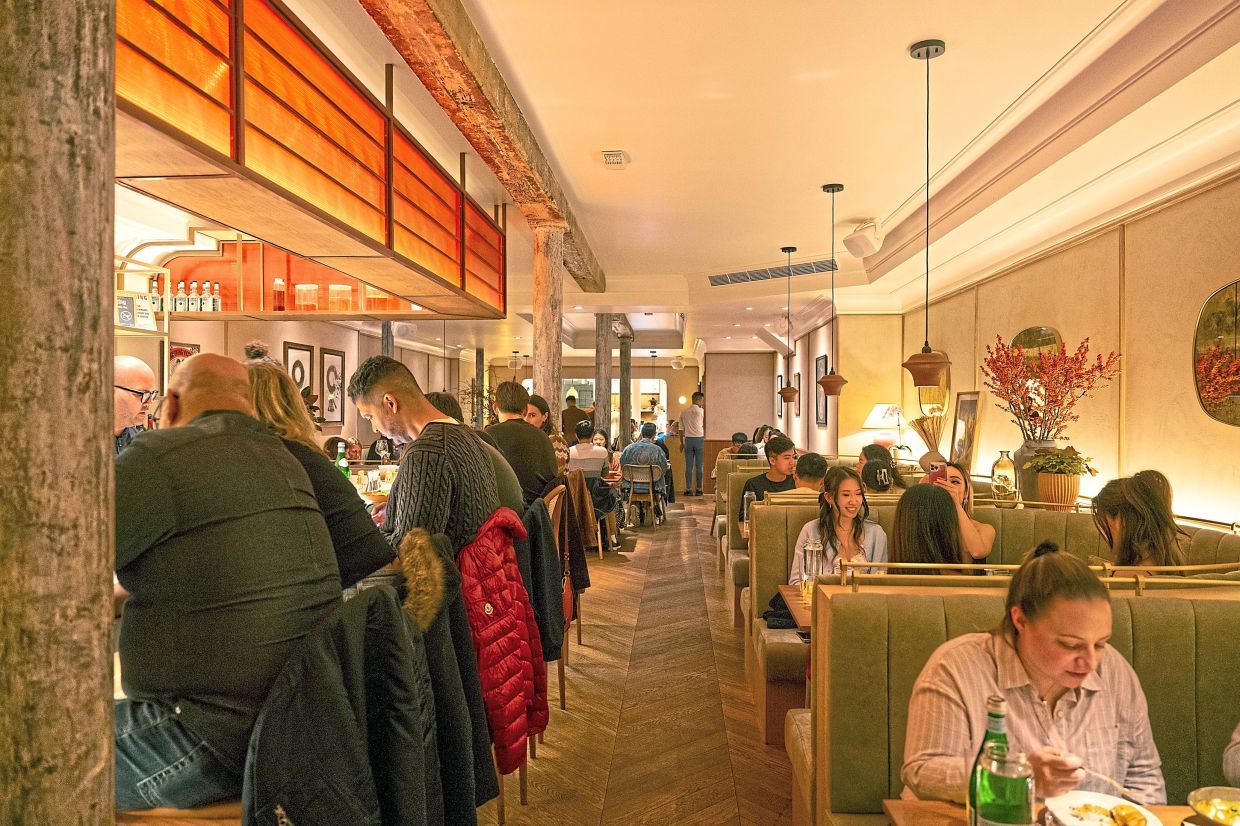
But anecdotal evidence suggests such a change in diners’ perception of leftovers that the organisation plans to commission a study on the topic.
“There are some people who have a thing against them,” Gunders said. “People who just say, ‘I don’t eat leftovers’, as a matter of principle.”
But for others, she said, leftovers are a question of logistics. How much food is left? How many boxes are needed to take it home? How much time do I have to eat it? What am I doing after I leave?
Burke estimates that three-quarters of his customers don’t take leftovers home and has noticed that many of them are young.
His theory: Members of Gen Z grew up with the ability to order whatever they want, whenever they want, from their phones. Why bring home food from one restaurant when you can easily order something fresh the next day?
He rarely sees people on dates ask for to-go boxes, either.
“I think maybe it’s embarrassing, like you don’t want to be the equivalent of going to an all-you-can-eat buffet and putting rolls in your dinner jacket,” he said.
“I think there is an insecurity thing. But I always say, even billionaires like open bars.”
Jenn Saesue, a co-owner of Fish Cheeks and Bangkok Supper Club, Thai restaurants in Manhattan, assumed that most diners were taking home leftovers.
But when she followed up with her staff, she was shocked to learn that wasn’t the case.
Growing up in Thailand, she was taught that letting food go to waste was a big no-no.
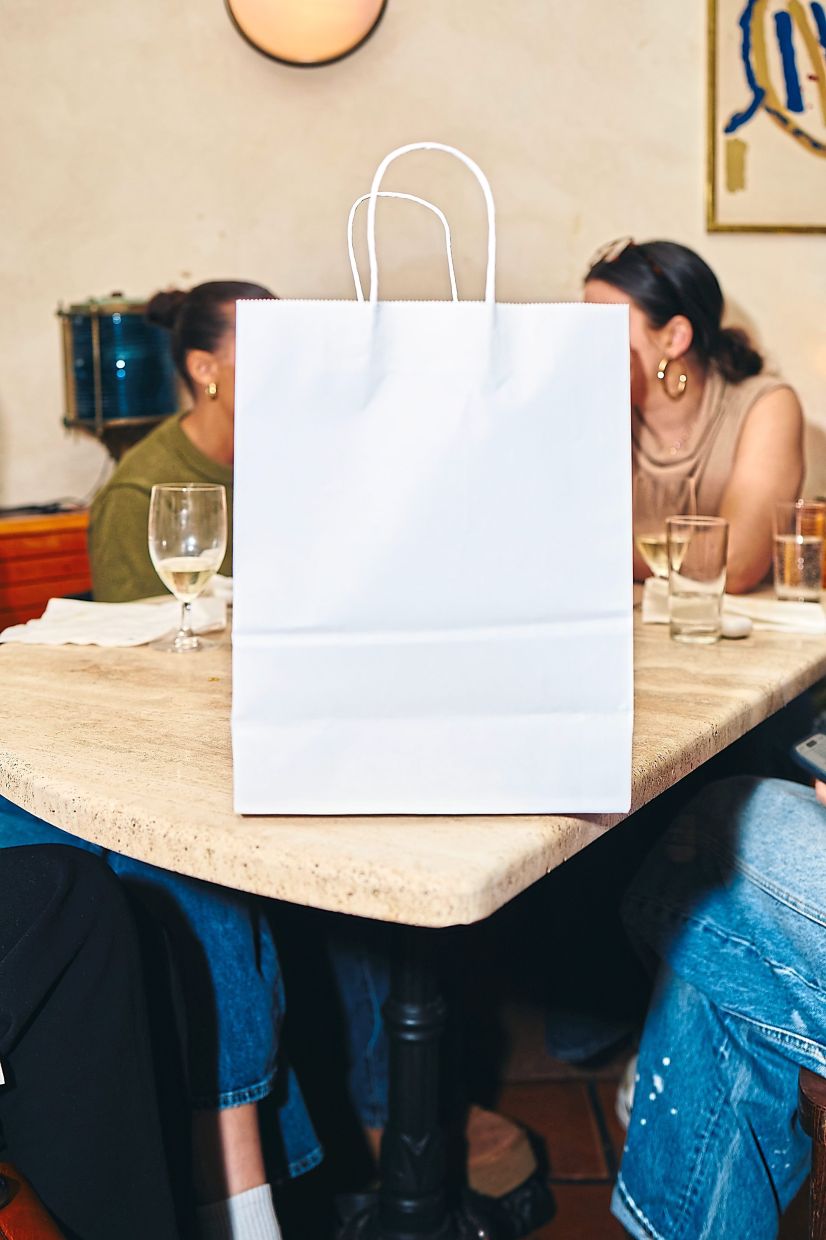
“The farmers work hard to harvest this rice. You don’t leave a grain of rice on the plate. You take what you can eat, and if there are leftovers, you take it home,” she said.
Like Burke, her team has observed some similar patterns. Families tend to take home food.
“But if it’s a guy and a girl, and it looks like they are on a date, they will order a lot, but they won’t finish anything,” she said. “And they won’t take it home.”
During the pandemic, diners got used to ordering their own entrees rather than sharing dishes at Philippe Chow, a chain of Chinese restaurants with locations in New York, Nashville, Tennessee and Washington, DC, said Abraham Merchant, its president and CEO.
Now, groups are back to splitting food and eating from one another’s plates.
“You don’t want to take that food home at the end of the meal,” he said, laughing.
“Different knives, forks and chopsticks have been in it.”
There may be one clearer indicator of diners’ likelihood to take home leftovers: whether they drive to the restaurant.
Most New Yorkers take public transit, Gunters said, and leftovers don’t fit their lifestyle. Long commutes and post-meal social engagements can keep doggy bags at an unappetising (and possibly unsafe) room temperature.
“That food isn’t going to be in the refrigerator,” said Adam Beckerman, an urban planner who lives in Sunset Park, Brooklyn, and often goes to bars after dinner.
“It’s just going to be flung around.”
He also doesn’t like to take home food in hard-to-read social situations.
“I don’t want to give the impression that I am taking claim of leftovers,” he said.
Burke believes many of the diners at his pizzerias face similar decisions.
“You might not be as inclined to bring a chicken Parm or meatballs to a club,” he said.
Most diners at Kyma, a Greek family-style restaurant in Atlanta, drive there. And perhaps because of that, leftover culture is alive and well.
“I will say 85% of guests are finishing what they ordered in restaurants, but 15% aren’t,” said Pano I. Karatassos, an owner.
“Those people paid for their food, and they want to take it home.”
When Karatassos’ father owned Greek restaurants in the city, the staff used to put leftovers in aluminium foil and twist the foil into swan shapes.
“We don’t make swans anymore, but we definitely make it easy for people to take their food home,” he said. “It’s a big part of hospitality here.”
Ahra Ko, the director of operations at Oiji Mi, a Korean tasting-menu restaurant in the Flatiron district of Manhattan, feels “a little disappointment” when guests (usually jet-lagged tourists, she said) ask for part of their meal to go.
She knows the quality won’t be the same at home.
“When they are like, ‘Can we take the doughnuts?’ which are hot and stuffed with gooey cheese, I’m like, ‘It’s not going to be as delicious, but sure’,” she said.
But she also feels it’s the restaurant’s job to get the portions correct. It’s a fine balance: enough to satiate guests, but not so much as to overwhelm them.
“We feel we are doing something wrong when diners ask to take food home,” she said.
Still, Oiji Mi accommodates the requests as long as the food can be transferred safely.
“We can’t do oysters to go,” she said, laughing, “although people have asked for them.” — ©2025 The New York Times Company
This article originally appeared in The New York Times
Already a subscriber? Log in
Get 20% OFF The Star Digital Access
Cancel anytime. Ad-free. Unlimited access with perks.