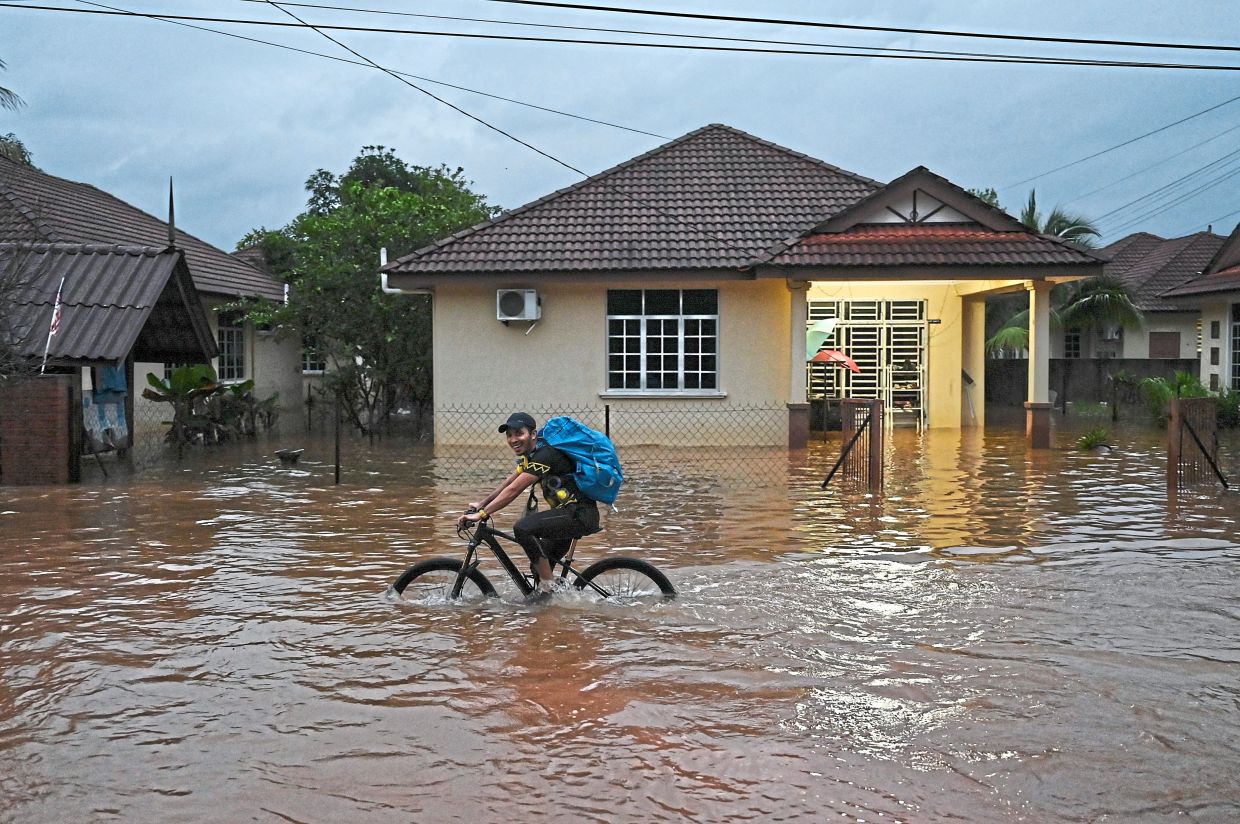
AS torrential rains hit our East Coast once again, the images of displaced families and submerged homes are staging its annual return to national headlines.

Just weeks ago, the 29th Conference of the Parties (COP29) under the United Nations Framework Convention on Climate Change concluded in Baku, Azerbaijan. This conference came under much scrutiny as developed and developing countries clashed over climate finance.
The gap between global pledges and local realities is stark.
How do these floods correlate with what is happening on the global stage, one may ask. During COP29, several key issues on the table yielded disappointing discussions. These include the New Climate Finance Goals (NCQG) which was set at a minimum of US$300bil (RM1.3 trillion) annually by 2035 which fell short of the US$1.3 trillion (RM5.8 trillion) demanded by the Global South, or the finalised Article 6 carbon trading rules which have been criticised for its lack of consequences.
Climate change is supercharging disasters. It is ironic that developing nations were even bigger losers than oil companies at a global climate conference, with reports of the conference’s chief executive promoting fossil fuel deals as host country Azerbaijan is an oil-dependent economy.
Global inefficiency in implementing robust climate action is leaving vulnerable nations like ours exposed to escalating environmental and economic catastrophes. The monsoon floods of December 2021 caused damages exceeding RM6.1bil, displacing over 120,000 people and resulting in 54 deaths.
Floods have now become annual disasters, compounded by rising sea levels, erratic weather patterns, and outdated infrastructure. The insufficiency of global climate crisis mitigation measures feels more apparent.
The science is clear: for every degree of global warming, the atmosphere holds 7% more moisture, leading to more intense rainfall events. Yet, while Malaysia’s vulnerability grows, global carbon emissions reached 36.8 billion metric tons in 2022, the highest ever recorded.
Floods also expose deep societal inequalities. Rural communities, fishermen, farmers, and those already struggling financially are hit hardest. A fisherman in Kuantan loses his boat, a family in Gua Musang watches their home get washed away, and the cycle of poverty deepens. According to the Malaysian Palm Oil Board, climate disruptions could reduce palm oil yields – a key export – by as much as 25% by 2050.
However, each flood season prompts us to question further. Why aren’t our cities and towns better equipped? Why aren’t long-term climate adaptation plans prioritised?
I was drawn to a report recently published by the Khazanah Research Institute (KRI) titled “What Is To Be Done? Confronting Climate Crisis in Malaysia”, which confirmed long-held suspicions that our governance remains reactionary as efforts tend to focus on managing the consequences of disasters, such as floods, rather than addressing underlying vulnerabilities or preventing future risks.
The report also suggests that Malaysia urgently needs to integrate state and federal climate strategies. This means creating transparent adaptation funding mechanisms that are monitored for effectiveness and ensuring a bottom-up approach where communities are involved in climate planning. Proactive governance goes beyond just managing floods but demands addressing vulnerabilities before disasters strike.
Alas, infrastructure damage from extreme weather is costly. The World Bank estimated that Malaysia needs to invest at least RM100bil by 2030 to adapt its infrastructure to climate resilience. Yet, adaptation funding remains scarce, both domestically and globally, with the aforementioned failings of the NCQG an example.
The inefficiency of global climate action is a story about governance failure. COP29, billed as the “Finance COP,” failed to deliver meaningful commitments for developing nations. Despite making up only 0.69% of global emissions, Malaysia bears a disproportionate amount of the burden. In order to improve our mitigation and adaptation plans, we in the Global South must rely on foreign funding and technological transfers. Our ability to take action is limited by a lack of global commitment and we are left to suffer from the industrialised world’s inaction on climate change.
Amidst all these, I am hopeful that Malaysia’s youths can play a role in realising the fight against climate change. Social media has made information on the topic extremely accessible, and avenues such as Unicef’s Youth Environment Living Labs and youth-led movement Kolektif Iklim has provided platforms for passionate youths to engage with.
Youth-led initiatives are already making an impact. Kolektif Iklim, for instance, has successfully organised community-level campaigns to raise awareness about waste management and sustainable living practices. Similarly, student groups in Kuala Lumpur have been promoting urban sustainability and resilience agenda with the aim of creating liveable cities. These examples show that when given the tools and platforms, young Malaysians are eager to take action.
Young people bring a much-needed long-term perspective to climate discussions, one that prioritises the well-being of future generations. Their forward-looking vision can ensure that today’s decisions reflect tomorrow’s realities, embedding sustainability as a central tenet of policy and action.
Youths must not be discouraged by inaction. Real change requires proactive governance, adequate funding, and the collective will to protect lives and livelihoods. While we cannot solve the global climate crisis alone, we can lead by example in the face of systemic inaction.
Climate resilience is not a distant goal but an urgent necessity. When global leaders and conferences fail us, we need to empower others to take up the mantle.
Student Jonathan Lee traces his writing roots to The Star’s BRATs (young journalists) programme, which he has written for since 2016. He is now a Malaysian youth advocate. The views expressed here are solely his own.