MANGROVES are among the world’s most important coastal ecosystems.
Besides storing large amounts of carbon, they serve as natural barriers that protect coastal communities from natural disasters, while supporting local livelihoods and income sources.
Dr Nur Hazlin Hazrin Chong, however, pointed out that the benefits of mangroves for the climate, public health and communities are still not fully understood and require more comprehensive assessment.
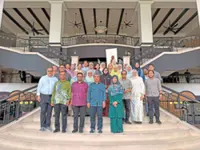
Leading the effort is a team from Universiti Kebangsaan Malaysia (UKM), led by Nur Hazlin from the Department of Biological Sciences and Biotechnology at the varsity’s Faculty of Science and Technology.
The team – comprising experts in climate and environmental science, public health, microbiology, ecology, sociology and anthropology – recently secured an international research grant worth £1.8mil (about RM10.3mil) to conduct a study titled Mangrove Conservation for Planetary Health: Quantifying Climate, Health and Socioeconomic Impacts in Protected Mangrove Ecosystems.
Awarded by the United Kingdom-based global health research organisation Wellcome Trust, the grant will support the team in examining climate and health challenges in developing countries, with the potential to create significant global impact.
Adopting a holistic approach, the study will examine the relationship between mangrove conservation and planetary health across three key areas: climate and the environment, public health, and the socioeconomic well-being of communities living in and near protected mangrove ecosystems.
“This study does not view climate and health issues as separate matters, but as interconnected systems.
“This approach allows researchers to assess various critical aspects, including carbon storage, exposure to pollution and disease risks, coastal protection, and the resilience of local communities,” she said in a June 29 press release.
Beyond generating scientific data, Nur Hazlin added that the project will emphasise the development of local research capacity.
“It will train young researchers, field technicians, project managers and students in interdisciplinary research methods centred on community engagement.
“The data, maps and analyses generated through this project are also expected to support policy planning related to climate adaptation, ecosystem conservation and public health,” she said.
Nur Hazlin noted that the project would create opportunities for wider collaboration among universities, government agencies, conservation organisations, local communities and regional partners.
“Such collaboration is important to ensure that research findings not only contribute to knowledge, but are also translated into tangible benefits for society,” she said.