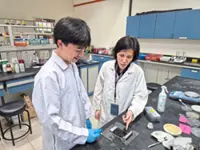
Having recently placed among the top 2% of scientists globally for the sixth consecutive year, Tunku Abdul Rahman University of Management and Technology (TAR UMT) lecturer Assoc Prof Dr Liew Chiam Wen already has her sights set on tackling the “unsolved mystery” of edible electrolytes.
These green energy storage devices could potentially be used in biomedical devices, further blurring the line between sustainability and human health.
“I am certainly looking forward to researching this,” the Faculty of Applied Sciences lecturer said.
Liew’s recognition in the prestigious global ranking by Stanford University highlights her unwavering commitment to high-impact research and her long-term contributions to the field of advanced materials.
Her core research focuses on developing green solid materials designed to replace the flammable liquid electrolytes typically found in batteries.
This innovation, she said, is crucial for creating energy storage devices that are safer, more stable and capable of higher energy density.
Hailing from Tanjung Tualang, Perak, Liew, whose fascination with science began in primary school, is driven by a deep-seated curiosity about how the world works.
She joined TAR UMT in 2017 and has since dedicated herself to research and development in green technology.
“My motivation comes from both scientific curiosity and the desire to address real-world challenges in energy storage.
“I am driven to develop safer and more sustainable materials that can contribute to next-generation batteries and support the growing demand for clean energy technologies,” she said in a March 19 press release.
Of her extensive body of work, Liew is most proud of her research into biodegradable polymeric materials derived from natural sources such as corn starch and aloe vera.
“I believe in the importance of sustainability, which promotes a healthier planet, strengthens economic resilience and supports better social equity and health.
“It is a great breakthrough for me to demonstrate the potential of sustainable materials in real-world applications, ranging from small-scale power sources for flexible electronics to high-energy systems for electric vehicles,” she said.
Beyond the laboratory, Liew is committed to her role as an educator, aiming to inspire the next generation of innovators.
“I want to inspire students to engage in research and innovation, and to give my best in further strengthening the research culture at TAR UMT.
“Through my research, I can bring cutting-edge examples like lab-scale device fabrication into the classroom.
“I also make sure to stay informed about important conferences and workshops, not only for my own benefit but also to encourage my students to attend them,” she said, adding that working at a varsity that places great importance on research and development has helped grow her career.
“TAR UMT continues to provide the right support for researchers like me, such as comprehensive laboratory facilities, research equipment, publication incentives and even scholarships for students.
“I am grateful to be in an environment that supports my efforts and hard work as a researcher and educator,” she said.