



Newsprint boost for modern learners


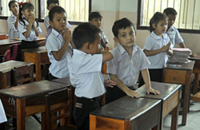
Ideas in motion: Chang (in blue shirt) engaging with participants at the workshop.

IN an age when students often turn to digital content in their free time, print materials such as newspapers continue to play a crucial role in formal learning, say teachers.

SMK Segambut English Language teacher Kasturi Chinnakrishnan, who recently attended a workshop held under The Star’s Newspaper-in-Education (Star-NiE) programme, said the session was a timely reminder of how newspapers can play a powerful role in the classroom, especially as digital distractions dominate students’ daily lives.

“Nowadays, we see the younger generation picking up Internet language and using it in their conversations, which could blur the line between correct and incorrect English.

“Using newspapers in English lessons can expose students to real-life language.

“They can learn new words, sentence structures and current issues. This helps them improve their reading comprehension, vocabulary and critical thinking skills,” she told StarEdu.

Kasturi was among 24 secondary school English Language teachers who attended the three-hour workshop held in collaboration with the Sentul District Education Office (PPD) in Kuala Lumpur on Feb 9.

For Kasturi, a key takeaway from the activities conducted by Star-NiE freelance trainer Chang Siew Juen was their interactive and experiential approach, which encourages students to actively engage with news content.

SMK(L) Methodist Sentul teacher Mohamad Amirul Nazron said newspapers are a tool that connects students with the community, their parents and global issues.

“By making the newspaper a centrepiece of fun, group-based activities, we can show its value as a relevant tool for modern communication.

“Many students today only consume bite-sized digital content. Using physical newspapers in the classroom reintroduces them to long-form journalism and the structure of professional reporting.

“They may realise that newspapers are a rich source of information for their other subjects and personal interests,” he said.

He shared that one “highly practical” activity he plans to implement is matching articles to themes, as it makes lessons more hands-on and less reliant on traditional textbooks.

“In this activity, students are given six newspaper headlines or article descriptions and must match them to the four core syllabus themes: people and culture, health and environment, science and technology, and consumerism and financial awareness,” he explained.

He added that students need to be given autonomy in their learning.

“Sometimes, as teachers, we have to remember to step back and let students explore, make connections and learn actively, rather than just follow the textbook,” he said.

SM Agama Kuala Lumpur teacher Noor Izzati Abdul Razak noted that it is essential to design activities that turn newspaper reading into a fun, interactive experience that sparks students’ curiosity.

“What teachers must know is that there are plenty of informative activities that can be done using newspapers, which can help enhance students’ knowledge, especially on current issues.

“Students can also improve their memory by recalling sentence patterns and vocabulary from news clippings,” she said.

She came away from the workshop with a toolkit of creative ideas – from planning speaking activities using advertisements to incorporating listening exercises.

PPD Sentul Language School Improvement Specialist Coach Plus (SISC+) Thanbeer Kaur said through guided exposure to newspaper materials at the workshop, teachers were able to explore how current events can make language learning more meaningful and relevant for students.

“Newspapers function within a blended approach, complementing digital media while providing authentic, credible content that strengthens students’ reading literacy and real-world awareness,” she said.

For teachers new to the approach, Thanbeer offered this advice: “Be excited about the possibilities that newspapers bring into the classroom and embrace them as powerful authentic materials.

“Most importantly, focus on relevance. When students see the connection between classroom themes and real-world issues, their engagement increases naturally,” she said.

Since its inception in 1997, the Star-NiE programme has supported English language teaching and learning in primary and secondary schools nationwide.

Star-NiE activities are available in StarEdu on Sundays, and in StarLifestyle on Tuesdays, Wednesdays, Thursdays and Fridays.

With the theme of the article in mind, carry out the following English language activities.

1 Have a competition. Pick different items or elements that can be found in a newspaper, such as headlines, photographs, captions, articles, advertisements and weather forecasts. The group that identifies the most different elements wins.

2 Pick a headline from today’s newspaper. Have your friend write a 300-word news article based on the headline. Then, reveal the original article to them. Compare and contrast the two versions. Have fun!

The Star’s Newspaper-in-Education (Star-NiE) programme promotes English language learning in primary and secondary schools nationwide. For Star-NiE enquiries, email starnie@thestar.com.my.

Follow us on our official WhatsApp channel for breaking news alerts and key updates!
Star-NiE , workshop , English

Next In Education

Showing up for others
Teacher Eliz bids farewell after 36 years
Nationwide study targets M’sians 40 and over
Can we still think for ourselves?�
UM to push healthcare, ESG
Korean youths spotlight Sarawak’s soul
Why home is a child’s first school
Employers crucial to workers’ financial fitness
Teachers in debt
Trailblazing trio at the helm

Others Also Read