It’s no longer enough that aspiring accountants are good at crunching numbers and dealing with balance sheets – future graduates must also be equally well-versed in carbon accounting and maintaining ecological balance.
Universiti Tunku Abdul Rahman (UTAR) Department of Accounting specialist Dr Yong Mun Ching says there is an urgent need to raise awareness about the importance of caring for soil as the foundation of food security.
Noting that the Malaysian Institute of Accountants has stressed the need to embed sustainability into accounting education, she said future accountants must understand how sustainability and environment, social and governance (ESG) principles influence corporate decision-making and reporting.
Accounting students, she said, must see how sustainability risks and opportunities translate into real-world practices.
“Malaysia stands at a critical juncture in managing its food security.
“Despite the agrifood industry contributing 11% to the country’s gross domestic product, the country still imports more than 60% of its food supply, like rice and meat,” she said, adding that the urgency of this issue is compounded by another silent crisis: soil degradation.
According to Yong, soil degradation is one of the most pressing environmental challenges of our time, threatening food security, biodiversity and climate stability.
“Healthy soil is the foundation of food systems, yet Malaysia’s soils are increasingly stressed by overuse, chemical inputs and climate change,” she said.
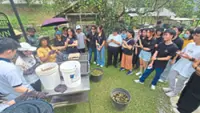
Recognising the gravity of this issue at the global and national level, UTAR organised a “Save Soil” sustainability forum at its Sungai Long Campus, and a visit to an organic farm in Semenyih, Selangor, last year.
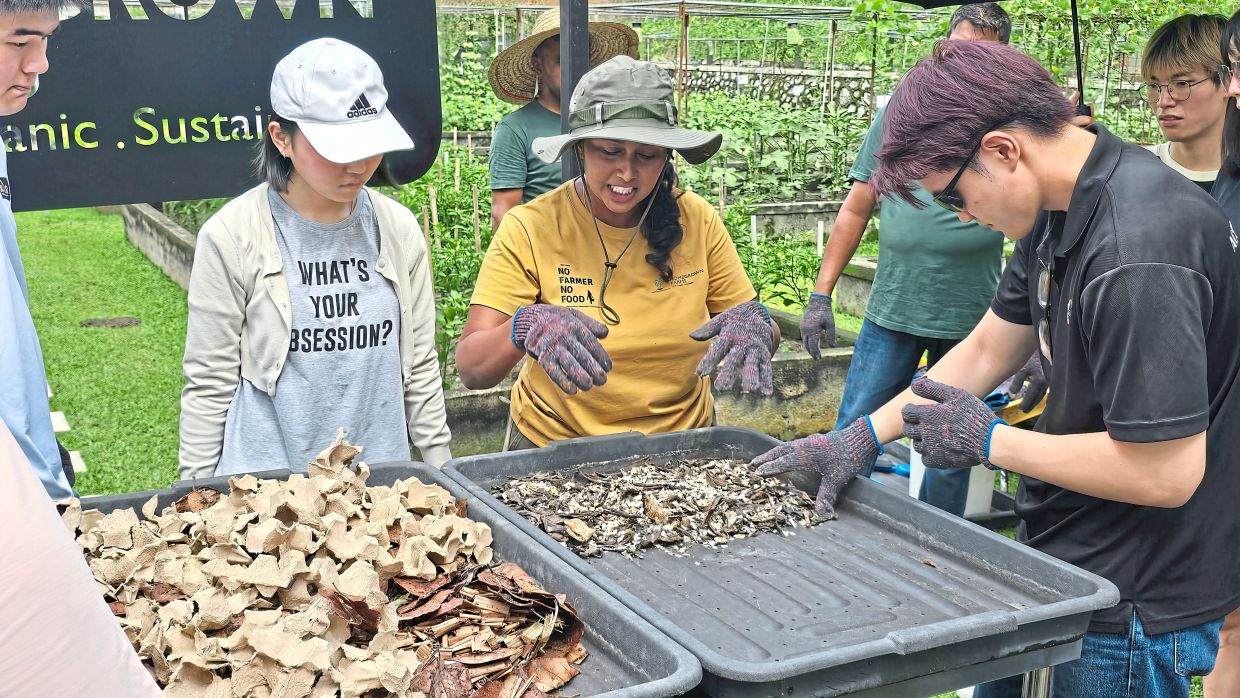
The organic farm visit introduced students to the making of organic vegetable beds, aquaponics and regenerative farming practices, other than hands-on experiences in making compost.
“By reconnecting students with nature, and allowing them to taste farm-fresh meals, the experience created lasting impressions of how soil health, biodiversity and sustainable practices contribute to food security in Malaysia.
“Next, the university will host the Food Forest Forum 2026 from April 24 to 26 at the UTAR Kampar Campus,” Yong said, while inviting interested participants to register for the event.
As the university continues to nurture socially conscious graduates, such initiatives are increasingly becoming more common, reflecting academics’ efforts to get the younger generation on board in creating a more sustainable and equitable future, she added.
UTAR accounting students on sustainability
Corporations should play their part in creating a sustainable business environment and driving the focus on ESG. Sustainability is not a rigid topic, but rather one that can be developed through creativity and persistence. With greater consideration for ESG, the world will be on the right track in terms of environmental conservation and business continuity. It is my pleasure to be a frontline leader, driving change and awareness. — Lim Kwong Yau
Sustainability is something we can actively practise every day. It is vital for our future. — Chong Mei Ting
ESG principles relate to real-world practices, especially in environmental sustainability and food security. I am inspired to continue contributing to ESG initiatives in the future, to create more learning opportunities for students beyond the campus. — Khoh Jing Ying
Awareness and communication are crucial. I am inspired to keep exploring ways to promote ESG initiatives and encourage sustainable practices within my peer community. — Sia Jia Wen
Hands-on experience with sustainability is important. Education is most impactful when it’s interactive. Sustainability education is not just about theory. ESG values can be applied in practical ways. — Ng Jia Wen