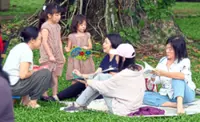
Students develop reading habits best when schools prioritise reading time and recognise it as a core part of a vibrant school culture, says Yogamalar Chandrasekaran.
The English Language teacher from SMK Seri Kembangan, Selangor, said setting aside time for the entire school to read helps normalise reading as a shared, valued practice – not just an academic skill to be tested.
She suggested schools adopt D.E.A.R. (Drop Everything and Read), where the entire school – principal, teachers and students – reads a book of their own choosing for 15 to 20 minutes, three times a week.
“This addresses the two biggest hurdles in cultivating a self-initiated reading culture: time and status,” she said, adding that schools could also create inclusive reading cultures for students who struggle academically or lack confidence by stocking more high-interest, low-reading-age books.

These books, she said, are written with mature, age-appropriate themes like sports, mystery or survival, but use simpler vocabulary and shorter sentences.
“Perhaps the school can also provide the kinds of graphic novels that students would prefer to read.
“It allows a 15-year-old to read something ‘cool’ without being defeated by the complexity of the text,” she said.
Reading initiatives can be challenging if schools prioritise syllabus coverage and data tracking over genuine engagement, she pointed out, however.
“In a 40-minute period, a teacher has to cover specific learning standards to prepare students for the Sijil Pelajaran Malaysia or school-based assessments.
“While the Education Ministry’s Nadi Ilmu Amalan Membaca programme was designed to track reading, it has unintentionally turned reading into a data-entry task, focused on the quantity of entries in a logbook rather than the quality of the experience,” she said.
To cultivate real reading habits, schools must move away from logbooks and quotas and instead make reading social, expressive and culturally relevant, she added.
“Many Malaysian students are heavily influenced by global digital trends.
“When they see peers online sharing emotional reactions to a book, it rebrands reading from an academic task to a lifestyle choice.
“Classroom culture should lean into this by letting students create their own book reviews in the style of their favourite influencers.
“Reading also doesn’t have to be silent. When we introduce book or literature circles where students discuss a story over snacks or treat it like a movie review session, the activity stops being about answering questions and starts being about sharing opinions,” she said.