What happens when our technology outdoes us?


WHAT is the purpose of technology? We develop tools, machines and processes to deliver performance that we cannot deliver ourselves.

When we domesticated animals and invented the wheel, we were motivated by the desire to move faster and farther than we could on our own.

When we invented computers, we wanted them to have faster processing capabilities and better memories than ourselves.

This has been the general trajectory of all technological advancements.

These advancements continue to impact every aspect of our lives. They influence the economy, political systems, our jobs and even the structure of our society.

But one thing has endured as technology progressed; humans remain largely in charge of technology.

During the first industrial revolution, for example, when we moved from using human muscles and physical labour to employing steam powered machines, we still needed people to drive and direct these machines.

The machines could not think for themselves, they needed our cognitive labour to drive and direct them, to turn them on and off, and to fix them when they malfunctioned. We were in the driver’s seat.

Even as we built our first computer, we were in control because it was up to us to programme the machine.

Humans are the ultimate masters of technology. With artificial intelligence (AI) and machine learning, computers are getting increasingly more powerful, and have surpassed human beings in games such as Chess and in the diagnosis of diseases and the analysing of x-ray scans.

Nick Bostrom, the Swedish-born Professor of Philosophy at Oxford University who founded the Future of Humanity Institute, has long predicted that, in the not too far future, computers will be more intelligent than humans, achieving what he calls “superintelligence”.

The big question is, when computers develop superintelligence, how can we be sure that it won’t all end in disaster? How will computers know how to behave? This might sound like a science fiction question, but it is one that deserves consideration, alongside the regular questions about jobs to be lost to automation and other economic and political questions surrounding AI.

Prof Bostrom’s view, elaborated on in his TED talks, books and papers, is that we need to be confident that when superintelligent AI escapes the control of humans, it remains safe.

He says that we need to ensure that AI is on our side by making it share our values.

After all, machines learn from big data sets that are generated by us. They include the content we create and the behavioural breadcrumbs that we leave behind as we surf the net and make choices and decisions.

When training Amazon’s Alexa using content available on the web, a team of researchers from my own university, Heriot-Watt, discovered that Alexa developed a nasty personality.

It is now very well established that AI algorithms, for example, the ones used to select the right people to hire, pick up human biases in decision making, even when humans are unaware of these biases themselves.

Garry Kasparov was the human Chess champion when he lost to Deep Blue, an IBM computer, in 1997. He now advocates the development of protocols and skills that enable humans to work collaboratively with intelligent machines.

“We must face our fears if we want to get the most out of technology – and we must conquer those fears if we want to get the best out of humanity,” says Kasparov.

So how can we ensure that we remain relevant and productive and that our technology remains safe?

During the first industrial revolution, humans were able to control machines thousands of times stronger than themselves, because they were cognitively superior.

To prepare for a world in which machines are cognitively stronger than us, we need to ensure that we are able to reach our ultimate domain, our emotional potential.

To achieve this, ‘positive education’ is key. ‘Positive education’ focuses on parallel tracks; cognitive labour, through academic excellence, and emotional labour, through building character, purpose and a value system.

Only if our scientists and engineers have right value systems themselves will they be able to build technology that shares those systems.

A focus on ‘positive education’ and the development of a personal values system deliver rounded graduates who will adapt well to the world of work.

This focus may also be what is needed to ensure that the technology of the future is safe and delivers the things that the world needs to keep it that way. Personally, that would make me sleep better at night.

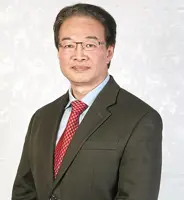
PROF MUSHTAK AL-ATABI

Provost and CEO

Heriot-Watt University Malaysia


Get 20% OFF The Star Digital Access

Monthly Plan

RM 13.90/month

RM 11.12/month

Billed as RM 11.12 for the 1st month, RM 13.90 thereafter.

Best Value

Annual Plan

RM 12.33/month

RM 9.87/month

Billed as RM 118.40 for the 1st year, RM 148 thereafter.

Follow us on our official WhatsApp channel for breaking news alerts and key updates!
technology

Next In Education

Squashing stress with mental skills
Kulai lass to represent M’sia in China challenge
Winning beyond pageant glory
AI-powered deception
‘Learning when not to trust’
Digital detour
Grab-bing the chance to make a change
Hands-on training key to cyber defence
BBGS legacy lives on
Creative skills for TVET

Others Also Read