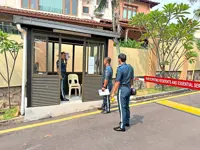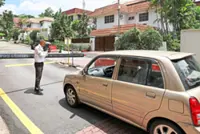
THE recent Taman Desa guarded neighbourhood dispute has once again brought into spotlight the legality and extent of such schemes operating across Kuala Lumpur.
This time, the issue is no longer simply about boom gates.
Residents have protested restrictions at a road providing the shortest route to a public park, forcing elderly residents to take a longer, potentially dangerous route along a busy road.
Who, they ask, gave a residents association the authority to decide when residents can access a public road and public park?
This is not merely a neighbourhood dispute. It is a question of who exercises authority over public space in Kuala Lumpur.
The distinction between a gated community and a guarded neighbourhood is important.
As lawyer Derek Fernandez explained in 2007, a gated community involves privately owned and managed infrastructure, including roads and facilities.
A guarded neighbourhood is different: residents employ private security in an area that includes public infrastructures.
The distinction remains relevant today.
PLANMalaysia Gated Community and Guarded Neighbourhood Guidelines state that a guarded neighbourhood is not established under any specific legislation or regulation, but merely an ad-hoc agreement among residents of a neighbourhood.
More importantly, it states that legally, a guarded neighbourhood cannot have physical obstructions on public roads, or enforce restrictions on the entry and exit of residents and members of the public.
The guideline also requires majority resident consent, but expressly states that residents who do not agree must not be subjected to coercion or pressure.
Yet in practice, the distinction between “guarded” and “gated” appears increasingly blurred.
Some neighbourhoods have public roads closed or gated, while the perimeter is fenced or even secured with barbed wire.
Public roads are treated as though they are private access roads, with visitors stopped at barriers, asked where they are going and required to provide personal particulars.
In some cases, identification cards or driving licences may be requested or recorded.
Beyond questions of legality and data privacy, such arrangements can create a more fundamental public safety risk.
What happens when an emergency vehicle needs immediate access, but a public road is behind a locked gate or barrier?
A security arrangement intended to make a neighbourhood safer should not create another obstacle to emergency response.
This is precisely why the distinction between a guarded neighbourhood and gated community matters.
A gated community may control access to its privately managed infrastructure; a guarded neighbourhood cannot simply assume the same authority over public space.
An approval from Kuala Lumpur City Hall (DBKL) cannot reasonably be understood as transforming public roads into private property, or giving private security guards powers equivalent to public authorities.
In Taman Desa, DBKL reportedly found that the guarded neighbourhood scheme had deviated from its 2012 approval, including the installation of closed-circuit TV cameras and facial-recognition systems.
DBKL then ordered several posts to be opened, removal of unauthorised structures and restoration of access along affected public roads.
It is fair to ask how a scheme approved by the local authority was allowed to evolve beyond its approved conditions in the first place.
An approval is not a blank cheque. If it comes with conditions, those conditions must be monitored and enforced.
Residents should be free to organise private security, but it should not become private authority.
A residents association does not acquire control over public roads just because its members support a guarded neighbourhood.
DBKL should therefore conduct a citywide review of guarded neighbourhood schemes and clearly establish what each approval permits, what it prohibits and how compliance is enforced.
Kuala Lumpur needs safer neighbourhoods, but public space must remain governed by public rules.
SHING SI YAN
Kuala Lumpur