EACH blowpipe made by the Temiar Orang Asli is unique, as the materials, intricate carvings and design are tailored to individual preferences.
For Jewi Adi, 45, from Kampung Chachuh in Pos Belatim, a settlement in Gua Musang, Kelantan, making a blowpipe involves more than just shaping bamboo.
It calls for patience, precision and painstaking attention to detail to produce a weapon suited to its user’s needs, and the process, he said, could take at least a week.
It starts with gathering materials from the forest, followed by cutting, measuring and shaping the shaft before adding decorative carvings.
“All Orang Asli men know how to make blowpipes, and each has one tailored to his liking.
“We make them according to our needs and comfort.
“I have been using the same blowpipe for over 10 years.
“Some prefer blowpipes without carvings because they are not willing to spend hours each day hunched over a bamboo stalk,” he told Bernama during an interview in Pos Belatim.
Jewi said the carving process could take up to three days for one blowpipe.
Getting the carving right takes a steady hand and careful workmanship.
The long process could also leave one’s fingers injured, numb or sore.
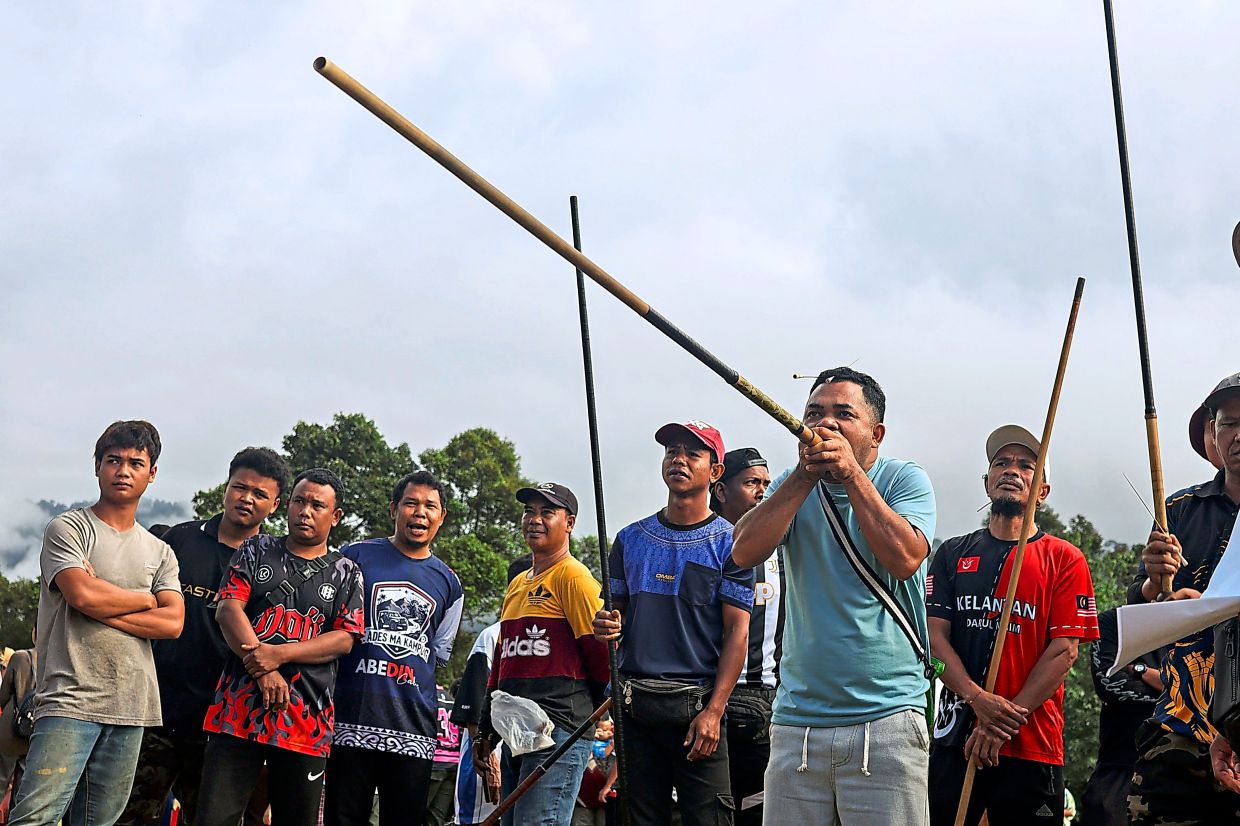
Jewi said blowpipes could be made from various materials, including suor and betung bamboo or rengas wood.
Meanwhile, Awie Alij, 34, from Kampung Sempadik, said a small knife was useful for whittling the components, particularly the basuk – the rattan base of a dart.
He said each component had to be carefully crafted, as any mistake in cutting the basuk affected the dart’s performance.
“Blowpipes and their accessories must be crafted with great care.
“We feel quite disheartened if we make a mistake while cutting the basuk.
“This will cause the dart to lose its seal, resulting in poor speed and a shorter range,” he said.
Awie said despite modernisation, blowpipes remained part of Orang Asli life, used for hunting in the forest and featured in village competitions.