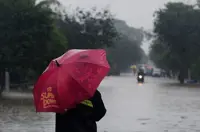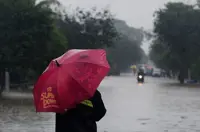
JOHOR’s capital needs a comprehensive flood-mitigation plan that factors in rainfall, tides, rivers, drains and upstream land to address recurring flash floods.
Asian Environmental Solutions director Joel Lawrence Jayasunthar identified areas around Jalan Wong Ah Fook, Jalan Ayer Molek and Hospital Sultanah Aminah (HSA) as Johor Baru’s flash flood hotspots.
He said that when the tide was high, blocked drainage outfalls forced water back into the streets.
“A blueprint has to deal with that head on, whether through tidal control gates, pump houses or temporary storage such as retention ponds,” Joel told StarMetro.
He said a proper early warning system was needed for people to move their vehicles and belongings, noting this was now highly realistic with recent artificial intelligence progress.
Joel, who is also Green Earth Society Johor advisor, said the drainage network in downtown Johor Baru struggled to cope with heavy rainfall when the city was hit by a flash flood in August 2022.
“A similar episode occurred when several city areas faced flash floods following heavy rain from 1pm to 5pm last Sept 30.”
Joel said Johor Baru’s low-lying location between the hills and the Straits of Johor made it vulnerable today, even though it was ideal for trade when the city was founded in 1855.
“We need to act. Singapore shares our climate risks but successfully prevents flooding through long-term planning and investment.”
He said that while coastal cities could not completely stop floods due to climate change, Johor government should focus on reducing floods frequency and severity while experts planned long-term solutions.
National University of Singapore South-East Asian Studies Department lecturer Dr Serina Rahman pointed out that Johor Baru was situated along the Straits of Johor and did not face the open sea.
She said that because the Johor Causeway blocks the waterway and restricts water flow, the effects of sea-level rise would be felt even more intensely.
“Johor Baru city will not escape flash floods, so work needs to be done to plan for and mitigate this before things get worse globally.
She said rampant development would have consequences and it would all depend on how the city was planned and whether there would be development in dedicated water-retention areas.
Serina said Johor should learn from the massive 2021 floods in Shah Alam, Selangor, to ensure that Johor Baru’s development took this into account.
“The authorities could prevent developments on water-retention areas. These areas should be left alone to retain water,” she said.
Serina suggested that Johor government copy global revitalisation projects by softening canal edges to prevent flooding.
“This is a form of nature-based solution, reinstating natural areas along waterways so that the impact of flooding is reduced,” she elaborated.
She further said that Johor should make it mandatory for property developers around Johor Baru to present flood-minimisation plans for both active construction and post-completion.
“Developers must follow these rules to get licences and building approvals, and officials must check their work to ensure the developers don’t cut corners,” she added.
Johor housing and local government committee chairman Datuk Mohd Jafni Md Shukor had said Johor Baru’s RM100mil flood mitigation system failed during the Sept 30 flash floods because extreme weather completely overwhelmed the city’s drains.