



Residents of Tropicana and the wider Kota Damansara community have every reason to be concerned about a proposed high-density development that could fundamentally change the traffic, safety and liveability of the area.
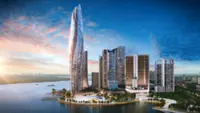
The proposal involves the relocation of the existing Seri Selangor Golf Club clubhouse, followed by the construction of three residential towers and an affordable housing tower, totalling approximately 2,500 units.
This could potentially introduce more than 4,000 additional cars into an already heavily used road network.
This is not a minor development. It is a major intensification of an established community, with consequences that will extend well beyond the development site itself — affecting residents in Tropicana, Casa Indah and surrounding neighbourhoods, as well as the wider Kota Damansara area.
At the Petaling Jaya City Council (MBPJ) briefing on Sept 17, residents were presented with proposed changes to traffic flows and additional road ramps intended to improve traffic movement.
But residents have a simple question: What happens when the traffic is not solved, but merely moved from one junction to another?
Adding ramps and changing traffic flows may improve movement at one location, but traffic does not disappear.
It moves through the surrounding network — onto roads used every day by residents, schoolchildren, pedestrians, cyclists and families.
That raises a much more important issue: safety.
We should not wait until roads become dangerously congested, junctions become accident- prone or emergency vehicles struggle to get through before acknowledging that the surrounding infrastructure was never designed for this scale of additional traffic.
More than 1,200 objections have reportedly been submitted.
This should send a clear message that residents were not objecting simply because they did not want development in their backyard.
They are asking whether the development is appropriate for the capacity and character of the existing community.
If this is being presented as transit-oriented development (TOD), then TOD must be assessed properly — not because an MRT station is nearby.
The assessment must consider the entire road network, traffic generated by the development, pedestrian and cycling safety, emergency access, environmental impact and the cumulative effect on existing neighbourhoods.
Kota Damansara and Tropicana are established communities. Their residents should not be expected to bear the consequences of poor planning simply because a development has been approved in principle.
There is also a bigger question about what kind of community we want to build.
As Kota Damansara matures, planning should be about more than maximising the number of residential units.
We should be asking whether we have sufficient community facilities, green and recreational spaces, family amenities and public facilities to support the people who already live here – and the thousands more who may arrive.
Development is inevitable. Poor planning is not.
MBPJ should therefore undertake a rigorous, holistic assessment of the proposal before allowing this scale of development to proceed.
Traffic mitigation should demonstrate that congestion and safety risks are genuinely addressed across the wider network – not simply shifted to neighbouring communities.
Residents are not asking for development to stop. They are asking for responsible development that does not compromise safety, infrastructure and the liveability of the communities that surround it.
The question is not whether we can physically fit another 2,500 units into the area.
The question is whether our roads, infrastructure and communities can safely absorb them.
That is a question that deserves a clear answer before the first brick is laid.
Derick Soo
Casa Indah Tropicana


