ABOUT a fifth of Selangor’s industrial wastewater is now being reused rather than dumped into rivers, following the rollout of the state’s Zero Discharge Policy (ZDP).
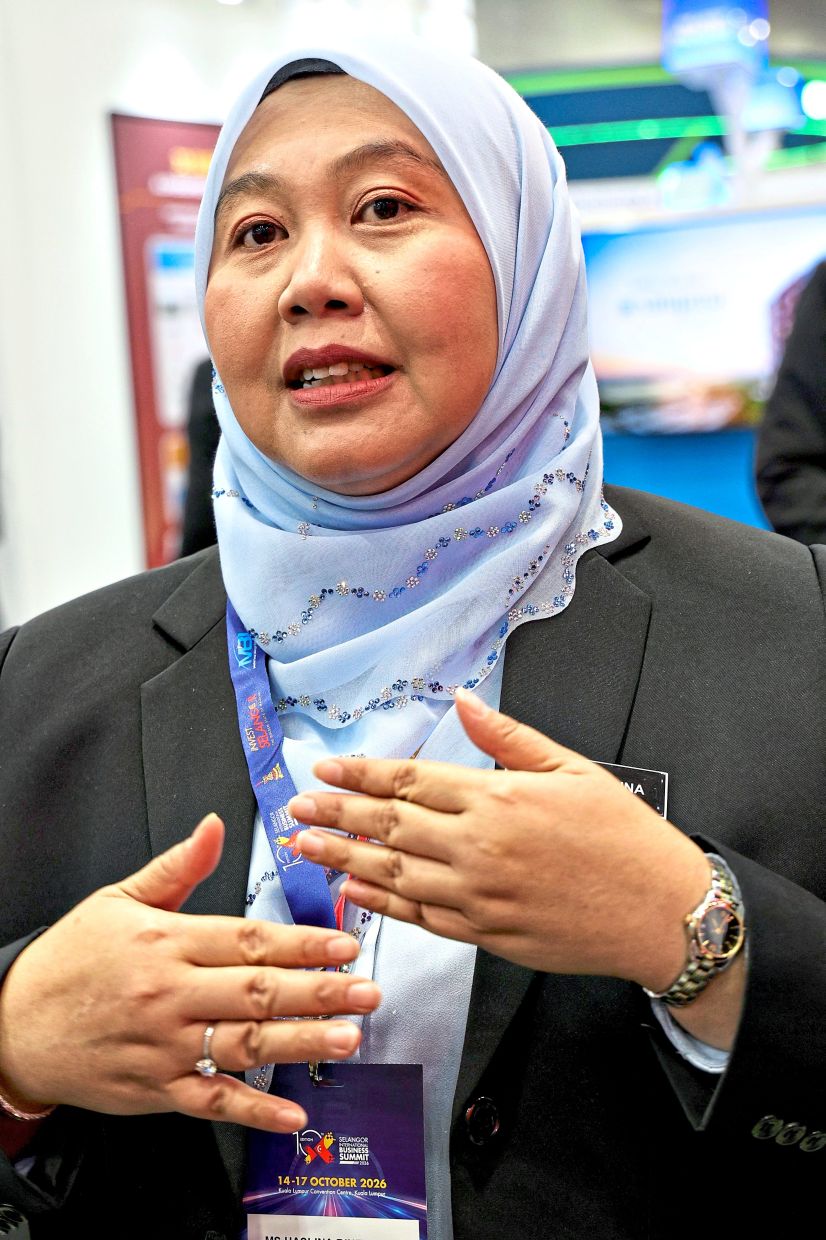
Selangor Water Management Authority (LUAS) chief assistant director Haslina Amer said the water was being recycled across various sectors.
“It depends on the type of premises.
“On average across industries, we can say it is about 20%,” she told StarMetro after a ZDP information-sharing session at the Selangor Industrial Park Expo 2026 which was held at a convention centre in Kuala Lumpur.
Selangor Mentri Besar Datuk Seri Amirudin Shari launched the ZDP in August 2024 to reduce the volume of effluent and pollution entering Selangor’s waterways, by encouraging premises to reuse and recycle wastewater.
“When you discharge more, you are adding to the pollution load in the river,” Haslina said during the event’s session.
“If less is discharged, we can reduce the pollution load and better control water quality.”
Under the policy, premises must obtain the relevant licence or licences.
The two main licences are a return-water licence, which regulates the amount of wastewater discharged.
While the waste or pollutant discharge licence regulates the pollutants it contains.
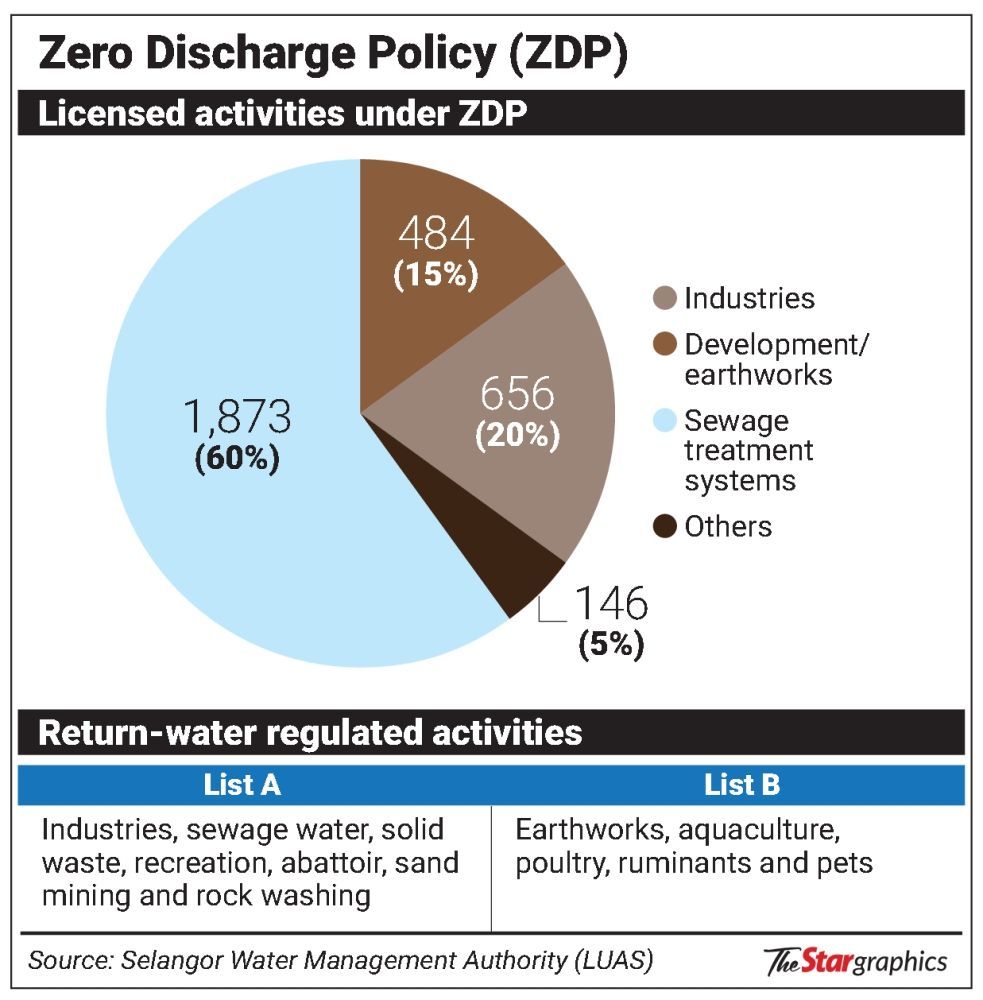
For the return-water licence (see chart), industries, sewage, water supply, solid waste and several other sectors are charged a fee based on how much water they discharge.
Earthworks, aquaculture, poultry and livestock farming are charged differently, based on factors such as land area or number of animals.
Haslina said almost 7,000 licences had been issued under the policy so far, although implementation was still at an early stage.
“It has only been about two years, so there is still a long road ahead.”
She said LUAS was carrying out door-to-door visits at industrial areas throughout Selangor to identify premises that required ZDP licences.
About 30% to 40% of the areas targeted under the exercise had been covered so far.
“There are a lot of industries, so we are doing it phase by phase,” she said.
She added that the exercise could take another five to six years to complete because of the large number of industrial premises across nine districts in Selangor.
Although ZDP is already in force, Haslina said LUAS was giving businesses time to understand the requirements as the policy was still relatively new.
“We guide them on how to apply for the licence and monitor their effluents,” she said.
Premises identified during the door-to-door exercise were issued notices and given 14 days to respond and apply for the relevant licence.
Haslina said LUAS had also begun checking whether existing licence holders were complying with conditions imposed under ZDP.
She noted that common issues included failure to either comply with licence conditions or submit required water quality reports.
In August, it was reported that there had been no water treatment plant (WTP) shutdowns in Selangor due to industrial pollution throughout 2025 and up to July 30 this year.
State public health and environment committee chairman Jamaliah Jamaluddin said this was partly attributed to the ZDP.
She said the positive outcome was also supported by integrated enforcement actions, 24-hour strategic monitoring of river basins and the implementation of the Raw Water Guarantee Scheme (SJAM).
The last major unscheduled water supply disruption across seven regions in the Klang Valley occurred on July 23, 2024.
This followed the shutdown of four water treatment plants due to incidents of odour pollution in Sungai Kundang and Sungai Sembah in Selangor.
The pollution was traced back to a chemical leak of poly(methacrylic acid) into Sungai Kuang, a tributary of the Sungai Selangor River Basin.
The factory owner was later convicted under the Environmental Quality Act 1974, sentenced to three months in jail and fined RM240,000.