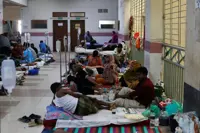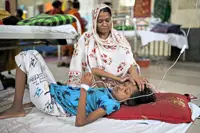
DENGUE cases in the Ampang Jaya municipality have more than doubled this year.
It recorded 1,766 cases up to Sept 14 compared to 834 recorded last year during the same period, an increase of 932 cases or 52.8%.
Ampang Jaya Municipal Council (MPAJ) deputy president Hasrolnizam Shaari said the council would continue to strengthen prevention efforts through the elimination of breeding sites, enforcement and cooperation with various agencies and the community.
Densely populated low-cost housing areas remained among the biggest challenges in preventing Aedes breeding, he said.
The density of residents, limited space and difficulty in obtaining cooperation from all occupants made prevention efforts more challenging, he added.
“In shoplot areas, inspections cover residential units on the upper floors and business premises on the ground floor, including rear areas that could potentially become Aedes breeding grounds,” he said in a written statement to StarMetro.
Despite the rise in cases, Hasrolnizam said its community-based prevention approach has earned recognition, with MPAJ securing first place in the “Cegah Wabak Denggi 2026” campaign organised by Housing and Local Government Ministry (KPKT).
He said one of the key initiatives was the formation of Communication for Behavioural Impact (Combi) squads, with 73 currently registered across the MPAJ area.
“The target is to establish 150 Combi squads with the involvement of community leaders, residents’ associations and councillors,” he said.
Hasrolnizam said the AU5C area in Taman Datuk Keramat for example, which had experienced a dengue outbreak, was divided into four sections for four consecutive weeks of gotong-royong activities.
The programme included public area clean-ups, action against illegal dumping, removal of Aedes breeding sites at residential and public areas, and health education.
Residents also took part in activities such as a mosquito larvae search competition, “Trash to Cash” recycling campaign and the “Kopi & Combi” initiative, which encouraged residents to bring at least 5kg of recyclable waste collected during home clean-ups.
MPAJ also carried out larviciding and fogging, while Combi members received practical training to identify and eliminate potential breeding sites.
As of Sept 14, MPAJ had inspected 7,327 premises, including construction areas, for breeding sites.
A total of 634 compounds were issued under Section 74 of the Local Government Act 1976, with residential premises accounting for the highest number at 299, followed by strata properties at 231.
Hasrolnizam said MPAJ also carried out integrated enforcement with the Health Ministry against premises and construction sites.
Under Section 74, those found guilty of allowing part of a building to become dirty and a breeding ground for Aedes may face a maximum fine of RM1,000.