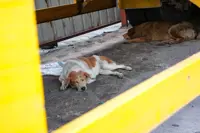
DESPITE protections provided under Animal Welfare Act (AWA) 2015, cruelty against animals is rarely prosecuted.
AWA 2015 or Act 772, which came into force in July 2017, legislates responsible pet ownership, establishes an Animal Welfare Board and
sets standards for the care, handling, transport and use of animals.
Under the Act, offences such as animal abuse, abandonment, failure to provide adequate food, water or shelter and using animals for fighting are punishable by fines ranging from RM20,000 to RM100,000, jailed up to three years, or both.
However, enforcement of the law is low, says Execute AWA founder Sue Ann Kong.
The organisation is a national humanity movement established last year to strengthen animal welfare through greater public awareness, stronger enforcement of existing laws and long-term policy reform.
Kong said the prosecution rate stood at a mere 0.22% despite the Veterinary Services Department (DVS) receiving over 19,000 animal welfare complaints since 2021.
The initiative, she said, was aimed to ensure AWA 2015 was fully implemented and offenders are held accountable.
“We are calling on the authorities to fully implement the law by investigating cases of abuse, prosecuting offenders and ensuring those convicted face penalties provided under existing legislation.”
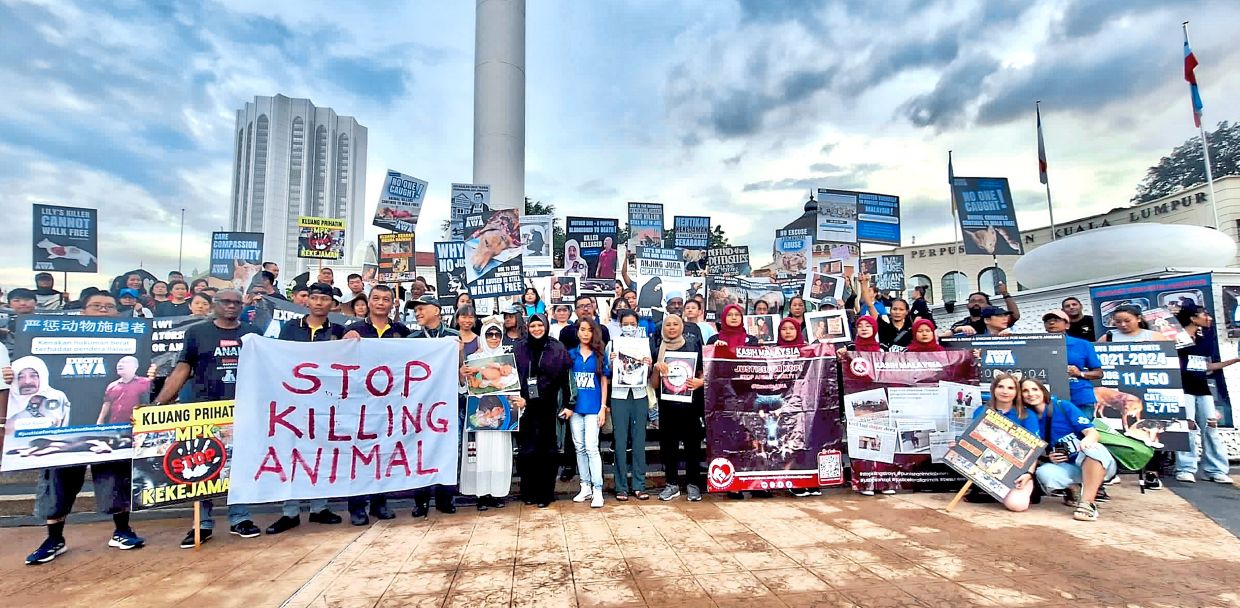
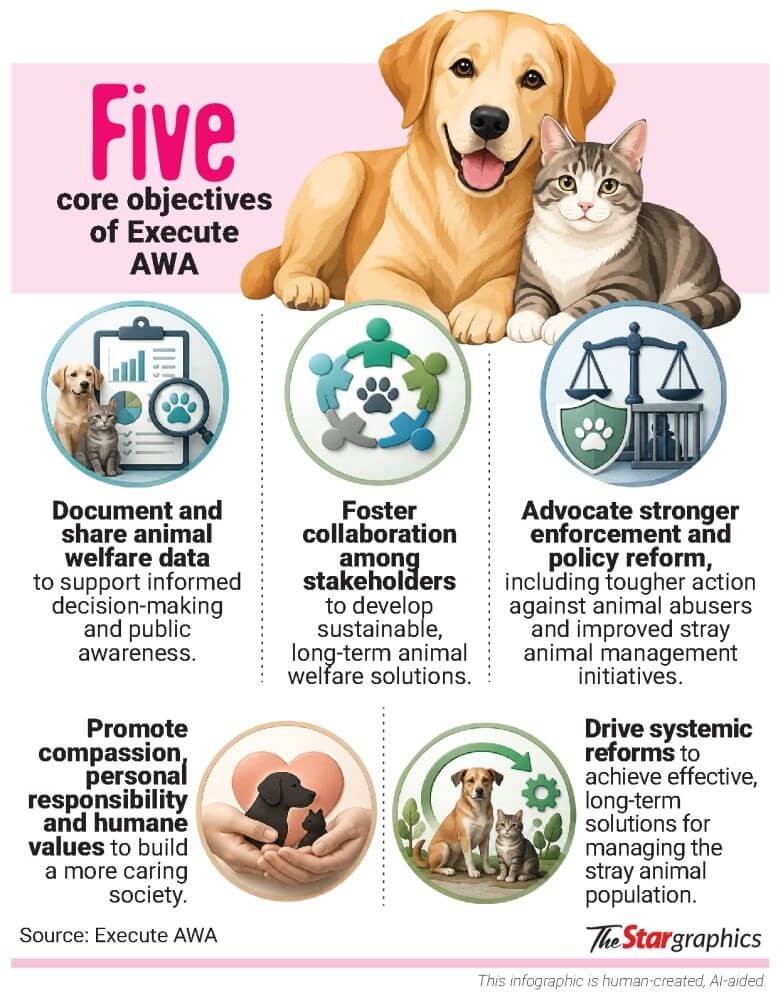
“We launched #ProjekTogetherBoleh to build a collaborative and holistic ecosystem that unites animal welfare organisations, veterinarians, policymakers, enforcement agencies and the public to develop sustainable solutions for animal protection,” added Kong.
Their proposed ecosystem, she said, was backed by data, science and proven effectiveness on a global scale.
“The project was rolled out in November 2025 in Negri Sembilan, with support from Rembau District Council (MDR) and NS Happy Paws, a non-governmental organisation (NGO)
“The project expanded to Seremban in June thanks to support from corporate
partner Millennia Village and animal welfare NGO FurryKids SafeHaven.”
Among reforms championed by the movement are ending the killing of stray animals, implementing humane trap-neuter-vaccinate-return-manage (TNVRM) programmes and encouraging pet adoption over commercial breeding and purchasing. (See graphic)
“Our supporters believe that fostering empathy, accountability and respect for life contributes to healthier communities and reflects broader societal values such as a civilised, diverse and progressive country,” Kong added.
“As public awareness grows, it will foster a more collaborative ecosystem, simultaneously building confidence and stronger cooperation between government agencies, civil society organisations and local communities to ensure AWA 2015 is consistently enforced.
“With such cooperation, meaningful reforms will be introduced to improve animal welfare standards across the country.”

Kong said the management of the stray population needs strategy and structure at a macro level.
“Culling stray animals will never work because it is like only treating the symptoms of the problem.
“Although we speak for all animals, the issue involving stray dogs needs immediate attention.”
No to culling
Execute AWA head of regulations and enforcement Punita Nook Naidu said in 2024, the country recorded about 11 million stray dogs.
With no reliable official data on the current stray population, she believes the number of strays has increased.
“Our calculations show that to eliminate 11 million stray dogs through culling alone, 200 dogs would have to be killed every day for the next 151 years.
“Not only is this inhumane and ineffective, it is also a waste of resources.”
Punita said culling stray animals could create further problems due to the “vacuum effect”.
“When stray animals are removed from an area but food, shelter and other resources remain, other stray animals move in, causing stray numbers to rebound over time.”
Execute AWA head of diversity Noraseela Khalid said its stray population control model showed that achieving a 70% sterilisation rate could reduce the stray population in an area by up to 94%.
“This is an encouraging decline that clearly demonstrates TNVRM, when implemented consistently and collaboratively with all relevant stakeholders, is a sustainable, humane and effective solution.
“We have the data to show the government the level of funding required to tackle the issue,” she said, adding that the matter should be approached objectively rather than emotionally.
DVS responds
In a statement to StarMetro, DVS stated that it received 19,303 animal welfare complaints nationwide from 2021 to 2025, out of which 6,512 fell under AWA 2015.
The complaints were lodged through various channels including the MyAnimalWelfare system and official departmental e-mail.
However, DVS clarified that many complaints were repeated reports or involved matters outside its jurisdiction.
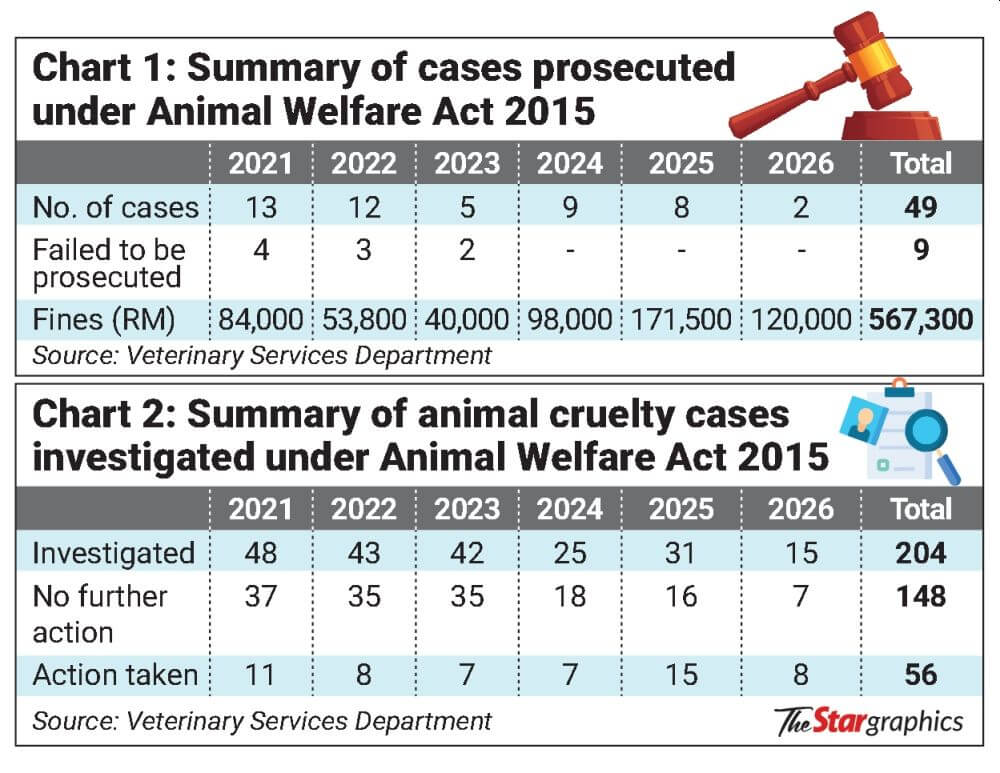
On prosecutions, DVS reported that 49 cases involving animal cruelty and welfare offences were brought to court from 2021 to 2026. (See Chart 1)
However, of this number, nine cases failed to be prosecuted between 2021 and 2023.
Successful prosecution and fines imposed by the courts totalled RM567,300.
DVS said prosecution would only proceed when investigations found elements of an offence under AWA 2015 and sufficient evidence to meet the standard of proof required in court.
The department also stated that many cruelty cases were resolved without prosecution.
“A complaint could be considered resolved through several outcomes, including immediate corrective action by the owner, issuance of an improvement notice under the Act, referral to another agency, a finding that no offence had occurred, insufficient evidence for further enforcement or successful completion of prosecution proceedings.
“Between 2021 and 2026, DVS investigated 204 animal cruelty and welfare cases. (See Chart 2) “Of these, 148 were classified as ‘No Further Action’ (NFA),” said DVS.
It added that NFA cases were marked as such due to reasons such as inability to identify suspects, absence of witnesses, unclear video recordings, insufficient evidence for prosecution, or inconclusive post-mortem reports that did not indicate a criminal element.
DVS also outlined its standard operating procedure for investigations, which starts with an initial assessment to determine jurisdiction, urgency and the need for immediate action.
“Investigations may be triggered by public complaints, reports from enforcement agencies, officer patrols, intelligence information or credible sources including social media.
“Investigating officers then identify the location, complainant and witnesses, conduct site inspections and gather evidence such as veterinary reports, witness statements, photographs, videos, footage, biological samples and treatment records.
“If evidence is sufficient, investigation papers are referred to the deputy public prosecutor for instructions on whether to prosecute, continue investigations or classify the case as NFA.”
Responding to claims that many cases were dealt with via warnings or advice, DVS said public perception of cruelty might differ from the definition under the law.
It said some practices that appeared cruel to the public might in fact be natural or appropriate management practices for certain animal species.
“For minor non-compliance cases arising from lack of knowledge and are capable of immediate correction, advisory services or improvement notices may be more appropriate to restore animal welfare quickly and improve legal compliance.
“Conversely, for cases involving cruelty, serious neglect or intentional abuse, DVS will take firm enforcement action, including prosecution, subject to sufficient evidence and legal requirements,” it added.
DVS urged the public to report suspected cruelty, neglect or animal welfare issues promptly through the MyAnimalWelfare online system at awa.dvs.gov.my or through official departmental channels.
The department also advised against submitting repeated complaints without new information or evidence, warning that duplicate reports could affect the efficiency of complaint management and divert officers from other cases requiring attention.