The absence of electricity previously forced some Orang Asli children in Kampung Sat, Sungkai in Perak, to put aside their books after sunset, leaving little time to revise lessons and complete school assignments.
But those days are gradually changing with GoRental Global’s #PowerToEmpower initiative, which provides solar power systems and portable batteries that store energy generated during the day for use after sunset.
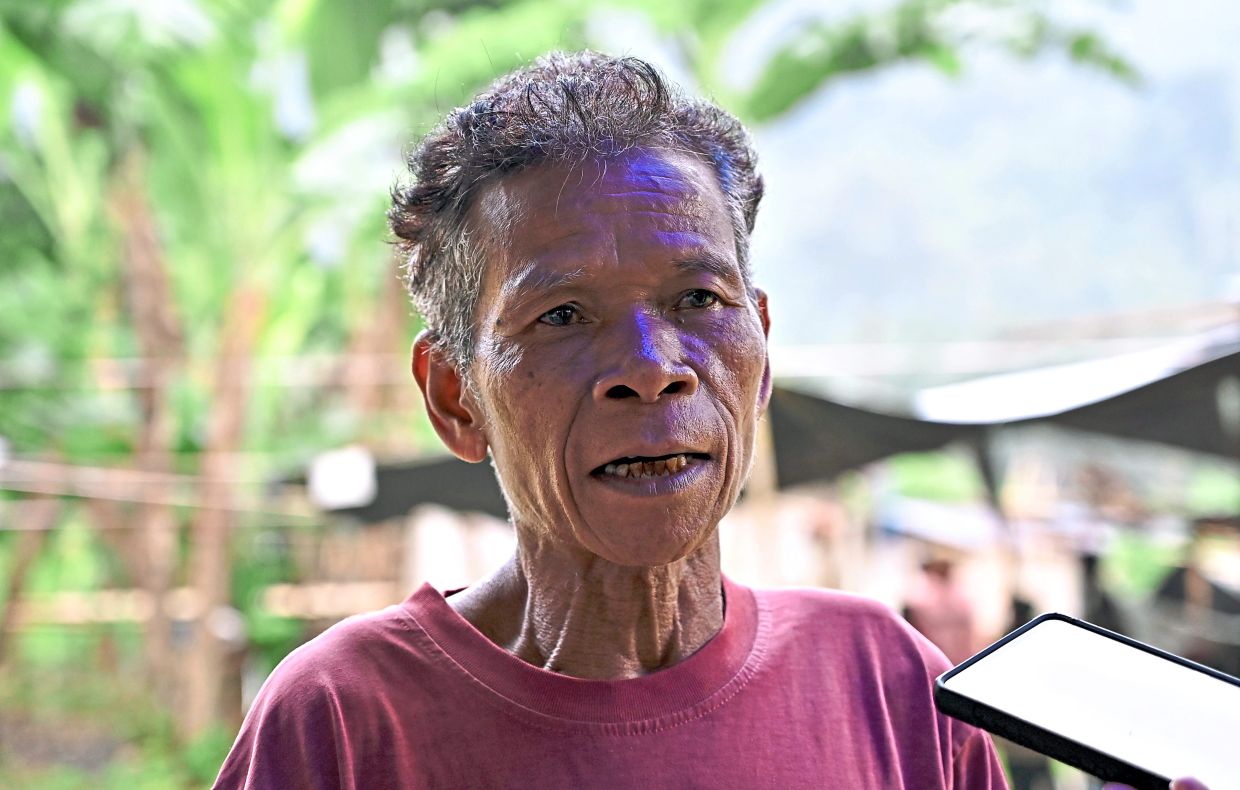
The village is home to about 350 members of the Semai Orang Asli community, with electricity currently available in around 22 concrete houses, said Kampung Orang Asli Sat Tok Batin (village chief) Yok Raman Yok Ankeh.
He said for families living in traditional houses made of wood and bamboo, having reliable power supply was particularly important for studying and carrying out activities after sunset.
“Getting electricity connected to these traditional houses is not easy.
“With this kind of help, at least families without electricity can use it for their daily needs, especially children who need to do their schoolwork at night,” he said when met by Bernama.
Yok Raman said some residents had bought small solar systems to have lighting at night, but the equipment did not last long and was easily damaged.
He said the solar system from GoRental Global was especially helpful to families still living in traditional houses, where getting conventional electricity supply was difficult.
Another recipient, Bah Kosong Ahmad said the assistance had made a big difference to his family, particularly his children who could now study at night.
“At night, my child can use the light to do schoolwork, and we can use it when cooking.
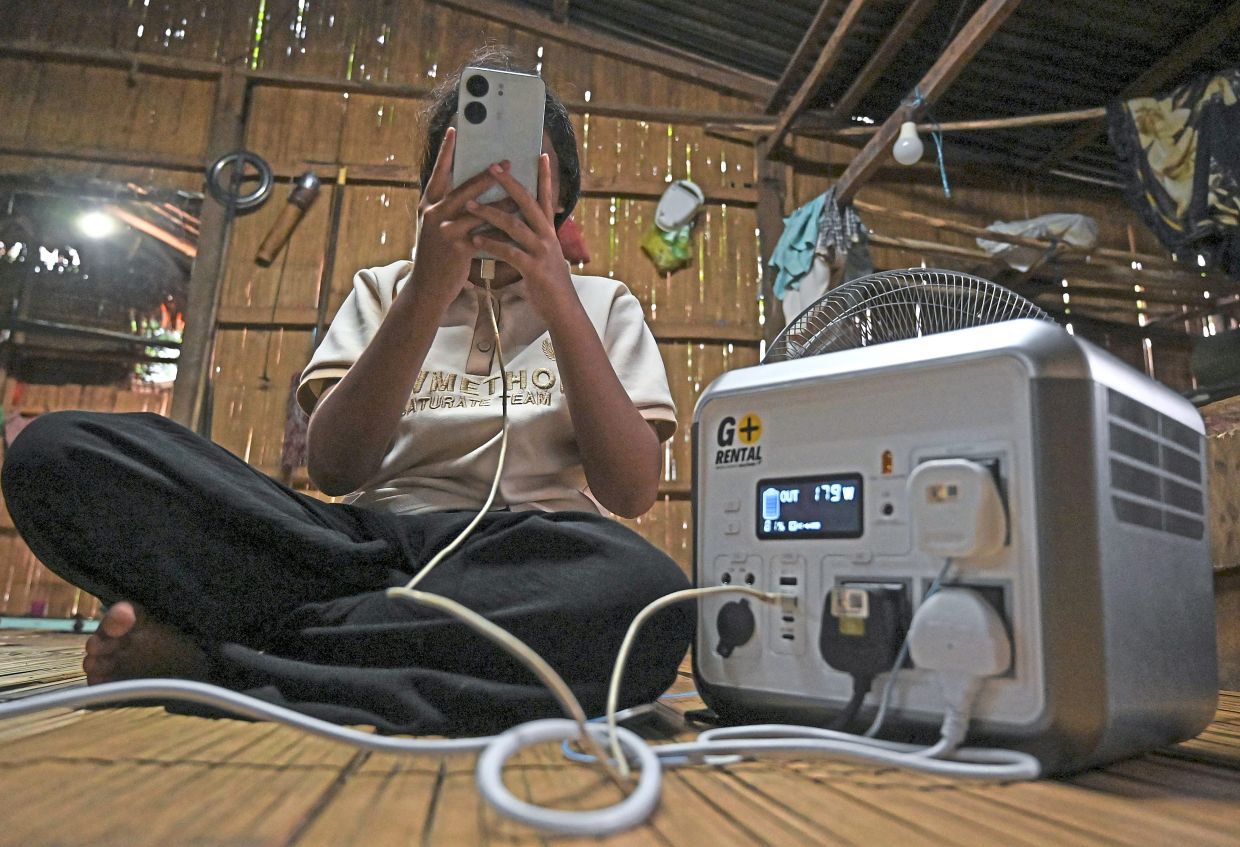
“We can also charge our phones and other devices through USB.
“It’s really helpful because before this, we didn’t have electricity in the house,” he said.
Through the initiative, 10 portable battery energy storage systems (BESS) were installed to support families in the village, providing the community with a much-needed source of power where access to electricity remains limited.
According to GoRental Global founder and managing director Colin Peh, the system harnesses solar energy during the day and stores it in batteries for use after sunset, mainly for lighting, charging mobile devices and meeting other basic needs.
“Sometimes we take electricity for granted.
“But when you don’t have it, even simple things like switching on the lights, charging your phone or letting the children study at night can be a challenge.
“That’s what we are trying to help through this initiative.
“For us, what matters most is making sure these families have something safer and more reliable, especially after sunset.
“It’s not just about giving them the equipment.
“We want them to have power they can use every day, and hopefully it will make things a little easier for them.”
Peh said the company hoped to bring the model to about 200 families within two years, particularly those living in rural areas where access to the electricity grid remains limited, including Sarawak.
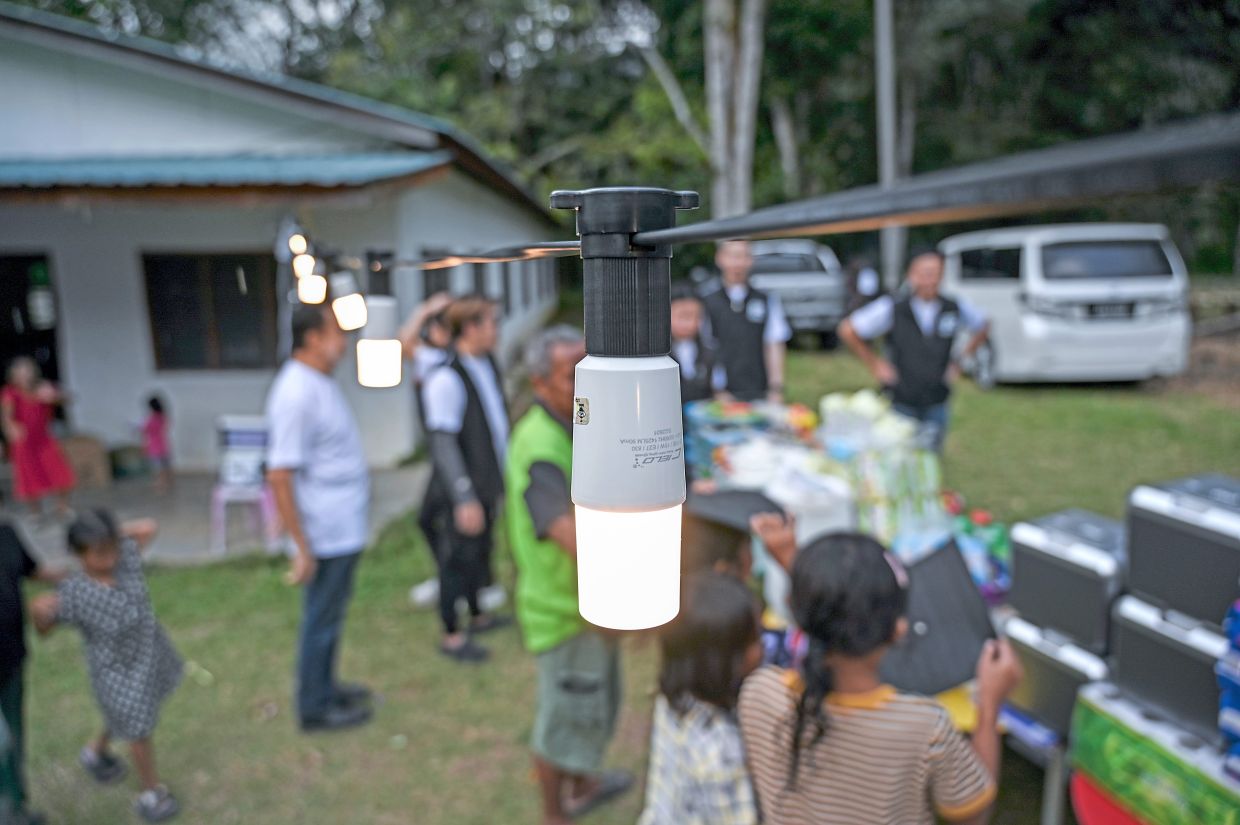
He said the system could last for up to about 6,000 charging cycles, potentially giving it a lifespan of almost 12 years, while also reducing fuel dependency among communities who rely on generators for power.
Peh said the initiative in Kampung Sat was GoRental Global’s first project in Malaysia and part of an effort to develop a community energy model that could be used in locations with limited access to conventional electricity grids.
The system is projected to generate about 43,800 kilowatt-hours of renewable energy over a 10-year period, potentially avoiding around 120 tonnes of carbon emissions and reducing reliance on diesel and kerosene.
He said the project was developed with community partner Kenneth Toon of New Life Restoration Centre and his wife, Ann Toon, who helped connect the company with residents and identify the community’s needs before the project was implemented.
“This could never be about simply arriving with equipment and assuming we know what a community needs,” said Kenneth.
“The starting point was listening. For these families, having dependable power after dark can change their everyday life, and this project gives us a foundation to build on together.”
The initiative followed an earlier project in Chiang’s Mai Huay Nam Rin Village in Thailand, involving 31 battery systems and 60 solar panels.