WHEN times get tough, Malaysians tend to pull together.
Whether it is responding to a disaster, helping accident victims or supporting one another through the Covid-19 pandemic, their instinct to lend a helping hand has remained strong.
That spirit of solidarity was particularly evident during the pandemic.
From the White Flag movement in 2021 which encouraged people in need to seek help, to the #KitaJagaKita movement – we have never failed to show kindness and generosity.
For some Malaysians, however, volunteering is far more than an occasional act of compassion.
It is a commitment to giving back to society, regardless of differences.
StarMetro spoke to three volunteers whose passion for helping others is shared by a community committed to making a difference.
Supporting amputees
Family has been a strong source of inspiration for Dr Ahmad Munawwar Helmi Salim, 42, whose volunteer work has ranged from setting up the Malaysian Amputee Football Association (Mafa) to running mobile clinics.
Dr Ahmad Munawwar, a sports medicine specialist at the National Sports Institute, said his commitment to give back began long before his current role, dating back to his houseman years.
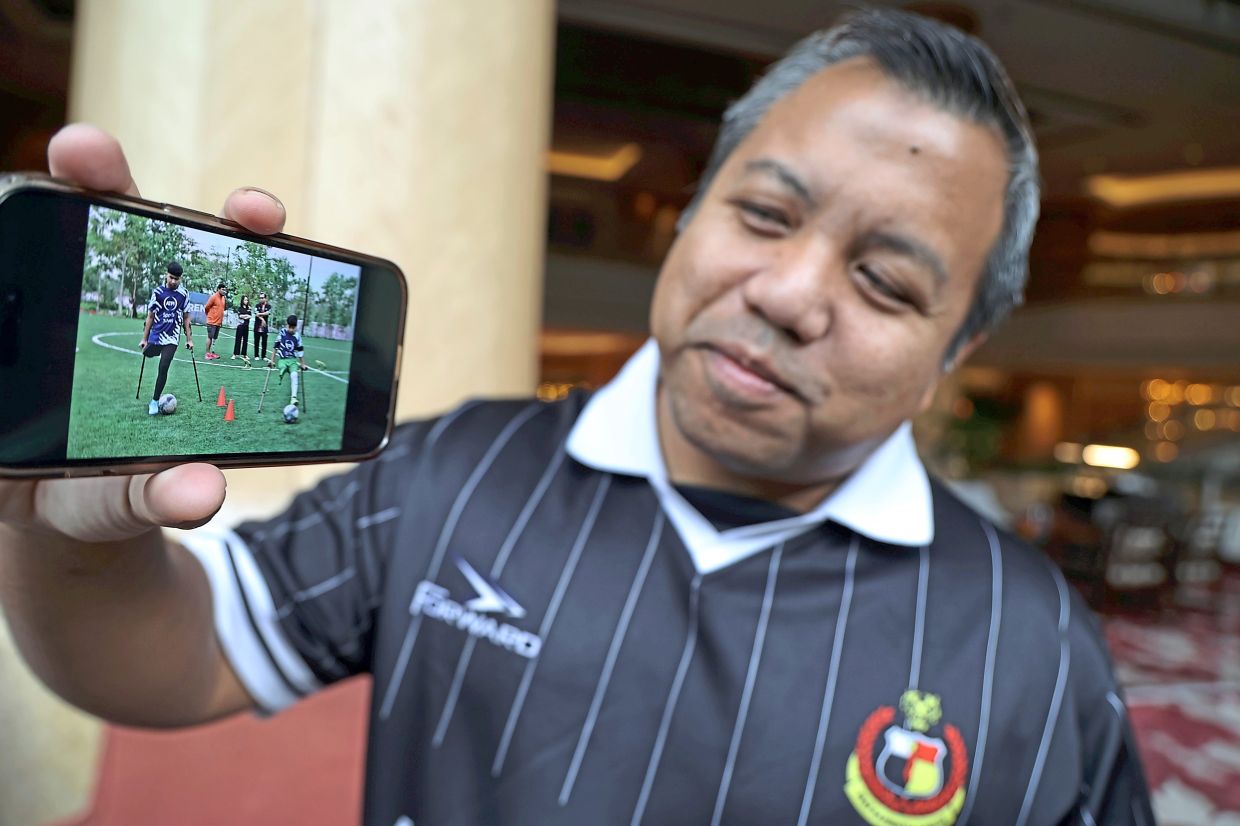
Just before the Covid-19 pandemic, he founded Projek Tongkat in 2019 – a project giving amputees the opportunity to play football.
“My father was an administrative and diplomatic officer. My mother was a finance lecturer.
“Growing up, my family fed needy folk and gave them pocket money during Ramadan,” he said.
He has been organising football matches for children since he was in his 20s.
He also gathered funds and used the matches as a platform for dakwah (outreach).
In 2016, Dr Ahmad Munawwar met Pan-Disability Football Club founder Sunny Shalesh, better known as Coach Sunny, in Subang Jaya and they started talking.
By 2017, amputees were also included in the opening match of the football games organised.
In 2019, a friendly match was planned between local amputees and amputees from Gaza, Palestine, who had lost limbs in the war.
“However, the project never took off due to the war, and the Covid-19 pandemic was also a concern,” said Dr Ahmad Munawwar.
“In Malaysia, most amputees are accident victims.
“We try to lift their spirits by encouraging them to stay active through sports.
“We also connect amputee footballers with doctors and other medical personnel, so they can inspire hope in other amputee patients they treat,” he said.
He hopes more amputees will join Projek Tongkat, which has more than 100 footballers nationwide.
“I help organise matches for them and also provide medical assistance,” said Dr Ahmad Munawwar, who has established amputee football teams in Johor, Perak and Sabah.
Projek Tongkat, he said, was also an awareness initiative for those who had lost a leg due to illness or accident, to show them that there was still hope.
“Everyone has the right to live and play.
“We want them to know that losing a leg is not the end for them.
“Some struggle with suicidal thoughts, so we want them to have social support through their peers.
“We hope more people will connect these amputees with us, so that they can meet others like them, build friendships and continue to enjoy life,” he added.
Besides Projek Tongkat, Dr Ahmad Munawwar is involved in mobile clinics with his peers where medical care is provided to the underprivileged as well as refugee communities.
“During the height of the Covid-19 pandemic, the authorities approached us to reach out and encourage refugee communities to get vaccinated,” he said.
He hopes such efforts will inspire more people to embrace kindness, look out for one another and continue helping those in their communities.
“If all of us play a small role, we can build a better Malaysia together,” he said.
Feeding those in need
Petaling Jaya resident Lim Chin Tah, 72, has maintained close ties with his friends in Penang, and those friendships have become a strong source of support for his charitable work.
Together, they help him distribute groceries to about 100 shelter homes, mostly in the Klang Valley.
A former student of Georgetown Secondary School and Penang Free School, Lim would later pursue a bachelor’s degree at Universiti Sains Malaysia.
“Some schoolmates built successful careers and now support my charitable work.
“It is all based on trust.
“I pay for my own expenses when I travel, but the groceries for the shelters, which can cost up to RM30,000 a month, are fully funded by my friends,” said Lim, who previously worked in the information technology sector at a plantation company.
He was first moved to distribute food aid during the Covid-19 pandemic.
In November 2020, he received a WhatsApp message regarding an old folks home in SS1, Petaling Jaya, which was in need of food.
“I contacted my friends in Penang and within days, managed to raise several thousand ringgit.
“With those funds, I reached out to the first shelter. Today, that number has grown to 100.
“Most of these homes accommodate between 10 and 30 people, including those with disabilities, children and senior citizens.
“A large number cater to people with disabilities, who may be mentally or physically challenged.
“The homes rely on donations to operate, and often struggle to pay utility bills such as water and electricity.
“They also have to pay commercial rates, which can be a burden,” he added.
Lim also raises funds to help settle outstanding utility bills when the homes’ water or electricity supply is cut off.
Besides dry food items, he donates chicken and meat as well to homes near his residence in Petaling Jaya.
He said that while there was a strong movement to donate food during the pandemic, the drive had since slowed despite the existing high demand for help.
“I started raising funds among trusted friends and schoolmates. Through word of mouth, more people came forward to assist me financially.
“However, I do not have a succession plan. If something happens to me, this effort comes to an end.
“I hope more people will reach out to their communities and look out for those living nearby. I want others to emulate what I do, if possible.
“No doubt the need is there, but it can be a lot of hard work.
“I understand there are many scammers out there, but work with good people and support one another.
“We can all make a difference in our own small way,” he said.
Lim said 70% of his charitable works was concentrated in Selangor and Kuala Lumpur.
“If the shelter is near my house, I will go there personally.
“Otherwise, I will order the groceries and have them delivered to their doorstep,” he said.
He makes deliveries to the shelters four to five times a week, rotating between them.
“I am a widower and a one-man show, so I channel my time into charity work.
“My son, who was recently retrenched after working in compliance management, is also supportive of what I do.
“My house sometimes looks like a huge pantry as I keep some groceries at home for delivery.”
For National Day, Lim wishes for unity among Malaysians.
“May our nation continue to grow in peace, unity, compassion and kindness, and may everyone in welfare homes have the opportunity to live a life filled with hope and dignity,” he said.
Doctors who give back
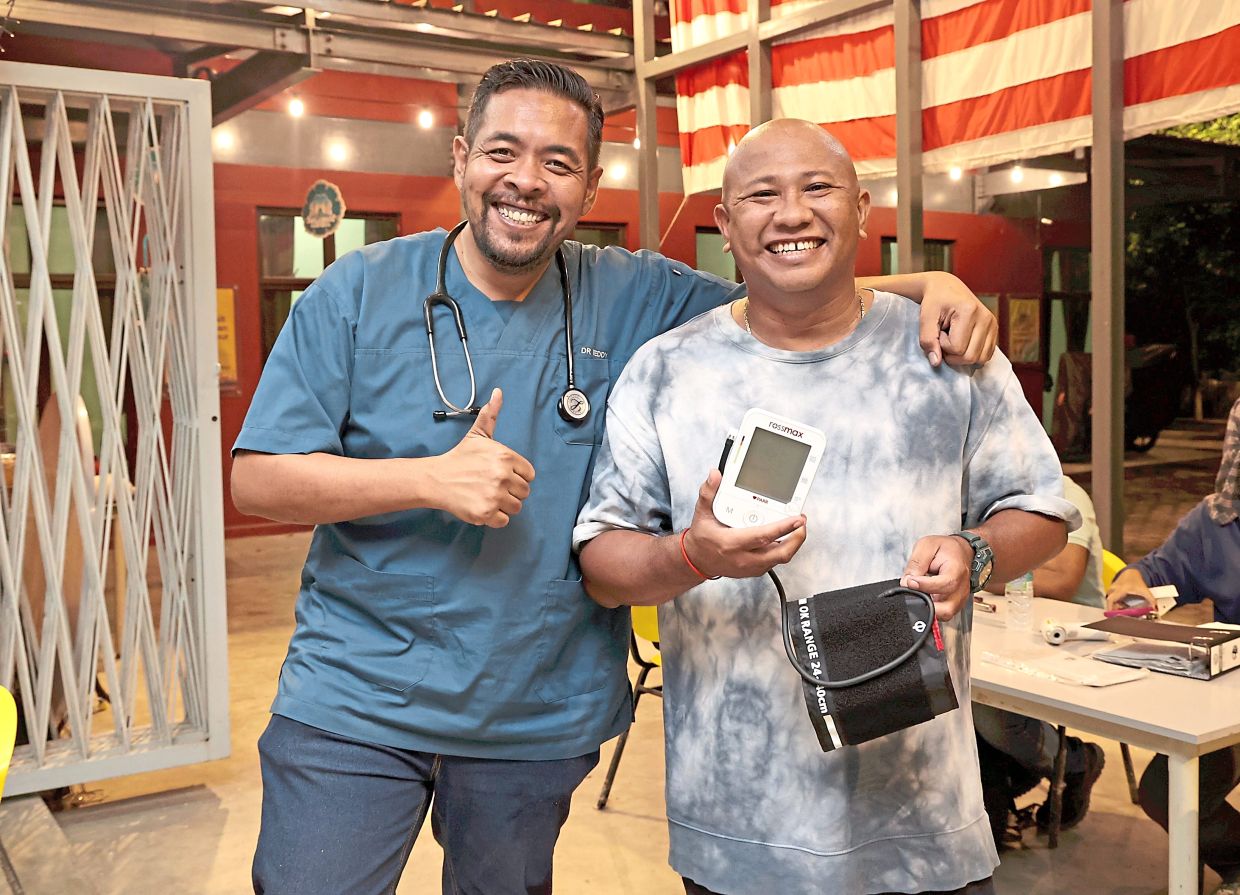
“Teddy Bear Doctor” Dr Madhusudhan Shanmugam, 44, has been organising mobile clinics and providing free medical check-ups to the poor for 11 years.
His efforts have resulted in several accolades, including the Star Golden Hearts Award in 2015 and 48th Commonwealth Point of Light from Queen Elizabeth II.
The “Teddy Bear Doctor” moniker was inspired by his practice of giving donated soft toys to children from urban poor communities when they visited his mobile clinics.
Dr Madhusudhan credits fellow doctors Dr Vinoshena Ng Amirthalingam and Dr Kaveena Ng Amirthalingam for helping make the Dr Teddy Mobile Clinic initiative a success.
After years of volunteering, he believes that poverty may never be eradicated, but it should not stop people from helping others in need.
He said instilling a spirit of giving in children from a young age could help foster a more compassionate society.
“My father provided free treatment at Klinik Krishna to people who could not afford medical care.
“He was my biggest inspiration,” said Dr Madhusudhan, who is now based at the same clinic in Kampung Jawa, Klang.
He said strict health measures implemented during the Covid-19 pandemic had changed the way he operated.
“Now, we go to shelters such as the Anjung Kembara homeless transit centre in Jalan Pahang, Kuala Lumpur,” he said.
Patients requiring prolonged treatment are referred to the Klinik Kesihatan.
“We only provide medication for about a week, such as for fungal skin infections or high blood pressure.
“Those whom we suspected of having cancer would be referred for further treatment,” said Dr Madhusudhan.
One case he remembers well was of an elderly man who left his family because he did not want to burden them.
“This particular uncle educated his children and even sent them abroad for higher education.
“However, in his old age, he became incontinent and often wet the bed, causing an unpleasant smell in the house.
“His problem could have been addressed simply by wearing an adult diaper.
“Instead, he became homeless,” said Dr Madhusudhan.
When he started the mobile clinic, many were sceptical about the initiative at first.
Its longevity, he said, was a testament to the perseverance and support of his fellow doctors and volunteers.
“I have job satisfaction, and that is priceless,” said Dr Madhusudhan who works with more than 100 volunteers.
He has no plans to expand the mobile clinic service, but was hoping more people would establish similar initiatives in other parts of the country.
For National Day, his wish is for unity beyond labels.
“We can jumble four languages into one sentence and still understand each other perfectly...that is the kind of magic only Malaysia has. I hope it never fades,” he said.