A community disaster preparedness programme has removed 21 tonnes of waste from six villages and a housing estate while equipping hundreds of residents with the skills to respond to emergencies.
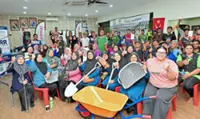
The two-day Community-Based Disaster Risk Management (CBDRM) and Disaster Risk Reduction (DRR) programme, organised by Pertubuhan Ihsan Johor with the support of the National Disaster Management Agency (Nadma), was held at Kampung Pasir, seven surrounding villages and the Taman Tampoi Utama 3 flats in Johor Baru.
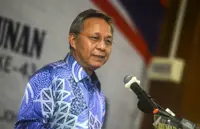
Pertubuhan Ihsan Johor president Mohamed Ridza Busu said the programme combined environmental conservation with disaster preparedness to help communities become more resilient against natural disasters and climate-related challenges.
He said the programme sought to strengthen grassroots preparedness through the CBDRM and DRR approaches.
The initiative also encouraged residents to identify potential hazards, assess disaster risks, plan mitigation measures and take appropriate action before, during and after disasters, he elaborated.
Throughout the programme, participants underwent training in disaster risk management, community hazard assessment, basic first aid, cardiopulmonary resuscitation (CPR), emergency communication, emergency “grab bag” preparation and disaster simulation exercises.
Mohamed Ridza said five community disaster action plans were developed jointly with local residents and residents’ representative committees to improve coordination and preparedness during emergencies.
He said a gotong-royong held as part of the DRR programme saw volunteers collect 21 tonnes of mixed wastes from six villages and a public housing area, including about 300kg of rubbish from Sungai Skudai.
“The waste was properly managed and disposed of, preventing the release of more than 24 tonnes of carbon dioxide into the atmosphere.
“This is equivalent to the amount of carbon that would be absorbed by more than 1,100 mature trees in a year,” he highlighted.
Mohamed Ridza said the programme also encouraged proper household waste management, with participants collecting 356 litres of used cooking oil, worth about RM1,500, for recycling.
Additionally, he said the programme focused on improving the condition of Sungai Skudai through biological rehabilitation efforts.
“Participants and volunteers threw 1,000 mudballs into the river during the clean-up, while another 1,000 mudballs were produced by community members on the first day.
“The remaining mudballs will be thrown into drains and waterways behind their homes over the next two weeks, bringing the total number used under the initiative to 2,000.”
Mohamed Ridza said 160 community members and government agency representatives participated in the DRR activities on the first day, while 100 participants attended the CBDRM programme on the second day.
The programme also brought together various agencies, including the Marine Police Region II, the police, Johor Baru Civil Defence Force, Larkin Fire and Rescue Department, Johor Baru City Council, Minerals and Geoscience Department, Solid Waste and Public Cleansing Management Corporation (SWCorp), SWM Environment, Malaysian Meteorological Department and Johor Baru Drainage and Irrigation Department.
Mohamed Ridza said Pertubuhan Ihsan Johor hoped to expand similar programmes across the state in collaboration with Nadma and other strategic partners to build communities that are more aware, better prepared and more resilient in facing disasters and the impacts of climate change.