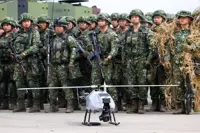
FOOD delivered by drone, medicines flown over traffic jams and emergency supplies reaching disaster victims from the sky could one day become part of everyday life in Malaysia.
These are among the possibilities as Penang seeks to become a national hub for the drone industry and low-altitude economy (LAE), opening up new opportunities for businesses, workers and public services.
Chief Minister Chow Kon Yeow said the state’s immediate priority was to engage the Federal Government and relevant agencies to formally propose Penang as the pilot location for the drone and LAE ecosystem.
“The next steps include preparing a comprehensive proposal highlighting Penang’s industrial strengths, suitable locations, infrastructure requirements, investment opportunities, local industry participation and talent development plans.
“It will address regulatory requirements, airspace management and operational safety,” he told StarMetro.
Chow said the state would seek support from the ministries of Investment, Trade and Industry (Miti), Science, Technology and Innovation (Mosti), Transport (MOT) as well as agencies like the Civil Aviation Authority of Malaysia (CAAM).
It would explore partnerships with drone manufacturers, technology companies, semiconductor players, aerospace companies and research institutions to demonstrate the commercial potential of the proposed hub.

The LAE covers commercial activities using airspace relatively close to the ground (generally below 1,000m) including deliveries, agricultural spraying, infrastructure inspections, emergency services and passenger air taxis.
Chow said Penang’s established electrical and electronics (E&E) industry, semiconductor manufacturing, precision engineering and digital technology sectors placed it in a strong position to develop the emerging industry.
“The key industries include E&E and semiconductors, which design and manufacture chips, sensors, cameras, communication modules, power management systems and other electronic components used in drones and electric vertical take-off and landing aircraft.
“Others include aerospace and advanced manufacturing, as well as automation, test and equipment.”
He said agriculture could benefit from drones used for crop monitoring, fertiliser spraying, pest management and yield assessment.
Construction companies and utility operators could use drones for land surveying, hillside monitoring, bridge inspections, coastal management and the maintenance of power lines and pipelines.
In healthcare and emergency services, drones could deliver medical supplies, assist search-and-rescue operations and support disaster response.
Penang already has homegrown companies developing technologies relevant to drones and autonomous systems, Chow said.
“The development of a national drone and LAE hub could generate significant economic benefits for Penang through new investments, industrial diversification, higher-value exports, technology development and skilled employment.”
Local small-and-medium enterprises could become suppliers of drone components, electronic systems, precision-engineered parts, automation equipment and specialised services, he added.
New business opportunities could emerge in drone operations, maintenance, software development, data analytics and drone as a service (DaaS).
Chow said the initiative could create more opportunities for engineers, technicians and skilled workers, including training in artificial intelligence, robotics, automation and aerospace technologies.
The proposal to position Penang as a national drone and LAE hub was raised during the Penang State Assembly sitting.
In his winding-up speech Chow said the state would leverage its E&E ecosystem, technical expertise and growing science, technology, engineering and mathematics (STEM) talent to pursue the initiative.