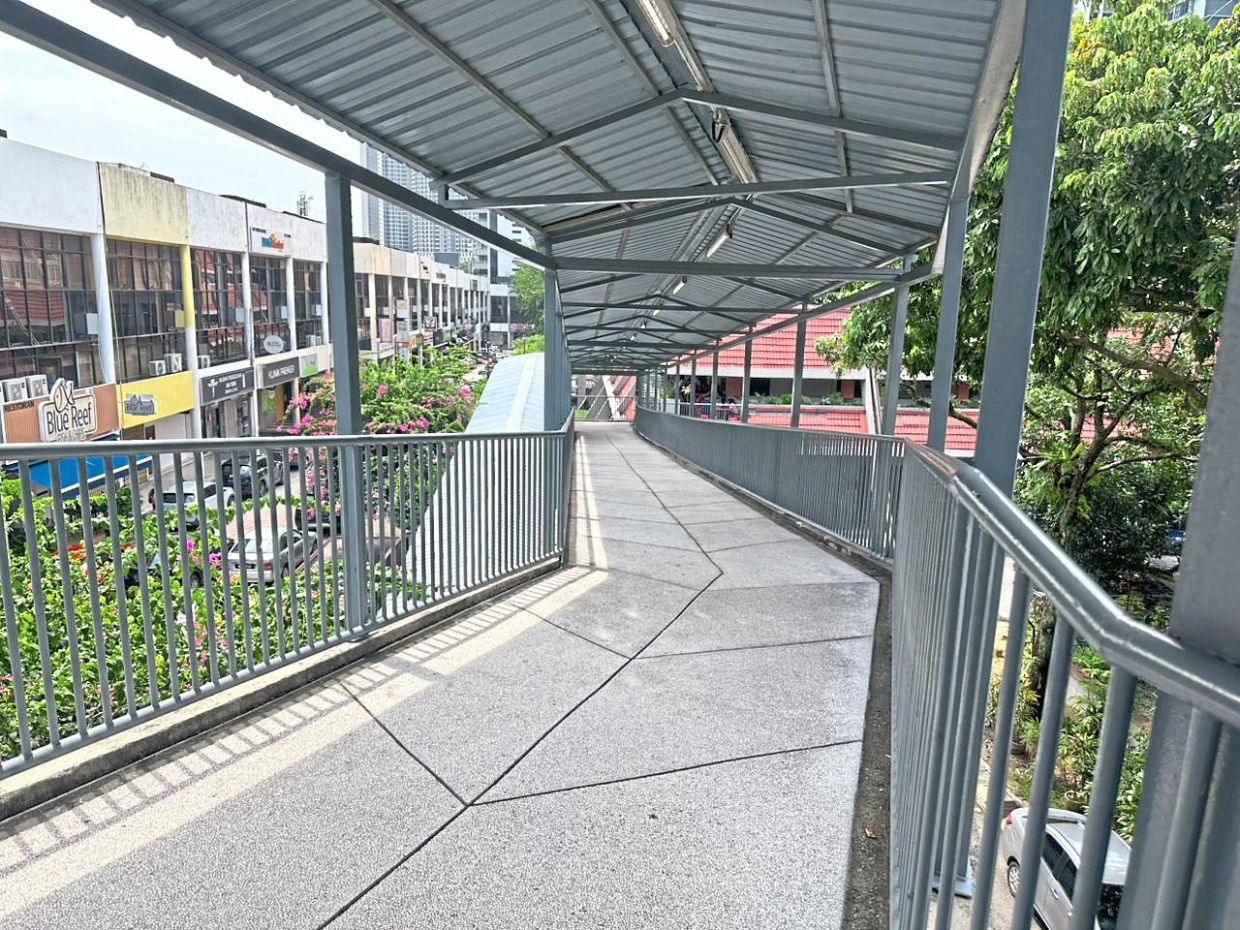
IN JULY 2007, just a year after Petaling Jaya officially achieved city status, a pedestrian bridge opened to connect the borders of SS20 in Petaling Jaya to the Taman Tun Dr Ismail (TTDI) wet market in Kuala Lumpur.
Named the “Bridge of Friendship,” the project succeeded after local community leaders cut through bureaucratic turf battles and secured federal funding for the overhead crossing.
It has a sloped pedestrian design tailored for senior citizens and wheelchair users.
“I am proud to say I left a legacy,” said Eileen Thong, the 80-year-old former SS20 Rukun Tetangga (RT) chairman who championed the bridge project.
“We told the local council we did not want a traditional staircase.
“Pedestrians and seniors had to be able to walk up and down safely and smoothly, and not climb countless steps.”
As Petaling Jaya celebrates its 20th anniversary of achieving city status under the theme of being Malaysia’s “Happiest
and Most Sustainable City”, community leaders said the people-
centred spirit behind the “Bridge of Friendship” had been lost amid rapid urbanisation.
Instead, residents said the city – originally elevated to city status through the formation of the Petaling Jaya City Council (MBPJ) on June 20, 2006 – was increasingly burdened by overdevelopment and traffic congestion, alongside a failure to adapt ageing infrastructure for its growing elderly population.
Commuting challenges
For the pioneers who built their lives in older suburbs like SS20, which is also known as Damansara Kim, navigating the modern city has become a daily challenge.
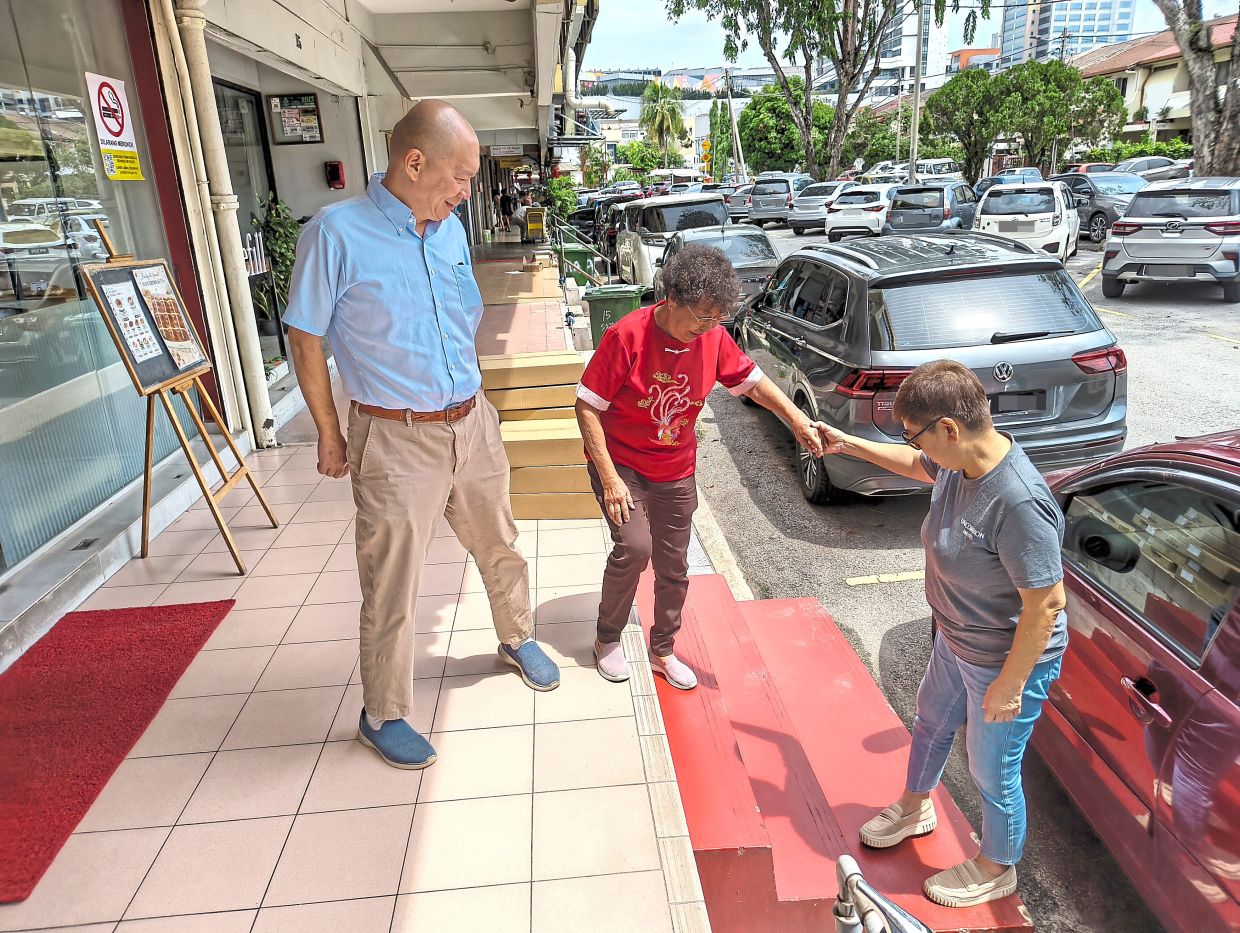
“Pavements and walkways along commercial areas lack handrails,” said Thong, who now chairs the SS20 RT Jiran Usia Emas (Seniors Wing).
“The uneven steps and steep drop at the bottom make it dangerous for seniors to use.
“Shop owners are constantly forking out their own money to instal handrails.”
James Lee, 55, the current SS20 RT chairman, agrees.
He said ramps and handrails were no longer luxury features but necessities.
Lee stressed that it was important for MBPJ to prioritise older residents’ safety.
Both Lee and Thong said the infrastructure shortcomings extended to critical healthcare hubs.
A trip to University Malaya Medical Centre (UMMC), for example, has become a parking nightmare for seniors.
While ride-hailing services ease the parking shortage, community leaders said they were an expensive long-term alternative not all pensioners could afford.
“We are following discussions on a new public hospital in Petaling Jaya, and hope is that it will feature proper, fully accessible public transport links,” Thong added.
Hazy guidelines, congestion
Another concern is the growing conflict between residential neighbourhoods and commercial expansion.
Neighbourhood boundaries have blurred as traditional residential plots are being replaced by commercial developments, leading to severe traffic bottlenecks and parking shortage.
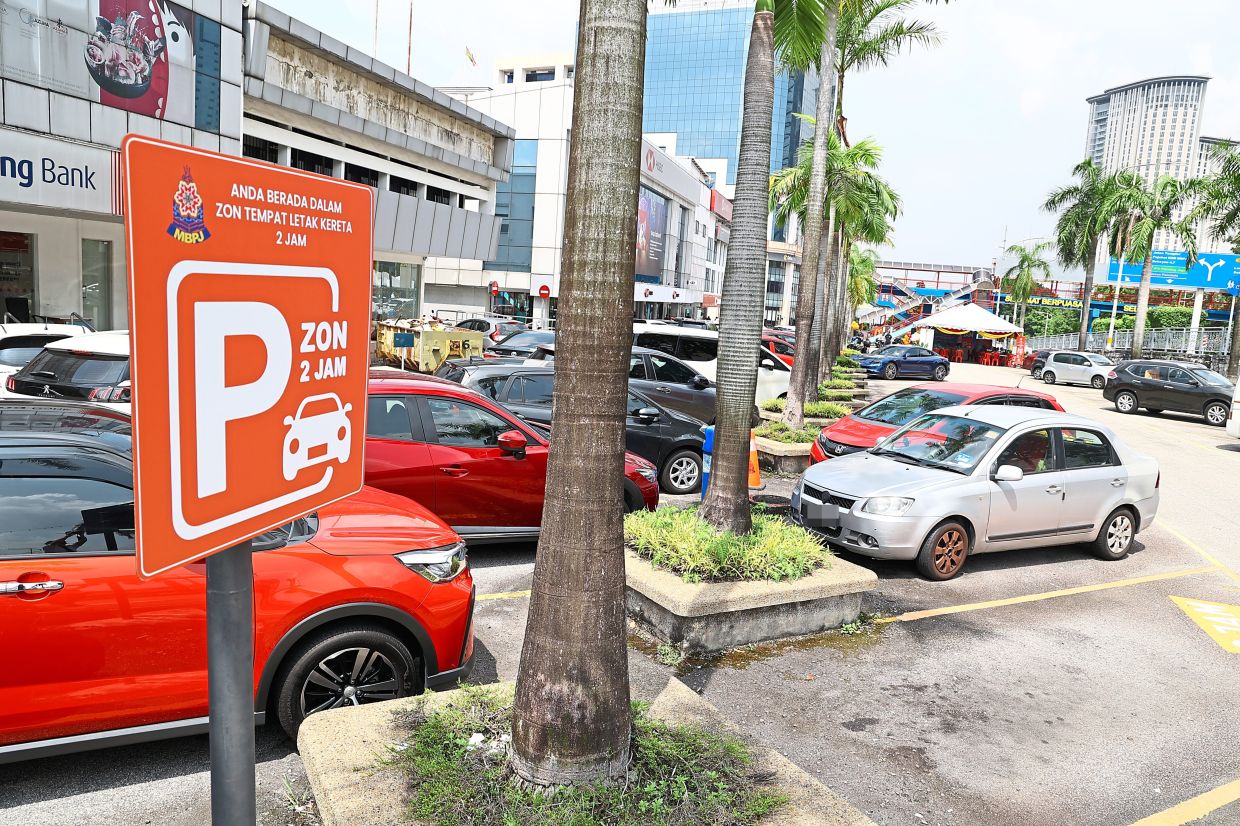
“We were informed that two-hour parking zones can only be enforced if a multi-storey carpark is available as an alternative,” said Thong.
“That might work as a rigid guideline for dedicated commercial zones, but what about residential areas that have been organically converted over time?
“How can an established neighbourhood like SS20 have a multi- storey carpark built?
“Guidelines are man-made – they have to be flexible.”
Prior to becoming a city, the local council operated the Residents Representative Council (MPP).
In this forum, the councillor (who was also an assemblyman), RT and Residents Association representatives, non-governmental organisations, community heads and heads of departments from the local council sat face-to-face in a dialogue.
“We got to know one another and were exposed to the wider issues of the city, not just our own local problems,” Thong said.
“We knew what was happening with our neighbours, from rubbish collection to tree pruning.”
Since 2018, the system changed into localised zones under individual councillors.
“It feels like silos. I miss the cohesive engagement we once had,” said Thong.
“Despite the strain of modern urban pressures, the social fabric of the pioneer neighbourhoods remains intact.”
To sustain that spirit, Lee is prioritising efforts to strengthen neighbourhood security.
“We are seeking better street lighting and the return of closed-circuit television (CCTV) cameras previously relocated by MBPJ,” he said.
“We are also designing events to engage younger residents in SS20’s ageing demographic.”
Former councillors weigh in
To understand why Petaling Jaya’s planning guidelines feel unclear to residents, one must look at how MBPJ’s internal dynamics have changed over two decades.
Former MBPJ councillor Richard Yeoh, who served from 2008 to 2013 under former Petaling Jaya mayor Datuk Mohamad Roslan Sakiman, remembers a time when policy and planning matters were debated openly and robustly.
“During my term, we fought to ensure that development remained sustainable and did not destroy the general living environment,” Yeoh said.
“Even state and Federal Government projects were critically assessed by the councillors back then.
“Some were even rejected if they didn’t serve public interest.”
During his tenure, Yeoh championed an open-door policy to promote inclusiveness, bringing major development proposals out of closed meetings and into public town halls.
One of his most notable achievements was convincing the then mayor and MBPJ full board meeting attendees to waive a RM5mil infrastructure contribution fee for a local non-Muslim house of worship project.
“I argued that these heavy infrastructure fees were designed for commercial projects, not places of worship or religious buildings,” he said.
Yeoh said introducing local government elections, which he described as long overdue, was key to addressing Petaling Jaya’s urban governance challenges.
He said between 2008 and 2013, under former Selangor mentri besar Tan Sri Abdul Khalid Ibrahim, the state government proposed implementing pilot local elections across three areas – Petaling Jaya, Shah Alam and Subang Jaya.
“Unfortunately, the plan was stillborn due to a lack of political support, even from within the then-ruling Pakatan Rakyat coalition parties.
“Elected councillors would lead to more effective services and stronger administrative accountability,” Yeoh said.
Looking at the city’s current trajectory on its 20th anniversary, Yeoh said MBPJ’s spending priorities needed urgent review.
“Instead of spending on prestige projects and feel-good community initiatives, the focus should be on redirecting funds to essential social needs,” he said.
“We need aggressive infrastructure renewal, better road safety for pedestrians and cyclists, as well as community amenities like localised clinics, childcare facilities and shelters for the homeless.”
Need for better inclusivity
The urgent need for micro- level infrastructural accountability is being championed by
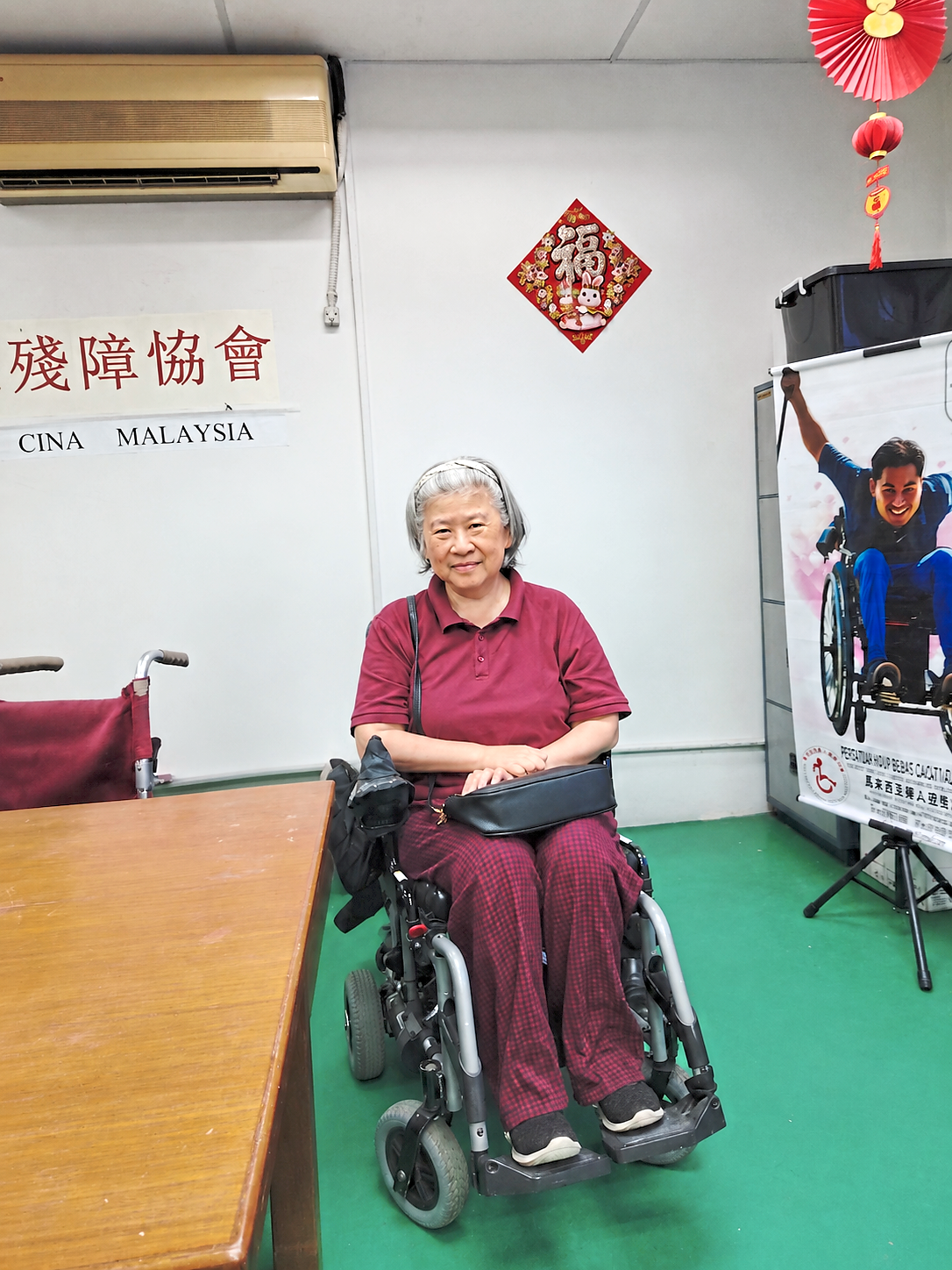
Sia Siew Chin. The Malaysia Independent Living Association for Disabled (Milad) founder and president served as MBPJ councillor from 2014 to 2018.
Sia, who is a wheelchair user, emphasised that development and modernisation should continue to be inclusive of vulnerable groups.
“As Petaling Jaya continues to modernise, we must ensure that seniors, people with disabilities and other vulnerable groups are not overlooked,” she said.
“Progress should be measured not only by new developments and technology, but also by how accessible, inclusive and welcoming the city remains for everyone.”
While the city boasts strong healthcare facilities, Sia said getting to them was still difficult.
“Public transport has improved, but the last mile connectivity remains a problem,” she said.
“A senior may reach the station safely, but the final stretch to the hospital entrance is often inaccessible.
“Improving accessibility is not just about infrastructure. It is about ensuring everyone can participate fully and independently in community living,” she added.
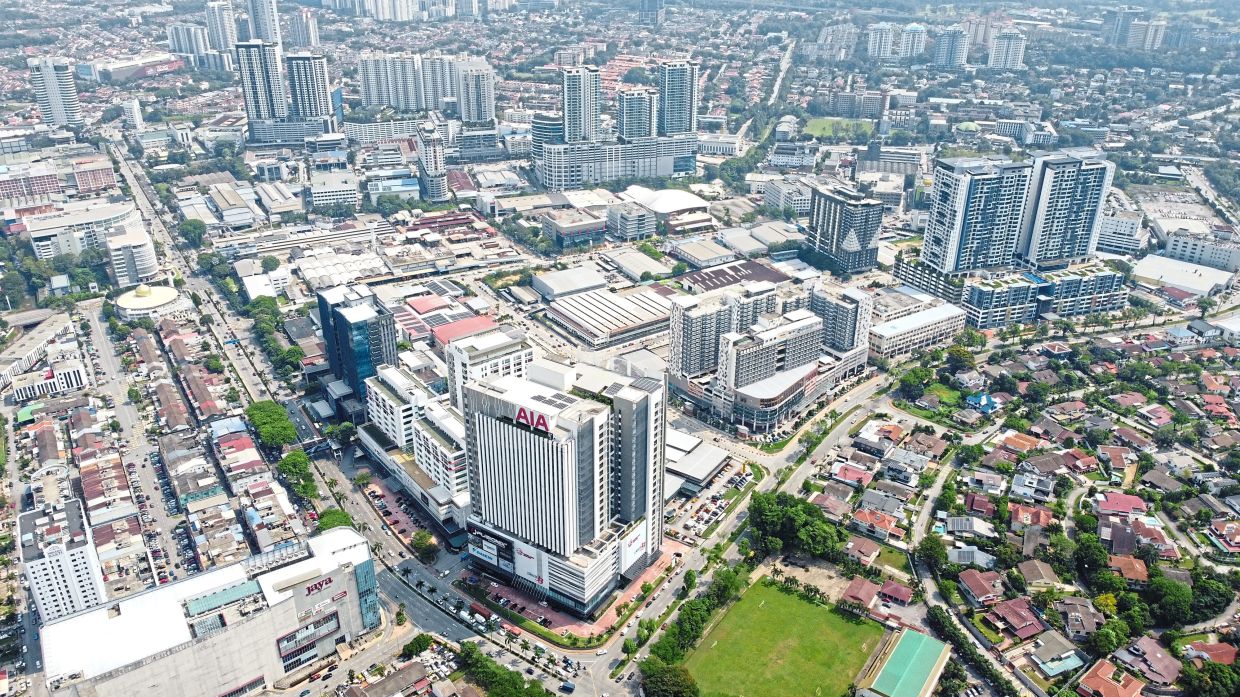
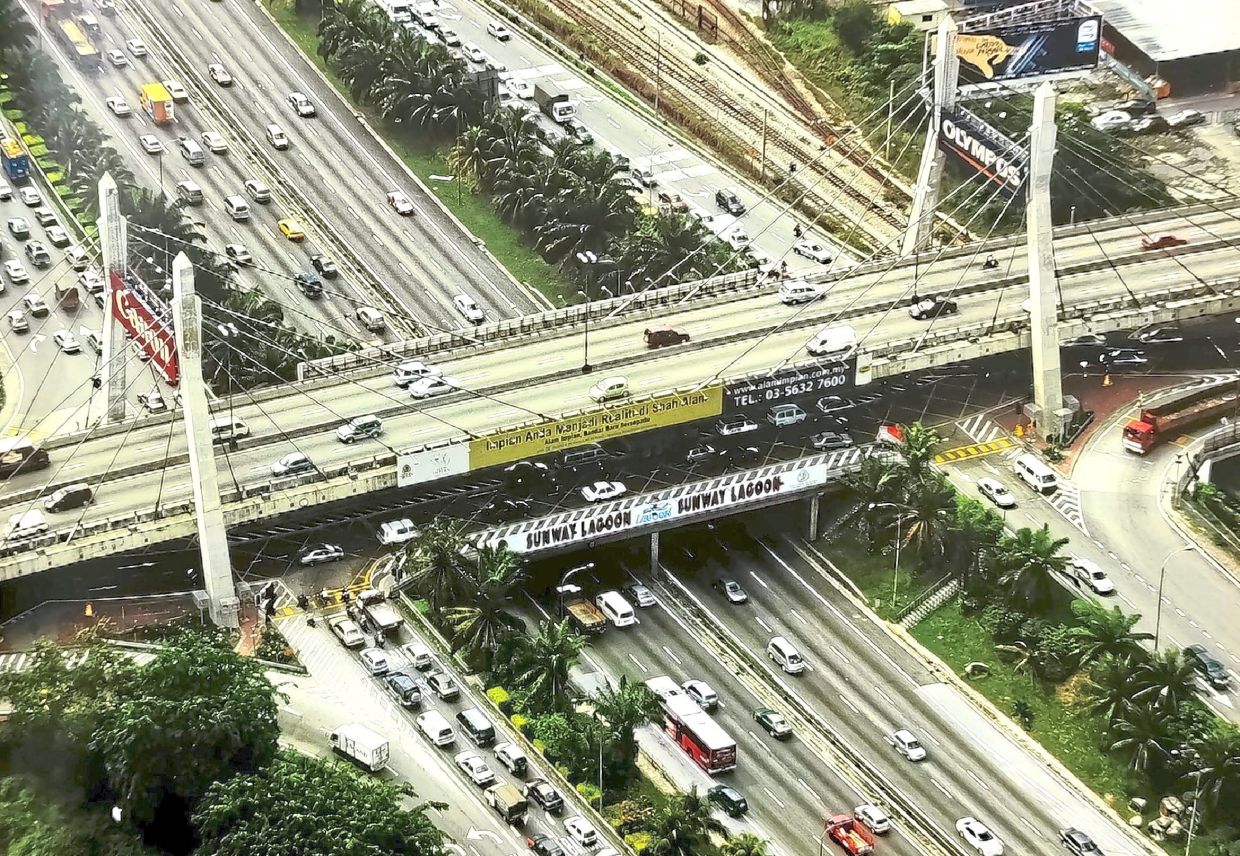
An aerial view of Section 13 (centre) and Section 14 (far left) in Petaling Jaya. Section 13 comprises 80 plots of land, but has undergone a transition towards a mixed- development enclave with several new commercial projects. — Filepic
Some residents are urging MBPJ to implement the two-hour parking system in areas where residential zones have been converted to commercial ones. — Filepic
(From right) Teresa Tan helping fellow resident Thong on the steps outside shops in SS20, as there are no handrails for senior folk to balance themselves. With them is Lee. — AIDA AHMAD/The Star
An aerial view of the Federal Highway and Damansara-Puchong Expressway (LDP) in 2010, four years after Petaling Jaya became a city. — Photo courtesy of Muzium Petaling Jaya
As Petaling Jaya modernises, Sia says MBPJ must ensure that seniors, people with disabilities and other vulnerable groups are not overlooked. — Handout
The ‘Bridge of Friendship’ connects the borders of SS20 in Petaling Jaya to the TTDI wet market in Kuala Lumpur. — Handout
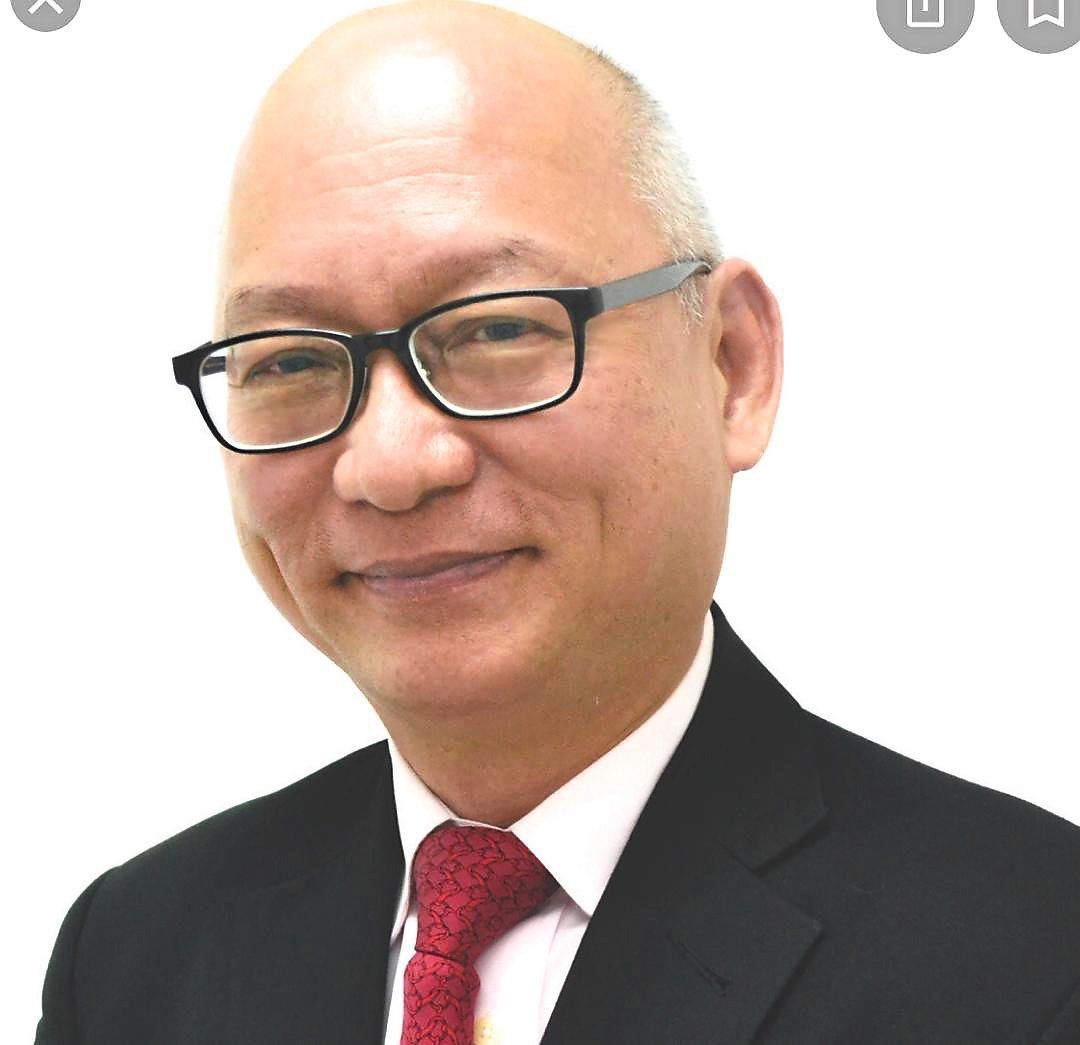
Yeoh says elected councillors will lead to more effective services and stronger administrative accountability. — Handout