Before dawn breaks tomorrow over the Buddhist Maha Vihara temple in Brickfields, Kuala Lumpur, 67-year-old former teacher
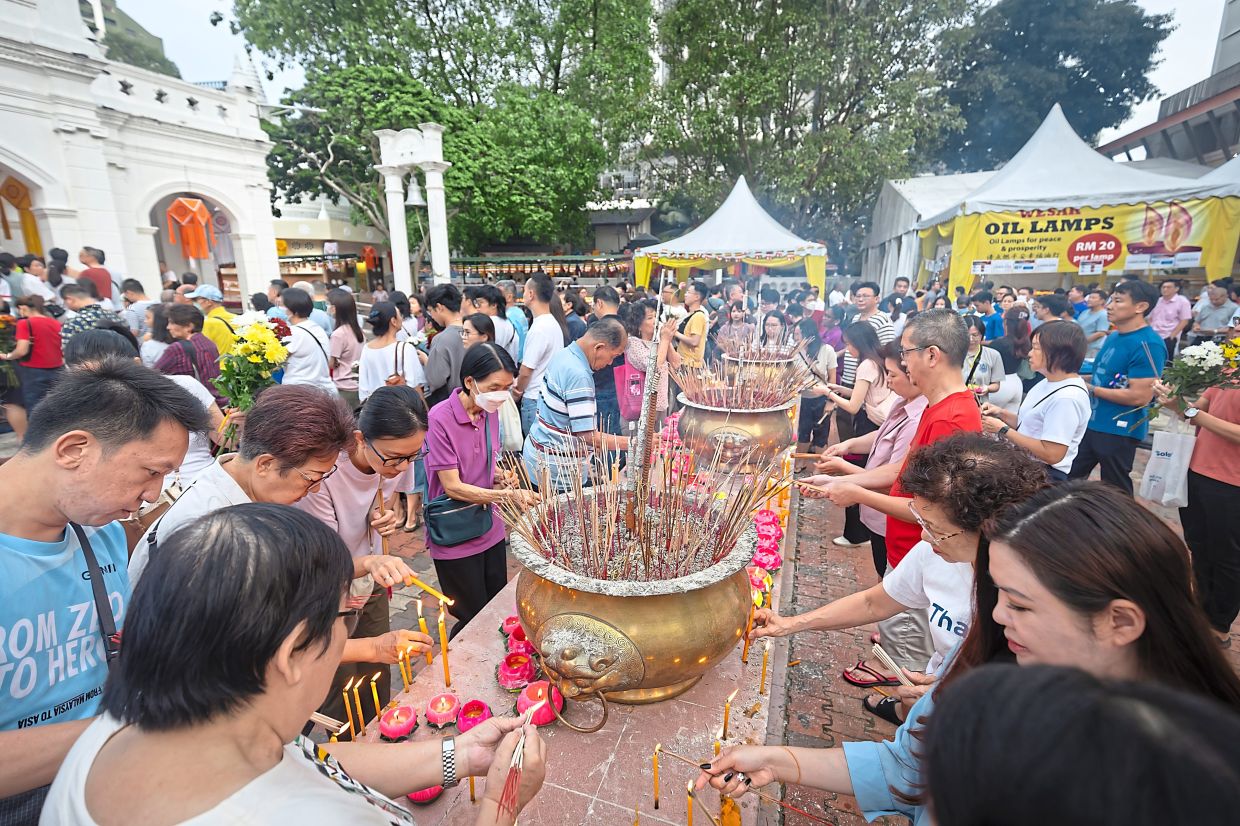
D. Santi will already be there, dressed in white and holding a small oil lamp.
For Santi and thousands of other Buddhists across Malaysia, the rituals of Wesak Day are not merely an annual tradition, but a profound opportunity to accumulate merit.
In Buddhism, gaining merit − positive karmic energy built through ethical conduct, generosity and spiritual practices − is considered essential for those pursuing the path towards enlightenment.
Wesak Day, which is tomorrow, offers devotees a dedicated space to observe these vital rituals, while serving as a timely reminder to practise virtues and uphold morality in their daily lives.
These traditional observances typically involve visiting temples to participate in meditation, chanting and the bathing of the Buddha statue.
Venerable Pusselle Wineetha Thero, a resident monk at the Buddhist Maha Vihara, said activities held during Wesak revolved around the three main sources of merit: dana (generosity), sila (morality) and bhavana (meditation).
“We offer free food and drinks to all attendees at our temple, regardless of their ethnicity, race and religion. This is one of the examples of dana in practice,” he said.
Devotees can also uphold sila by observing the five precepts – abstaining from killing living beings, stealing, sexual misconduct, false speech, and intoxicants.
“Meanwhile, they also get to learn meditation techniques from monks to cleanse their minds,” said Pusselle.
However, he pointed out that these meritorious deeds were not restricted to temple grounds and could be practised anywhere, at any time.
“For example, cooking for others or feeding stray animals are already considered acts of generosity. You can also meditate any time, including when you are travelling,” he added.
“Meditation remains a crucial tool for individuals to tame the mind by aligning their thoughts with their physical presence.
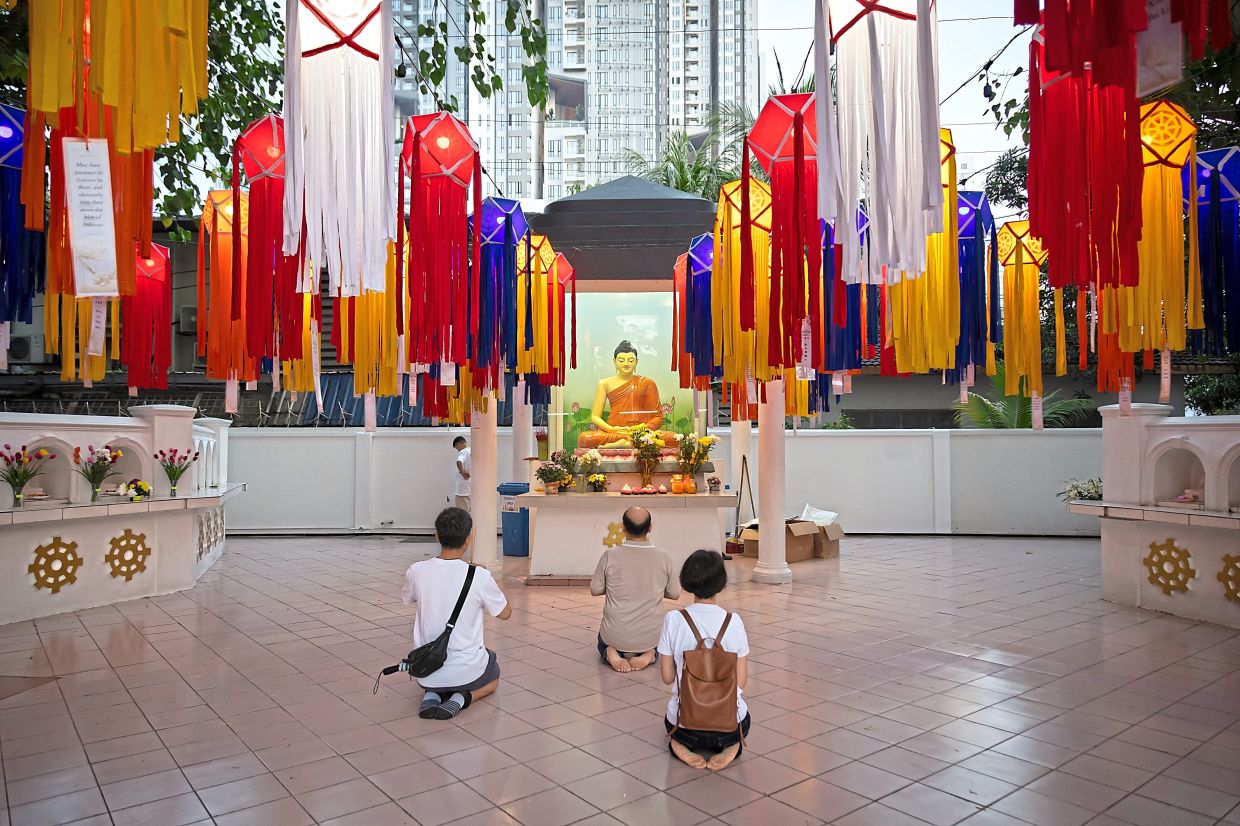
“To meditate, you first need to understand the nature of your mind, which tends to run around,” said Pusselle.
“For example, you might be physically present in Malaysia, but your mind could have reached the United States.
“The purpose of meditation is to unite your thoughts and body at the same point, while focusing your mind on reflection.
“Once you achieve this, you will be able to control your mind from cultivating negative thoughts, such as anger.
“This will, in turn, lead you to a positive direction,” he said.
Change of mindset
Despite the importance of merit-making, spiritual leaders caution against viewing these acts as a spiritual transaction.
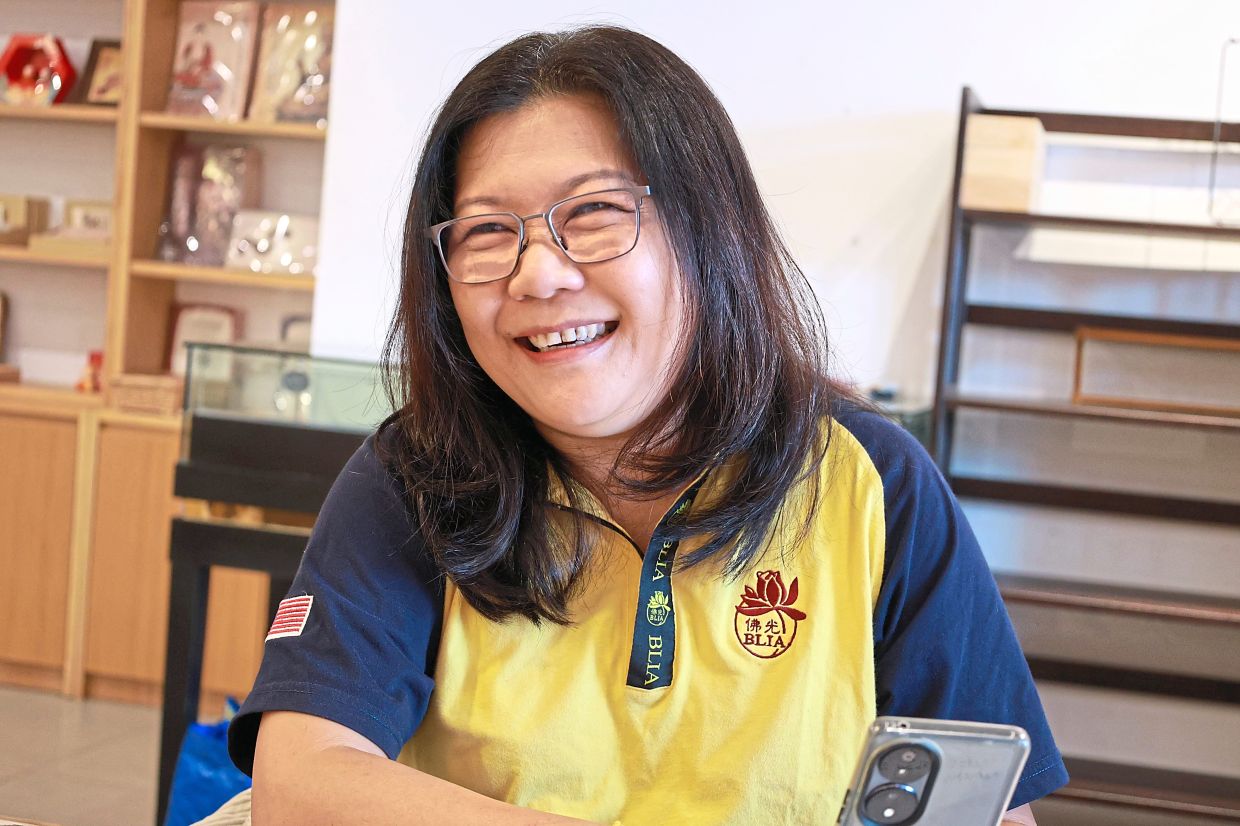
Buddha’s Light International Association (BLIA) president Kong Choi Mee emphasised that true Buddhism discouraged a transactional mindset in relation to merits.
“We don’t intentionally pursue merits as they will naturally come to us when we do good deeds,” said Kong.
“Buddhism teaches us to consistently be sincere and compassionate while focusing on actions that benefit ourselves and others. What comes back to us afterwards is not for us to worry about.”
She added that Wesak Day should serve as a catalyst for devotees to perform good deeds daily, rather than just during the festival.
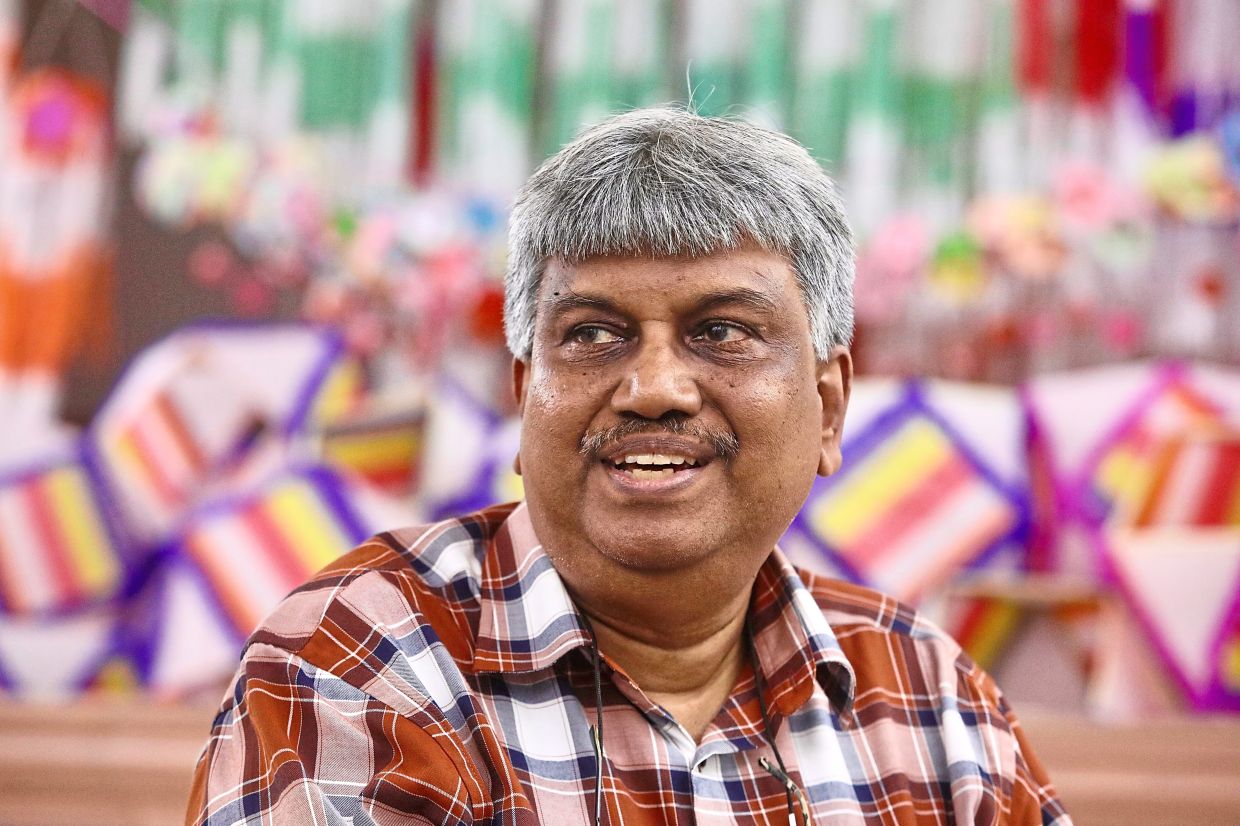
Echoing this sentiment, Siri Jayanti Association president AK Nelson Sammie said it was overly simplistic to reduce the Buddha’s teachings to the mere accumulation of merit.
“Some people only turn to the Buddha and attempt to do good deeds when they are facing problems in their lives, thinking that the merits gained from these actions could somehow help alleviate their sufferings,” said Nelson.
“However, this is not what we emphasise in Buddhism.”
Instead, Nelson explained that real relief from suffering comes from understanding its core structural origins.
“The Buddha taught that all living beings have three characteristics, which are anicca (impermanence), anatta (selflessness) and dukkha (unsatisfactoriness or suffering),” he said.
“You need to first realise that all things and living beings are impermanent, including your soul.
“Life consists of the body
and four mental faculties which are feeling, perception, volition and consciousness. The Buddha taught that these are the sources of suffering.”
Nevertheless, Nelson acknowledged that Wesak celebrations remained a vital platform for disciples to observe the five precepts and gain blessings through collective chanting and the ritual of Buddha bathing.
During the festival, devotees are encouraged to wear white to symbolise purity, using the day to actively refrain from negative thoughts.
At the Sri Lanka Buddhist Temple in Sentul, which is managed by the association, educational talks and classes on Buddhist principles are held throughout the year to avoid the massive festival crowds.
Wesak activities
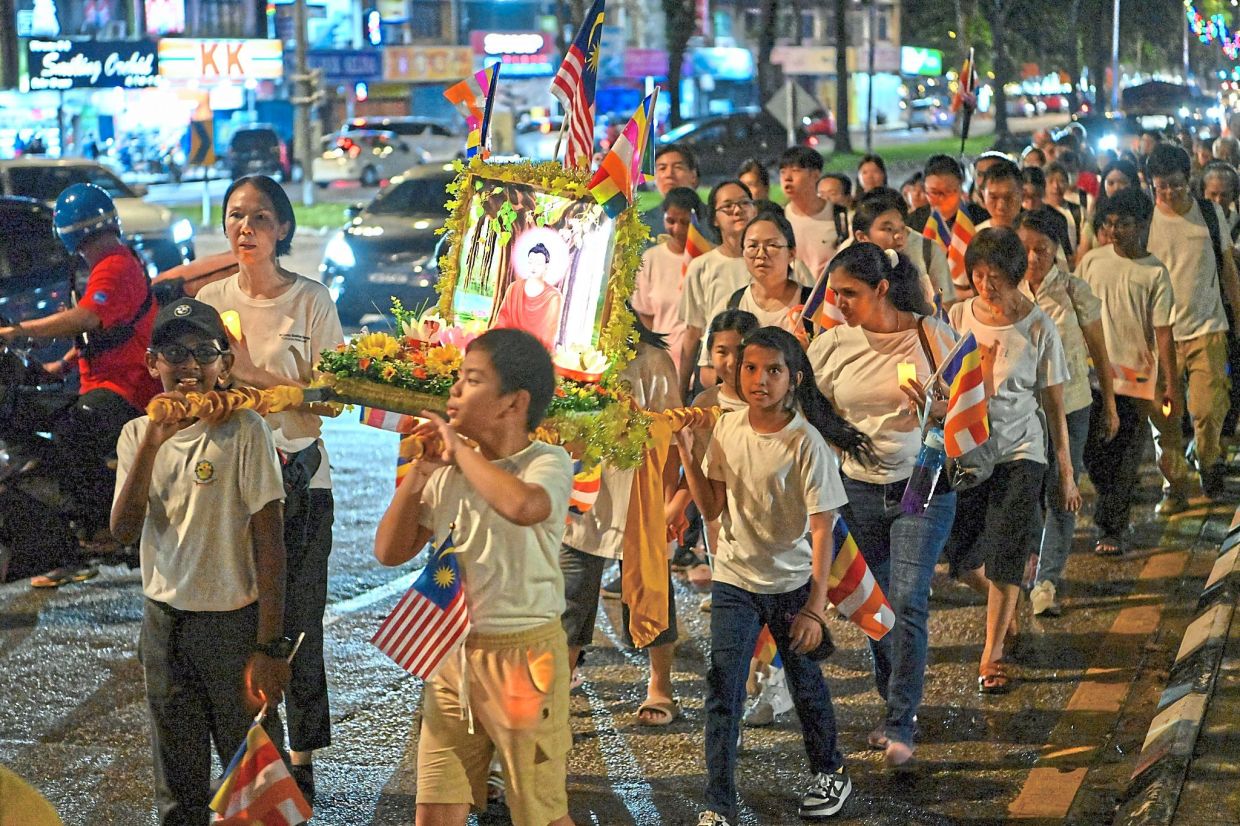
Among the most visually prominent and interactive public activities during Wesak are the Buddha bathing ritual and colourful float processions.
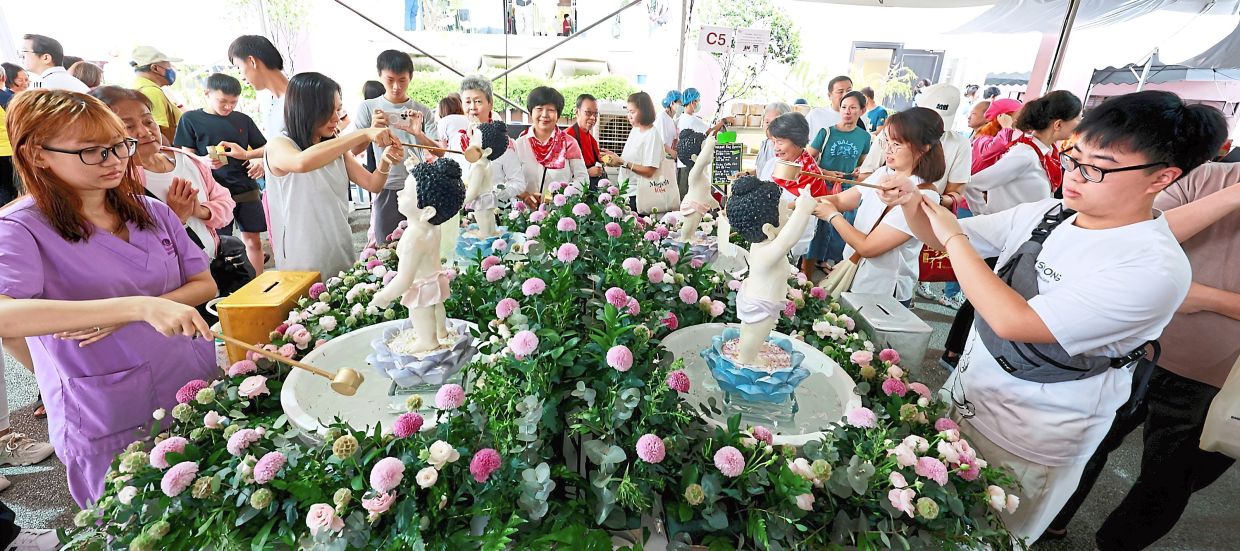
Kong said the bathing ritual commemorated the birth of Prince Siddhartha Gautama, who would become the Buddha.
She said it was sort of a replication of the scene when he was born, where heavenly beings showered him with pure water.
“In practice, the ritual does not only symbolise the cleansing of Siddhartha’s statue but also our inner selves. It clears our minds from greed, anger, ignorance and jealousy.”
At the Fo Guang Shan Temple in SS5, Petaling Jaya, , devotees pour
three scoops of water over the Buddha’s statue to represent right speech, right deeds and right thoughts.
The temple’s celebrations also feature a vegetarian bazaar and a baby blessing ceremony.
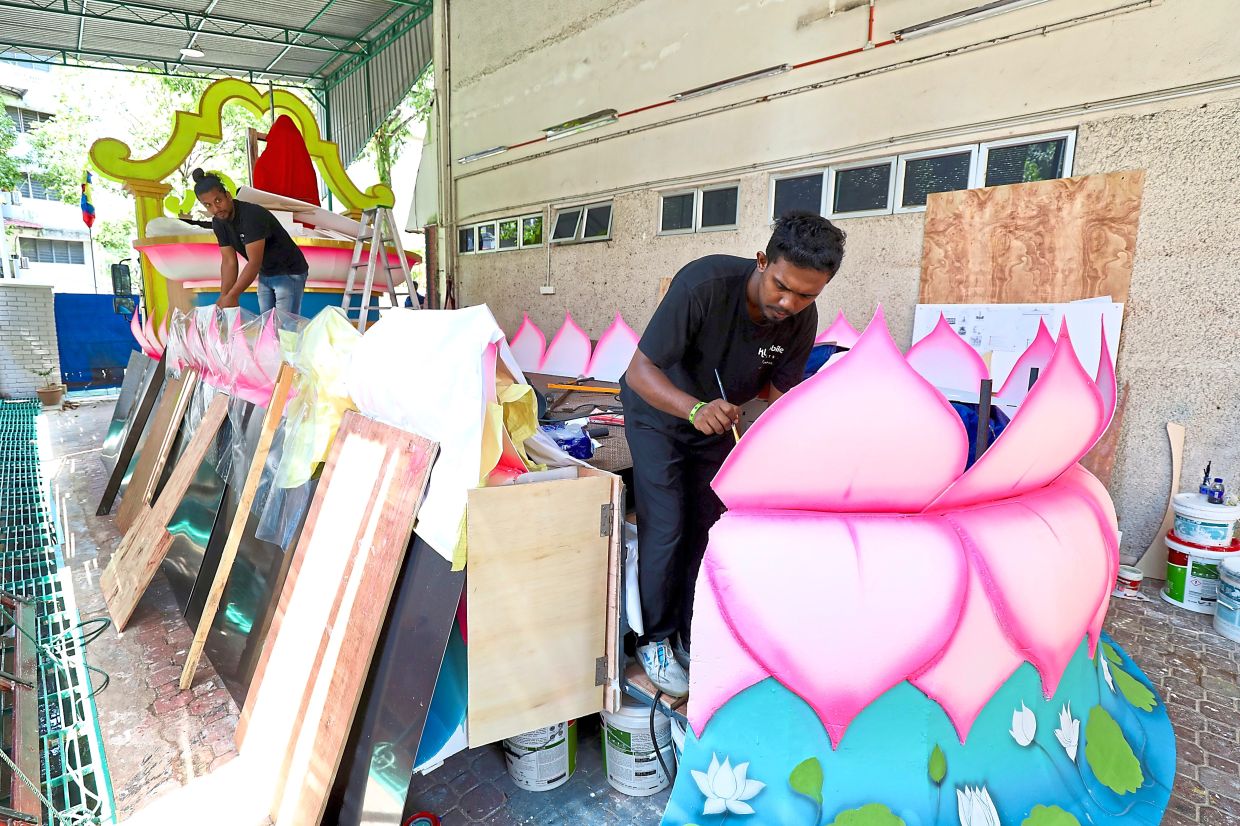
The lively float processions, while iconic, serve a more social purpose.
Nelson said the processions were originally created as a cultural tool to bring people together.
“As far as I know, the Buddha never spoke about processions. However, it is a good platform for people to come together to rejoice and have fun.
“It is also a good opportunity for people, especially youngsters, to know more about Buddhism,” he said.
The Sri Lanka Buddhist Temple’s float procession takes place this evening at 7pm, covering a 3.5km route through Sentul.
Meanwhile, the grand float procession for the Buddhist Maha Vihara is scheduled to begin tomorrow at 6.30pm.
According to Pusselle, the event is set to feature more than 40 floats, representing over 40 Buddhist organisations.
“It will cover a distance of about 5km to 6km,” he said.
“We are also expecting some non-Buddhists, including those from interfaith organisations and the government, to attend.
“This highlights the festival’s enduring capacity to foster unity across different communities.”
As evening approaches, Santi will take her place alongside the thousands lining the streets of Brickfields, waiting for the float procession to begin.
For her, the day ends where it begins – walking alongside the glowing procession with a lamp in hand, her focus shifting
from personal merit-making to simply being part of a massive community.