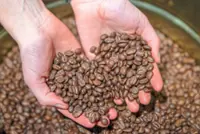
Perak savouring potential of sought-after Liberica beans
MALAYSIA’S coffee-drinking culture has seen a sharp rise in the nation’s coffee bean consumption in recent years. International Coffee Organisation data placed the country third among 58 nations in terms of highest coffee consumption growth in 2021.
Yet despite the booming trend, particularly among Malaysian youths, there’s insufficient local production.
Agriculture and Food Security Ministry reported that Malaysia imported about 90% of its coffee beans to satisfy industry needs.
Recognising the immense market potential, Perak has intensified cultivation efforts towards becoming one of the country’s leading coffee producers.
Currently, Malaysia’s coffee production is dominated by Johor, Sabah and Sarawak.
Guided by the national food security agenda under the “Perak Sejahtera 2030” plan, the state Agriculture Department is developing a more structured coffee ecosystem.
Enter “Kopi Perak”, which was sparked by the Cherita Secangkir Kopi Festival in December 2023.
“With the global coffee industry projected to reach US$690bil (RM2.7 trillion) by 2030, Perak wants to seize the opportunity to become one of the country’s coffee producers,” said Perak Agriculture director Norsiyenti Othman.
“We have identified several districts with strong potential to become major coffee-producing areas in Perak, including Hulu Perak (19.4ha), Bagan Datuk (11.87ha) and Kuala Kangsar (10.13ha),” she told Bernama.
Although coffee cultivation currently covered only 51.18ha involving 48 smallholders, she said interest among farmers was steadily growing.
“We are implementing a cluster-based development approach to optimise participation.”
Still in its early stages, Kopi Perak has yet to be marketed commercially despite being introduced via Malaysia Agriculture, Horticulture and Agrotourism Exhibition (MAHA) for the past two years.
“Most of the planting areas have only recently been developed, while existing plantations are undergoing tree rehabilitation, resulting in limited current production,” said Norsiyenti.
“However, we aim to begin marketing Kopi Perak this year through several parties, including the Perak State Development Corporation.”
Kopi Perak is also expected to become part of the state’s agro- tourism identity.
Norsiyenti said the focus on Liberica was due to Perak’s soil and climate conditions.
“The species thrives in alluvial soil and temperatures of 27°C to 30°C. It is disease-resistant, bears fruit throughout the year and has a lifespan of up to 25 years, making it highly suitable for development of Kopi Perak.
“Liberica has strong market demand because of its unique flavour.
“It is also easier to manage in terms of agronomic practices, making it a viable crop for smallholders,” she said.
To support expansion efforts, Perak Agriculture Department is channelling various forms of assistance to farmers through special allocations under the 13th Perak Development Plan.
The department established the Perak Coffee Processing Centre in Tapah last November to serve as a collection hub.
“We are planning to establish more centres and collection hubs at strategic locations in future to ensure large-scale production,” Norsiyenti said.
A key component in developing the coffee supply chain lies in the role of local service providers responsible for purchasing and processing coffee beans into market-ready products.
Overseeing operations at the processing centre is Mohamad Syafiq Saad, 36, whose involvement began after Perak Agriculture Department sought out entrepreneurs to help process coffee produced locally.
“The centre not only helps farmers sell their produce but also ensures supply can be coordinated for processing and develop the industry in a more organised manner.
“Fresh coffee cherries are currently priced at around RM3 per kilogramme and can increase to about RM4 per kg when delivered to the processing centre, giving farmers better returns.”
Describing the process, Mohamad Syafiq said freshly harvested coffee cherries were soaked for one to two days to soften the fruit, particularly for Liberica as it has thicker skin than Arabica.
The cherries are then sorted according to quality before undergoing a peeling process to extract the beans, which are then dried.
After drying, the green beans undergo the roasting stage.
Drying and roasting Liberica require extra care because the beans are larger and denser, thus demanding stricter control to maintain quality.
Overall, the entire process from fresh cherries to roasted beans takes about three weeks before the coffee is ready to be marketed as the final Kopi Perak product.
Mohamad Syafiq said Liberica’s distinctive characteristics set it apart from other coffee varieties.
“Compared with Robusta which is more bitter and commercial, or Arabica which is lighter and more acidic, Liberica offers a more complex flavour profile with fruity aromas resembling jackfruit and pineapple.
“This uniqueness positions Liberica as a high-potential coffee in the premium or speciality coffee segment, adding value to the development of Kopi Perak.”
For coffee farmer Hazian Hamid, 65, the journey into coffee cultivation began unexpectedly after receiving recommendations and seed assistance from the Agriculture Department around 2019, before the Covid-19 pandemic.
“Previously, I only cultivated coconuts and had no experience in the coffee industry.
“But I took the opportunity to diversify and increase my income.
“I cultivate the coffee trees on my land, enabling continuous monitoring and maintenance,” he said of his farm in Kampung Padang Kota, Pengkalan Hulu.
Hazian now has over 1,000 Liberica trees, producing 600kg to 700kg per harvest cycle.
“These trees are grown from seedlings. It takes three to four years before they begin producing fruit.
“The fruit itself takes another three to four months to mature from flowering to ripening,” he said, adding that he harvests three to four times a year.
Hazian said one of the advantages of the crop was its resistance to disease and relatively low maintenance.
“That gives farmers an advantage because the crop does not require intensive control,” he said, disclosing that each harvest could generate around RM3,000 in income.
He hopes Malaysia’s coffee industry will continue to be strengthened, particularly in terms of price stability and market guarantees, to encourage more people to venture into coffee farming.