Lepidopterist turns backyard into insect sanctuary in Selangor
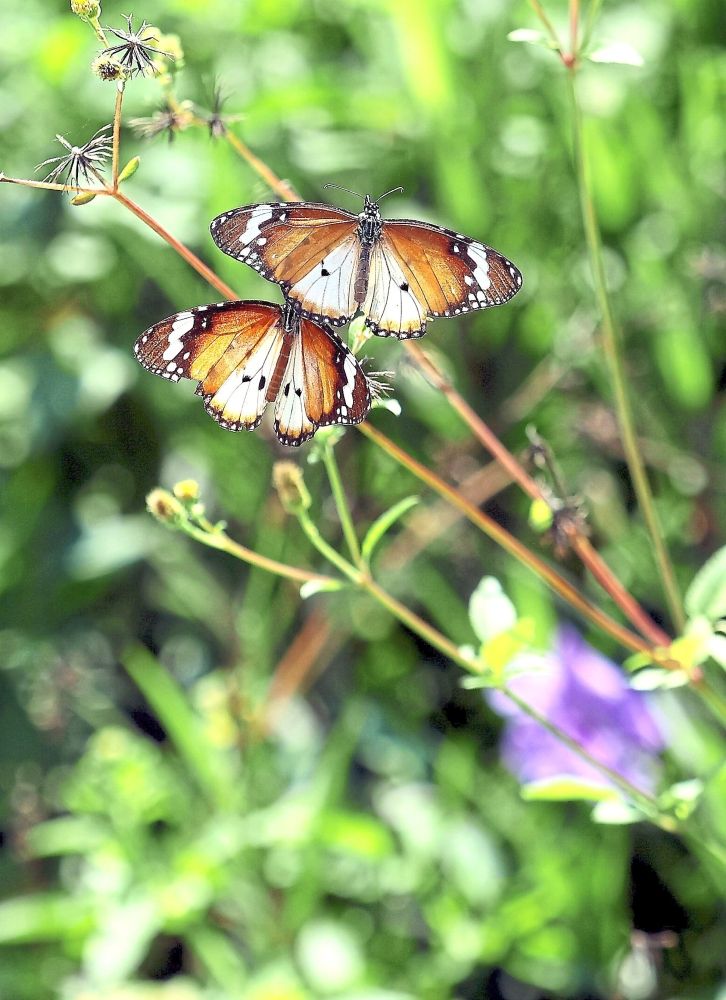
RICH and tawny, a kaleidoscope of Plain Tiger butterflies flutter effortlessly through the foliage of a home in Sungai Pelek New Village, Selangor.
Hovering above a vibrant floral stretch, they linger to feed on nectar before flying away into the afternoon sun.
“This is a male butterfly because it has four black dots on its hindwing.
“The female on the other hand, has three dots, that is how you differentiate them,” said Raymond Lim, a 63-year-old lepidopterist.
This species, scientifically known as Danaus chrysippus, was introduced to Sungai Pelek as part of Lim’s conservation effort.
Having pioneered Malaysia’s butterfly industry with key roles at the Penang Butterfly Farm in 1986 and the KL Butterfly Park in 1991, he transformed the backyard of a house along Jalan Lestari Indah 1 in the new village into a suitable habitat for butterflies.
“After managing the National Science Centre’s Garden of Nature for 20 years, I retired and moved to my wife’s hometown in Sungai Pelek and started this space to attract more butterflies and increase their population.
“Back then, I identified about 25 butterfly species but the Plain Tiger butterfly was not found here despite the area being hot and humid – most suitable for that species.
“These butterflies are also normally found in coastal areas in the east coast of the peninsula,” he said.
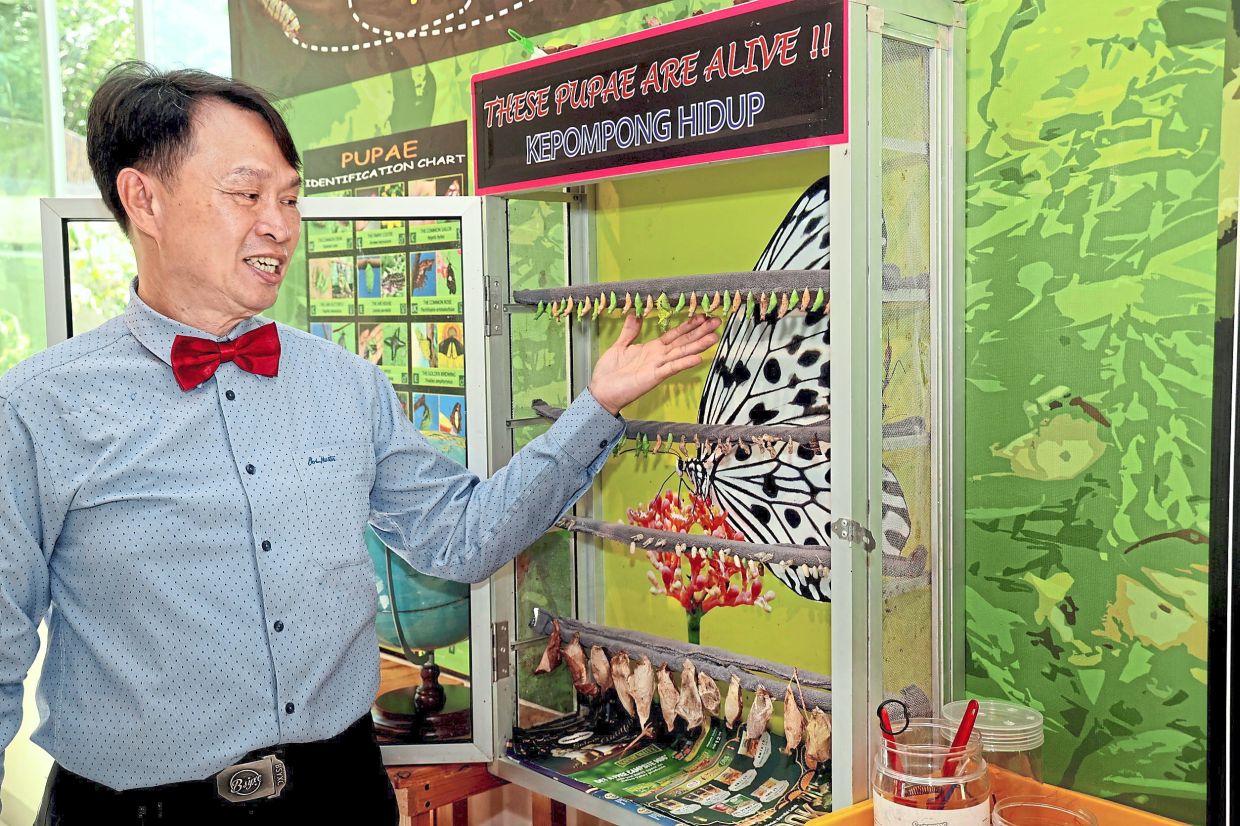
Lim said the absence of Plain Tiger butterflies was due to the lack of milkweed plants in the area.
“Milkweed is the host plant for Plain Tiger butterfly caterpillars.
“Butterflies are famously picky eaters during their larval stage as most species feed on only one specific family or genus of plants, known as their host plants.
“Without this specific vegetation, the caterpillars cannot survive because they are genetically hardwired to feed only on its leaves,” he said.
Passion turned conservation
To increase the local butterfly population, Lim rented a bungalow and started planting host plants for different butterflies in the backyard, which he named “My Backyard Garden” in 2023.
Gradually, he turned the once-empty space into a thriving ecosystem for butterflies.
He then began captive breeding the Plain Tiger butterfly in his backyard and successfully introduced the species to Sungai Pelek New Village.
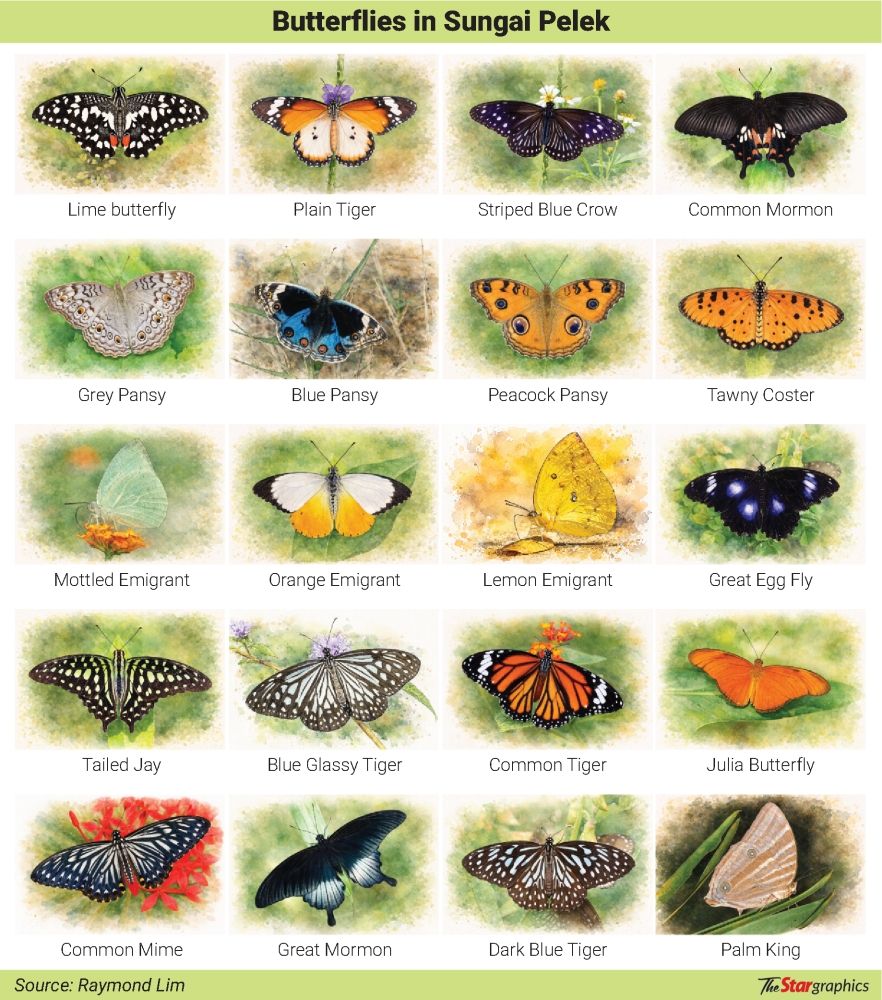
Other butterfly species found in the area include the Lime Butterfly, Striped Blue Crow, Common Mormon, Grey Pansy, Peacock Pansy, Tawny Coster, Great Mormon, Common Tiger and Julia Butterfly.
In the morning, one can expect to see different kinds of butterflies fluttering around the backyard garden; a rare sight not seen elsewhere.
“The butterflies are generally more active in the morning due to the lower temperature.
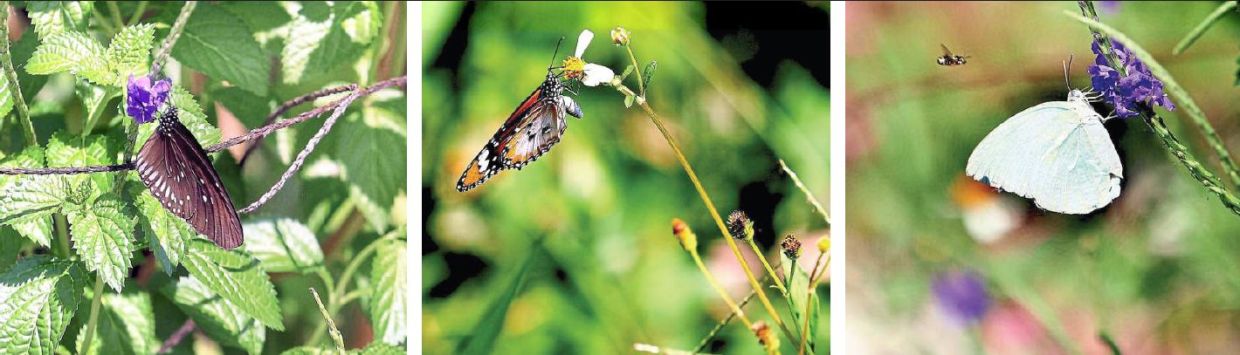
“When it is closer to noon, most of the butterflies will rest on the plants,” he said, adding that these butterflies only have a lifespan of two weeks.
For Lim, maintaining such a project is a labour of love rather than a lucrative business.
“Education remains the heartbeat of the operation.
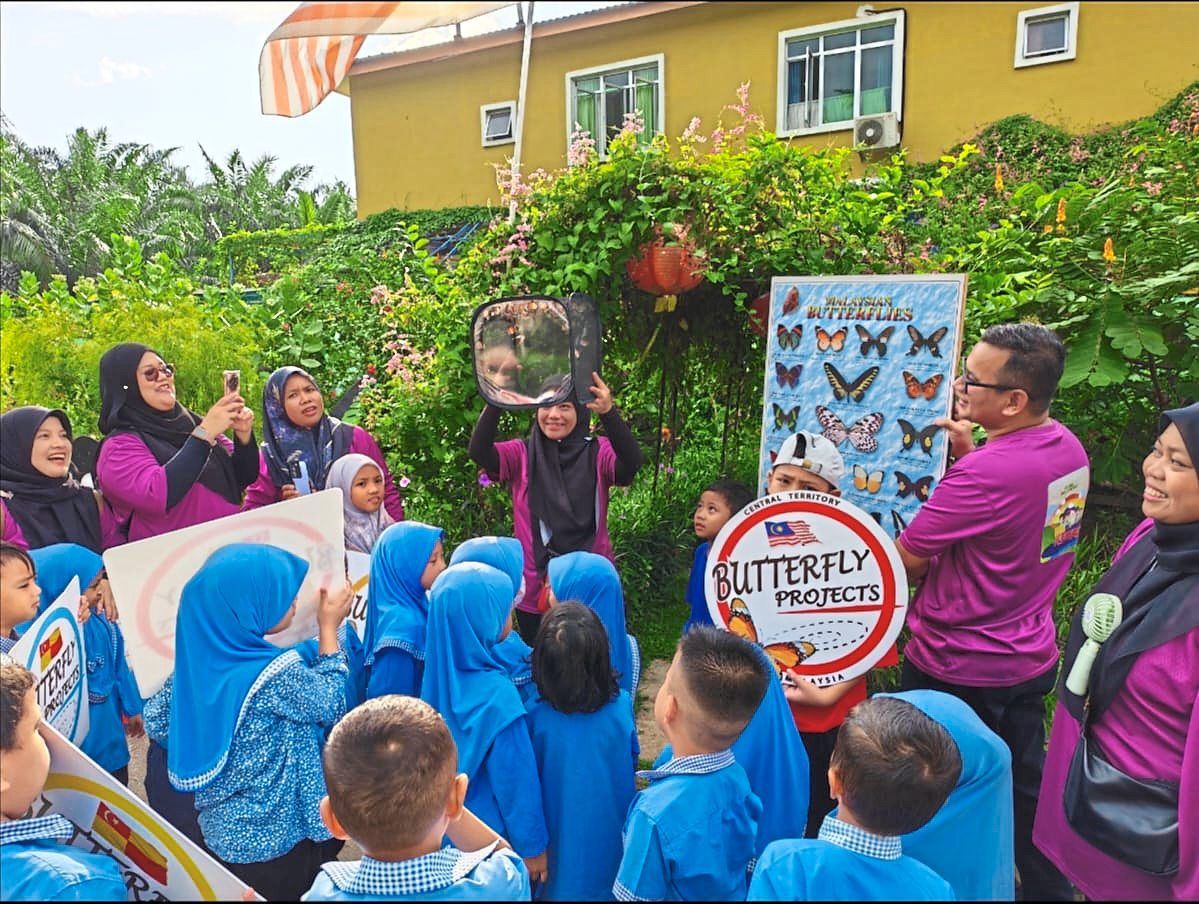
“We host tour groups and educational programmes for schools, but this is more of a hobby than a sustainable business.”
In August 2024, the Chinese New Village Bureau (BKBC) under the Housing and Local Government Ministry (KPKT) approved a RM44,290 grant for Sungai Pelek Village Security and Development committee after Lim submitted a proposal to drive ecotourism in the new village.
Through the project, the new village is now recognised as Butterfly Village.
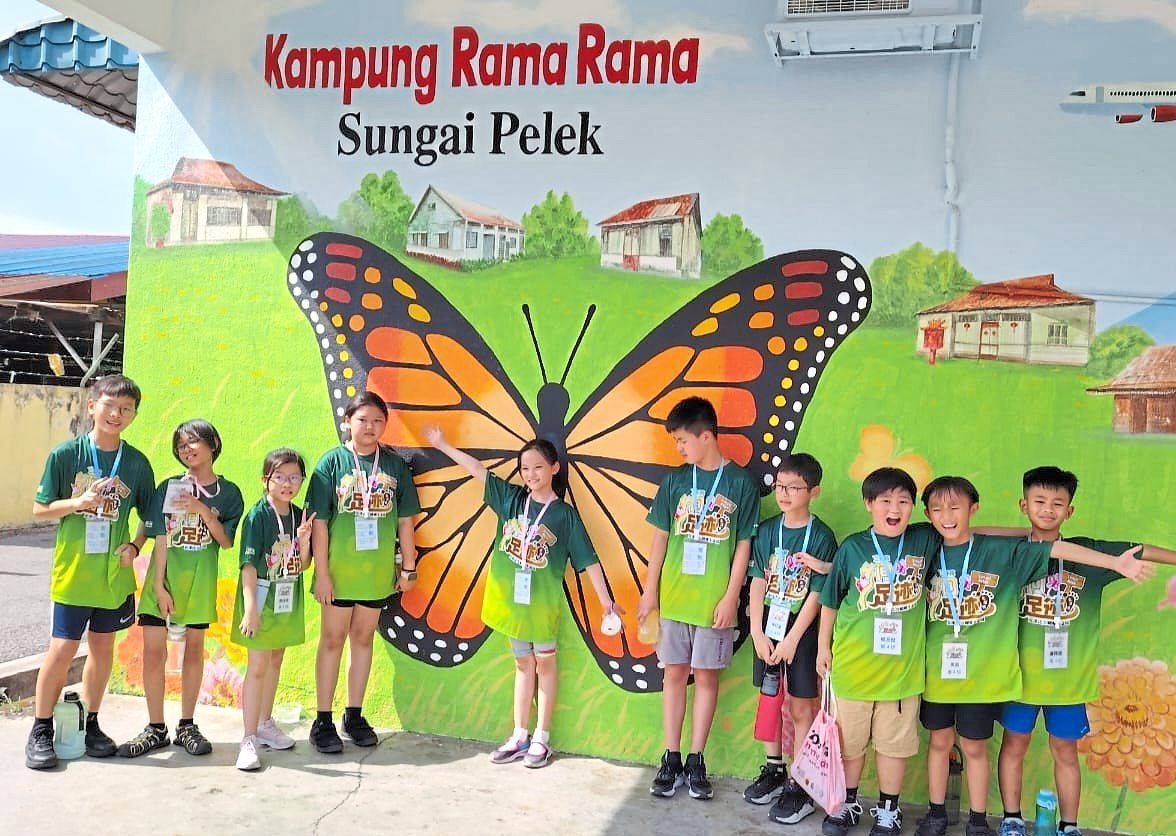
Funds were also used to paint a butterfly mural at Jalan Pasar, erect multilingual “Butterfly Village” signs throughout the neighbourhood and grow host plants in various parts of the village to attract butterflies.
Exploring tourism potential
For Lim, the vision for Sungai Pelek extends far beyond a private backyard.
His goal is to integrate butterfly conservation knowledge into one of the attractions of small town tourism.
“I plan to set up a Butterfly Village story gallery detailing interesting facts about the insect.
“This gallery will double as a butterfly education centre and a tourist attraction for locals and international visitors alike,” he said, adding that it would house his extensive collection of butterfly specimens and stamps as well as tell the story of the Sungai Pelek New Village.
“I also plan to host butterfly specimen workshops,” he said, adding that this unique identity, centred on science and nature, would set Sungai Pelek New Village apart from other traditional villages.
By transforming a private passion for lepidoptery into a public attraction, the gallery would serve as a ‘micro-anchor’ that draws visitors into the heart of the village, encouraging them to explore the wider local economy.
The new village’s proximity to Kuala Lumpur International Airport in Sepang also benefits visitors who wish to spend a half day or full day exploring the charm of new villages.
“The gallery can be one of the attractions that visitors spend a day visiting the new village while also seeing other popular attractions such as the dragon fruit farm, traditional coffeeshops and enjoying local delights,” he said.
Besides that, Lim also plans to start a butterfly conservation centre at Kampung Sungai Penchala in Kuala Lumpur.
“The idea started when I saw Malaysia’s National Butterfly, the Rajah Brooke Birdwing in the area.
“Their habitat is in the primary rainforests. So finding them in this area with a nearby secondary forest is rare,” he said, adding that this was because the butterfly’s host plants were found nearby.
Lim has spoken to the owner of an old durian orchard in Kampung Sungai Penchala who agreed to turn a part of the property over for butterfly conservation.
“The orchard has two bungalows with a big garden compound in a hilly area. One part of this area will become a butterfly conservation centre,” he said, hoping to get corporate companies to fund the centre.
“We hope to collaborate through their corporate social responsibility or Environmental, Social and Governance (ESG) programmes. It can be turned into an ecotourism spot for inbound tours,” added Lim.
Sepang councillor Cheong Wai Shon highlighted Sungai Pelek New Village’s potential to develop into a hub for ecotourism and agrotourism.
“Sungai Pelek is a small town with minimal development in the new village.
“There is potential for ecotourism or agrotourism in this new village.
“It is an old town with old structures, but visitors can check out the coffee roastery, oil palm and fruit farms located here,” he said.
Cheong added that he had met with Eco-Steps Malaysia, a non-governmental organisation championing sustainability in the hospitality and tourism sector, to bring in more Western tourists to Sungai Pelek.
Sungai Pelek village chief Yu Tong Fatt said attractions like this could drive visitors to the small town.
He said KPKT had helped beautify the new village, for example, with the butterfly murals, that would help promote the village.
“The village committee is in support of Lim’s efforts,” added Yu.