Industry players emphasise importance of equipping future workforce with critical thinking, sound judgement, ethical standards
ACCOUNTABILITY must remain a human responsibility despite rapid advances in digital technology, artificial intelligence (AI) and automation, a Sustainable Workforce Summit on AI and talent development in Penang was told.
Panellists explored how AI was being integrated into human resource practices, while emphasising the importance of maintaining ethical standards, inclusivity and employee well-being.
Discussions also centred on how organisations could adapt to change and build a more resilient workforce.
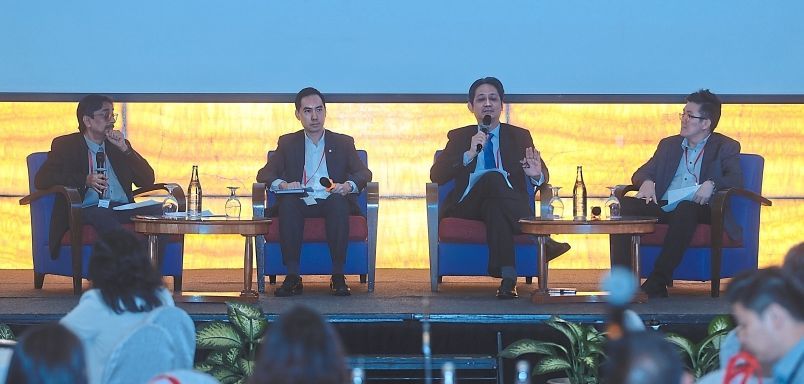
During a panel discussion titled “Sustainability in Human Resources: From Strategy to Practice”, speakers highlighted that accountability could not be delegated to technology.
Panellist Jun Maria Tan Abdullah said organisations and their leaders remained responsible for decisions made with the aid of AI.
“Tasks can be delegated to AI, but the final decision must rest with humans, as accountability ultimately lies with us,” she said at the half-day event organised by Inti International College Penang at Jen Penang Georgetown by Shangri-La in Magazine Road.
Lawyer R. Kumarappan said that while AI was here to stay, it must be governed by human oversight.
“AI can develop bias over time, so checks are necessary.
“There must be audits and proper documentation to show how decisions are made.
“Human oversight is essential when AI is used to support decision-making.”
A session on workforce upskilling, reskilling and continuous learning highlighted the need for human intervention to mitigate potential bias in AI systems.
Panellist Teoh Soon Beng, a bank executive director and area head, said educators must equip students with critical thinking skills and sound judgement.
“We need human qualities such as empathy and moral judgement.
“When AI is used for credit assessments, there can be bias, particularly against lower-income groups or certain ethnic backgrounds,” he said.
Teoh noted that while digitalisation might reduce the need for bank tellers, new roles such as service and digital advisors were emerging.
“Bank tellers can be upskilled to take on these roles, expanding their scope.
“Automation works well for repetitive and high-volume tasks, but human input is still needed for critical thinking and ethical judgement.
“While some roles may diminish, we expect growth in compliance-related jobs,” he added.
Inti International University’s accreditation of prior experiential learning centre director Dr Choo Yeong Khong urged industry players to share insights on evolving workforce needs.
“Higher education institutions require input from industry.
“By sharing your needs, we can better prepare students and enhance our curriculum,” he said.
Inti International College Penang chief executive M. Hemalatha said businesses must take a more deliberate approach to talent development as AI continued to reshape industries.
“Such discussions are vital in helping education providers stay aligned with industry needs, especially as roles evolve with AI.
“Our postgraduate programmes focus on upskilling and reskilling talent, with strong emphasis on AI, digitalisation and automation to ensure a sustainable talent pipeline,” said Hemalatha.