



FOR several years, residents of a low-cost apartment in Bandar Bukit Tinggi 2, Klang, Selangor, have been tolerating clogged drains, overflowing bins and waste piling up close to Sungai Aur.
They say the worsening rubbish conditions in Lorong Batu Nilam pose a health hazard.
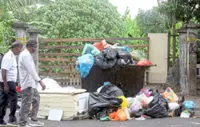
The accumulation of rubbish, from plastic bottles to household waste, has turned parts of the neighbourhood into breeding grounds for pests, while stagnant water in blocked drains raises concerns over mosquito-borne diseases and foul odours.
Nasir Jamhari, 60, said the residents were increasingly worried about the risk of dengue due to the clogged drains.
“We are living with this every day,” he said.
“The drains are full of rubbish and stagnant water. You can see mosquito larvae in there.
“Children and the elderly are especially vulnerable. We are worried about diseases, but the situation doesn’t seem to improve.”
Resident Rajan Govindasamy, 70, said the worsening conditions affected his daily routine, with the sight and smell of rubbish keeping him indoors.
“I hardly step out these days. The smell is quite unbearable, and the surroundings are not pleasant anymore,” he said.
“At my age, you worry about falling sick, and living in this kind of environment only makes it worse.”

Mukkazainab Mustapha, 32, a mother of six with her youngest barely a year old, said she was constantly worried about the health risks.
“I am scared of possibly contracting dengue and other diseases because the drains are dirty and rubbish is everywhere.
“I try to keep my children indoors as much as possible, especially the baby, but it is not easy.
“They deserve a clean and safe place to grow up – not this.
“There is a small stretch by the riverbank where a non-governmental organisation is doing cleanup and urban farming. It is the only place I feel is safe for my children,” she said.
When StarMetro visited the site, the stench was overwhelming, with rubbish piled up along the roadside and spilling into drains, where organic waste was mixed with bulky items such as furniture and discarded household goods.
Drains appeared not to have been cleared for months, clogged with stagnant water and debris, while flies and mosquitoes hovered over the waste.
One particularly distressing sight was a sick duck sitting in a rubbish-filled drain.
Klang Royal City Council (MBDK) councillor Pannir Selvam Gopal said the area has long been a dumping hotspot due to its location near the river and a main road, despite regular clean-up efforts.
“We carried out gotong-royong sessions last year, but the problem persists because of outsiders dumping rubbish here.
“Just last week, we conducted an operation and caught 17 individuals in the act of illegal dumping. They were fined RM1,000.
“The culprits were those operating restaurants in the vicinity and residents from double-storey houses nearby,” he said.
Pannir Selvam said MBDK was working with the relevant authorities and contractors to monitor the situation.
“The population in the area is about 1,700. I agree that the current roll-on, roff-off (Ro-Ro) bins are too small and need to be upgraded.”
Resident G. Sivamalar, 45, questioned whether the penalties were enough to deter offenders.
“If 17 people were caught littering and the total fines collectively amounted to RM1,000, that works out to less than RM60 per person.
“That is hardly a deterrent. As long as the fines are this low, people will keep dumping rubbish because there is little fear of the consequences.
“The drains are filled with plastic rubbish and bottles. It is so thick that the water cannot flow at all.
“It is completely stuck. How often is the city council supposed to clean the drains,” asked Sivamalar, adding that the drains have not be cleaned for years.


