With Hari Raya Aidilfitri close at hand, the rhythmic “clack-clack” of biscuit tins and the heady aroma of toasted nuts and browned butter are once again filling the kitchens of those preparing for the festivities.
Yet, in an era of store-bought convenience and ageing matriarchs, the labour-intensive tradition of home-baking is slowly fading into a memory for many.
For a dedicated few, however, the kitchen remains a sanctuary of remembrance.
This festive season, these families are proving that a recipe is more than just a list of ingredients; it is a living bridge to the women who came before them.
Legacy in a mixer
In housewife Julaiha Packeer’s terrace home in Bangsar, Kuala Lumpur, the air is thick with the scent of melting chocolate and butter.
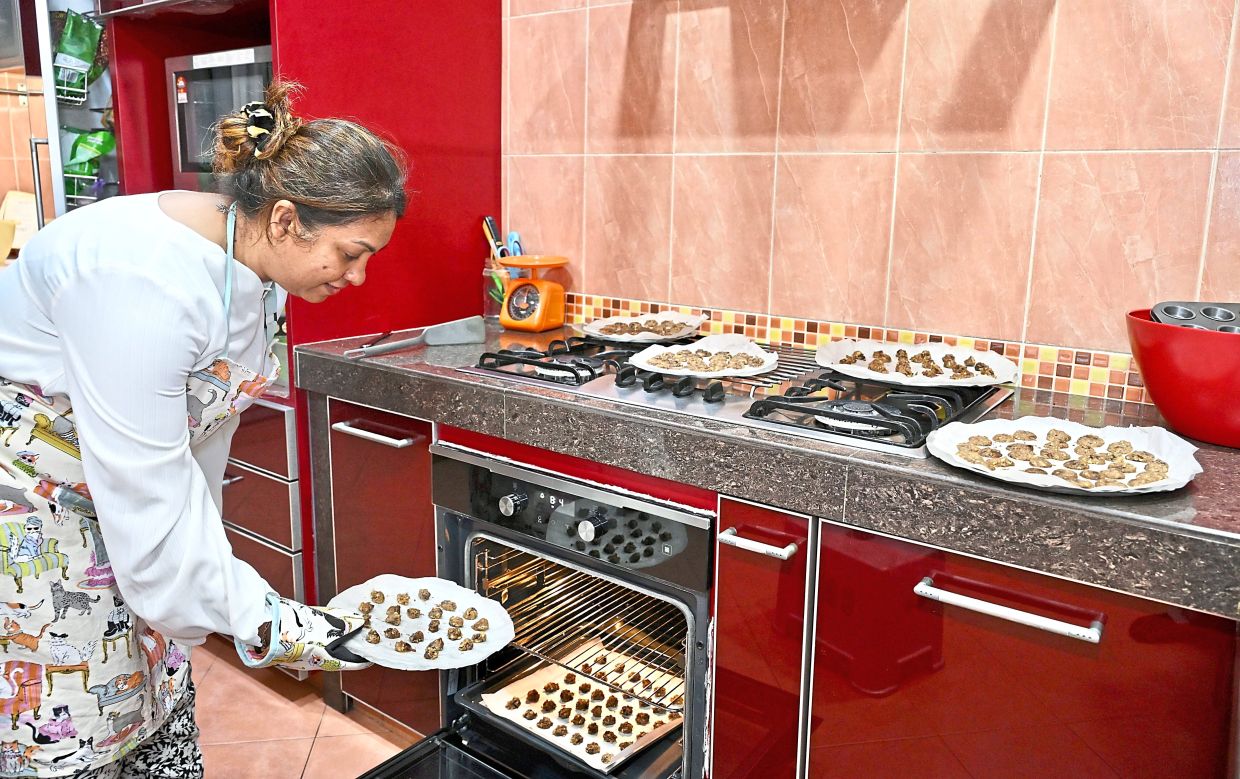
For her, these smells are bittersweet and connected to her mother who passed away in 2012.
“I was not really into cooking,” Julaiha admitted with a nostalgic smile.
“But my mother could tell I needed to take over.
“She made sure I knew how to make her cakes and biscuits so that I could continue her legacy.”
Today, Julaiha and her brother, accountant Abdul Rahman, 40, have turned their mother’s treasured chocolate chip biscuit recipe into a “morning to evening” family baking event.
Their dining table transforms into a sprawling production line where generations gather.
Helping Julaiha are her husband Arif Amla, 38, and sister-in-law Ilya Syireen, 38.
Even the youngest members – Abdul Rahman’s daughters Mikaela, five, Ophelia, three, and Julaiha’s daughter Alayna, four – are drafted into the “bottling department.”
“The bottling also sees my daughters eating the biscuits at the same time,” Abdul Rahman laughed as he watched his children carefully arrange the treats into glass jars.
While the family honours the past by still using their mother’s original Kenwood mixer, they are not afraid of evolution.
This year, Arif is experimenting with M&Ms alongside the traditional hazelnuts and butterscotch chips.
“Our mother would be so proud to see us continuing this tradition after 14 years,” said Julaiha.
“To see all her grandchildren helping out, it is the unity she always wanted for us.”
The 100-year-old press
In the bustling residential area of USJ, Subang Jaya in Selangor, Selamah Manan, 75, oversees a process that feels frozen in time.
Beside her is daughter, Norliza Abd Karim, 51.
Together, they churn out semperit biscuits, the iconic dahlia-shaped biscuits using a tool that is a literal piece of history.
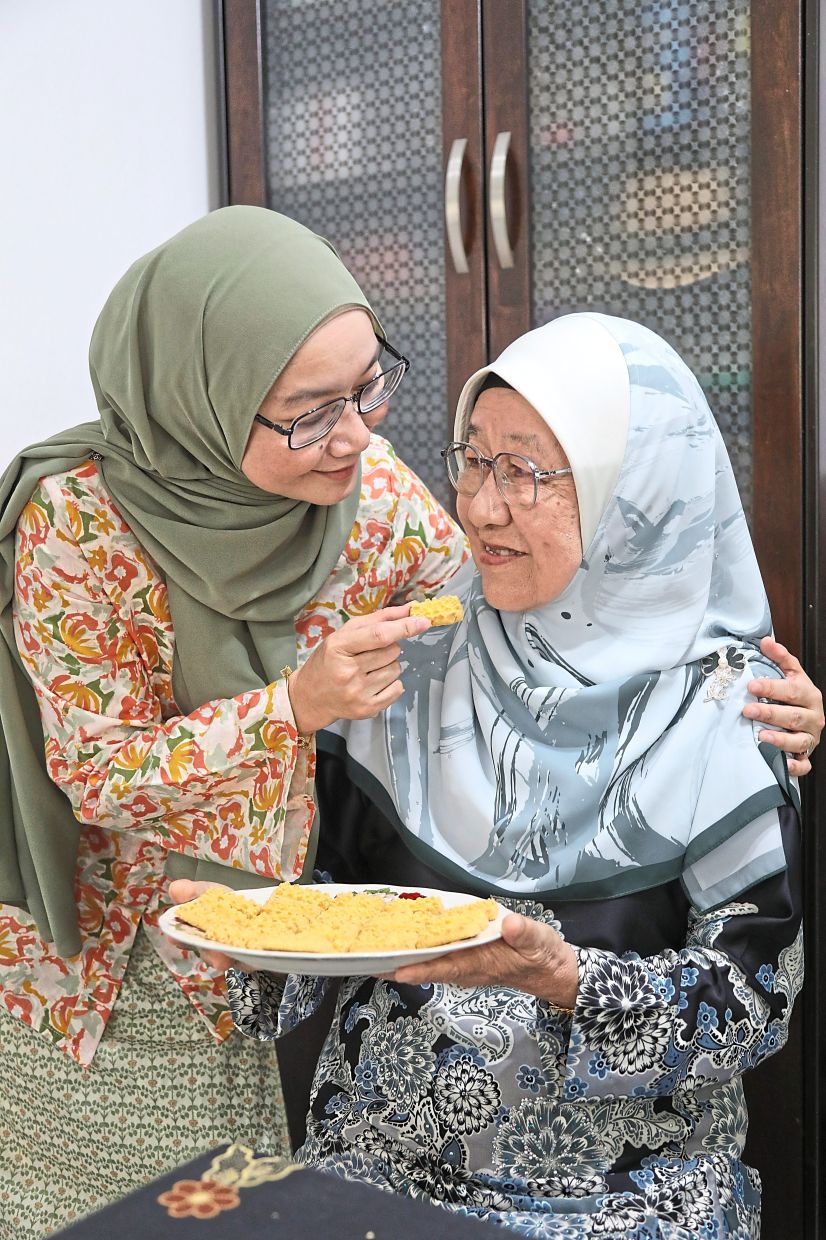
The press mould, crafted from copper and wood, is over 100 years old.
“It belonged to my mother,” said Selamah from Jelebu, Negri Sembilan.
“She taught me and now I teach my children and daughter-in-law.”
Despite her age, Selamah insists on mixing the dough, which is a precise blend of wheat powder, custard, cornflour, eggs and margarine, by hand.
It is a gruelling task, but one that Norliza swears makes all the difference.
“My sister-in-law in Seremban uses an electric mixer for the batches she sells, but my mother still uses her hands,” said Norliza.
“There is a slight difference in texture that true semperit lovers will know immediately.”
The family’s biscuits are legendary, known for being buttery and not too sweet.
The demand is so high that orders via WhatsApp began long before Ramadan even started.
The secret, according to Norliza, is the “ubiquitous ridges” that can only be achieved if the dough is the perfect consistency – neither too hard nor too soft.
“If we could find a skilled person who could hand-make another copper press mould today, we would get one for sure,” she said.
Until then, the century-old heirloom remains an important part of the family.
Dainty bites, deft hands
For retired IT corporate executive Tanti Didi Zam Zainal Abidin, 54, baking is an exercise in precision.
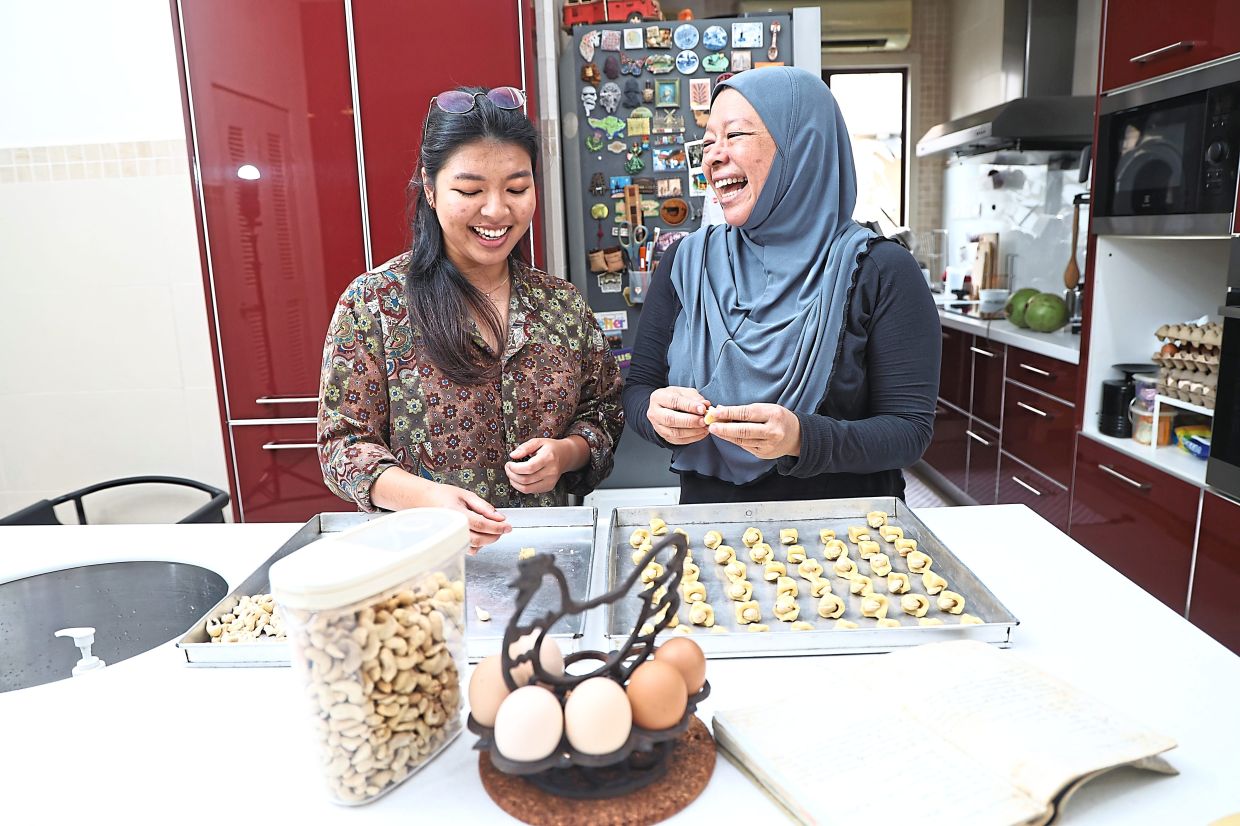
She is currently perfecting her mother’s signature cashew nut biscuits, a staple that has graced her Raya table for decades.
Her mother is no ordinary baker.
ACP Koraiza Abdullah, 83, was a pioneer – the first woman appointed as George Town’s OCPD in 1996 and a legendary figure in Royal Malaysian Police (PDRM) history.
Though her mother has stopped baking due to her age, Didi carries the torch in Shah Alam, Selangor.
“The cashew nut biscuits are so good that Hari Raya is not complete without them,” said Didi.
But there is a standard to maintain.
“My mother is very particular.
“They must be dainty enough to eat in one bite,” Didi said, jesting that if her mum were here, she would chide her for any uneven shaped biscuits.
Didi recalled her childhood in Penang as the designated “kitchen hand” while her sisters were either abroad or too young.
That discipline has now trickled down to her daughter, Ina Enisa Amalo Hojey, 25.
“When I was younger, my mum didn’t allow me to buy processed sweets,” Enisa recalled.
“If I wanted to eat it, I had to learn how to make it.”
By age 13, Enisa was already mastering the making of pavlovas and meringues.
Now, she plans to open her own bakery specialising in brownies, carrying her grandmother’s legacy of excellence into a modern business.
As these families gather around their ovens, the biscuits represent more than just festive snacks.
They are the crunchy, buttery manifestations of love, discipline and shared history.
In the hands of Julaiha, Norliza and Didi, the recipes of their mothers are not just being followed – they are being immortalised, one jar at a time.