
Local, regional delicacies bring unique charm to Ramadan bazaars on island and mainland
Several streets come alive across Penang in the late afternoons, drawing people from all walks of life.
From the island to the mainland, Ramadan bazaars can be seen across neighbourhoods —brimming with colours, aromas and plethora of food for the break of fast.
Besides local favourites, culinary delights from Indonesia to Cambodia are among the top attractions, alongside seasonal treats specially prepared for Ramadan.
Indonesian appeal
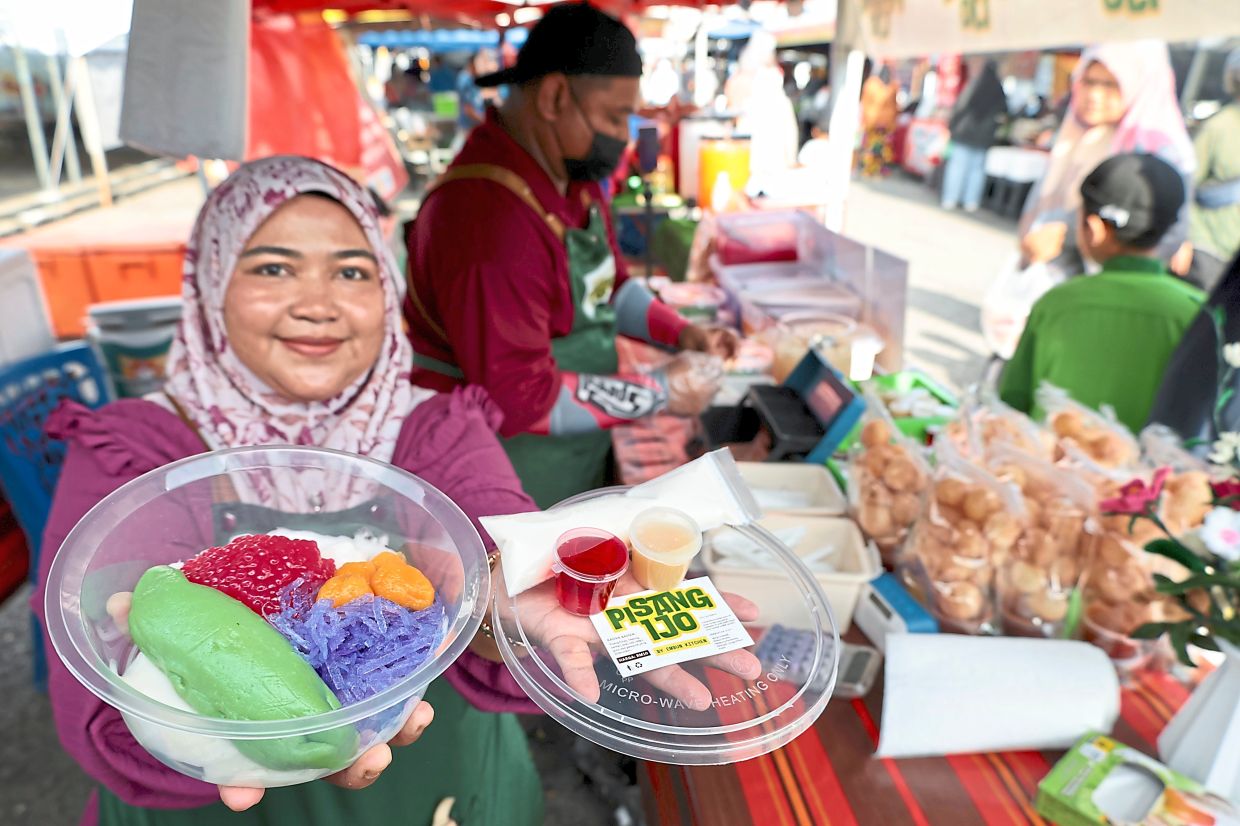
At Bandar Putra Bertam Ramadan bazaar in Kepala Batas, the Indonesian Es Pisang Ijo treat is rather interesting.
Originating from Java, this steamed banana in a layer of green rice flour is served with thick, coconut milk pudding.
Trader Nurfathmi Mohammad Rejab, 36, who learned to make the dessert while living in Jakarta, Indonesia, said she decided to sell it at a Ramadan bazaar this year.
“It is a traditional Indonesian dessert featuring banana and bubur sumsum – a soft, rice flour and santan pudding.
“It is typically served with sago, agar-agar and butir nangka, rose syrup and condensed milk.
“It is best enjoyed cold, sometimes with ice cubes, and is suitable for buka puasa because it is light and refreshing,” said Nurfathmi, who handles the stall with husband Mohd Shazwan Che Zan, 36.
The couple starts preparations as early as 7am, because the treat is labour-intensive.
Nurfathmi sells about 150 portions daily, with a basic set priced at RM10.
A special set with toppings such as boba or mango costs between RM13 and RM15.
The Bandar Putra Bertam township is also known as Bertam Putra among locals.
Grilled Cambodian dish
From Malaysia’s neighbour to the north, Cambodia’s beef-based delicacy tongmo is fast gaining popularity among folk in Penang.
Marinated with fragrant spices, the minced beef is stuffed into cleaned beef intestines and grilled over an open flame until smoky and charred.
Athirah Ahmad, 28, trading at Kepala Batas Ramadan bazaar, said the beef marinade resembled traditional satay spices.
She offers three varieties – spicy, original and harimau menangis – for buka puasa.
“Each marinade is different. The harimau menangis has a strong taste of black pepper.
“The spicy one is really fiery, while the original is milder, highlighting the beef’s natural flavour,” she said.
The mother of two said the spice mix was sourced from Cambodia to keep the taste original.
In Cambodia, tongmo is typically enjoyed with a sour element – often paired with pickled papaya.
In Malaysia, however, it is served with Thai chilli sauce and fresh salad.
“The response this Ramadan has been encouraging,” Athirah said, adding that her other stall is located at Taman Tasek Gelugor Utama Scientex Ramadan bazaar.
Bite-sized treats
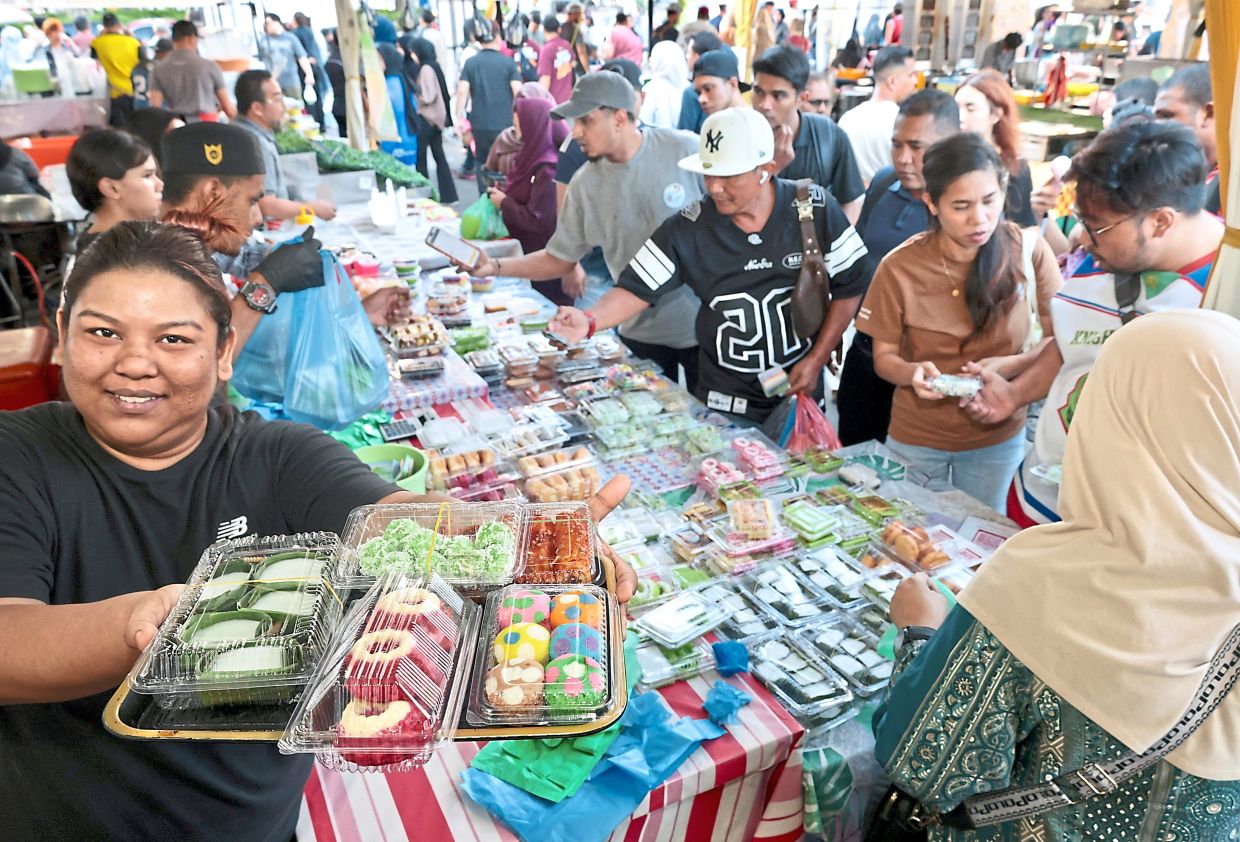
Small in size but big on appeal, mini apam balik sells fast at Bayan Baru Ramadan bazaar, one of the largest in Penang.
Unlike the traditional pancake, the mini version features bite-sized portions.
Since its introduction last year, the mini apam balik has quickly gained fame as a Ramadan-only treat.
“Customers are specifically looking for it this fasting month,” said Muhamad Hanafi Arpan, who has been making apam balik since 2013.
Crediting his wife for the idea, Muhamad Hanafi said, “At first, I tried using a small frying pan, but they didn’t turn out too well.
“My wife later found the perfect mould online, which we ordered from China,” he said.
His stall offers 20 flavours including chocolate, hazelnut cocoa spread, pistachio, hazelnut cocoa spread with cheese, Biscoff and tiramisu.
This year’s new additions such as strawberry, coffee and cappuccino add a modern twist to the classic local pancake.
A box of 10 mini apam balik is priced at RM20, while a smaller box of four is RM10.
He said daily production could reach 12kg or more, a testament to the demand for their wares.
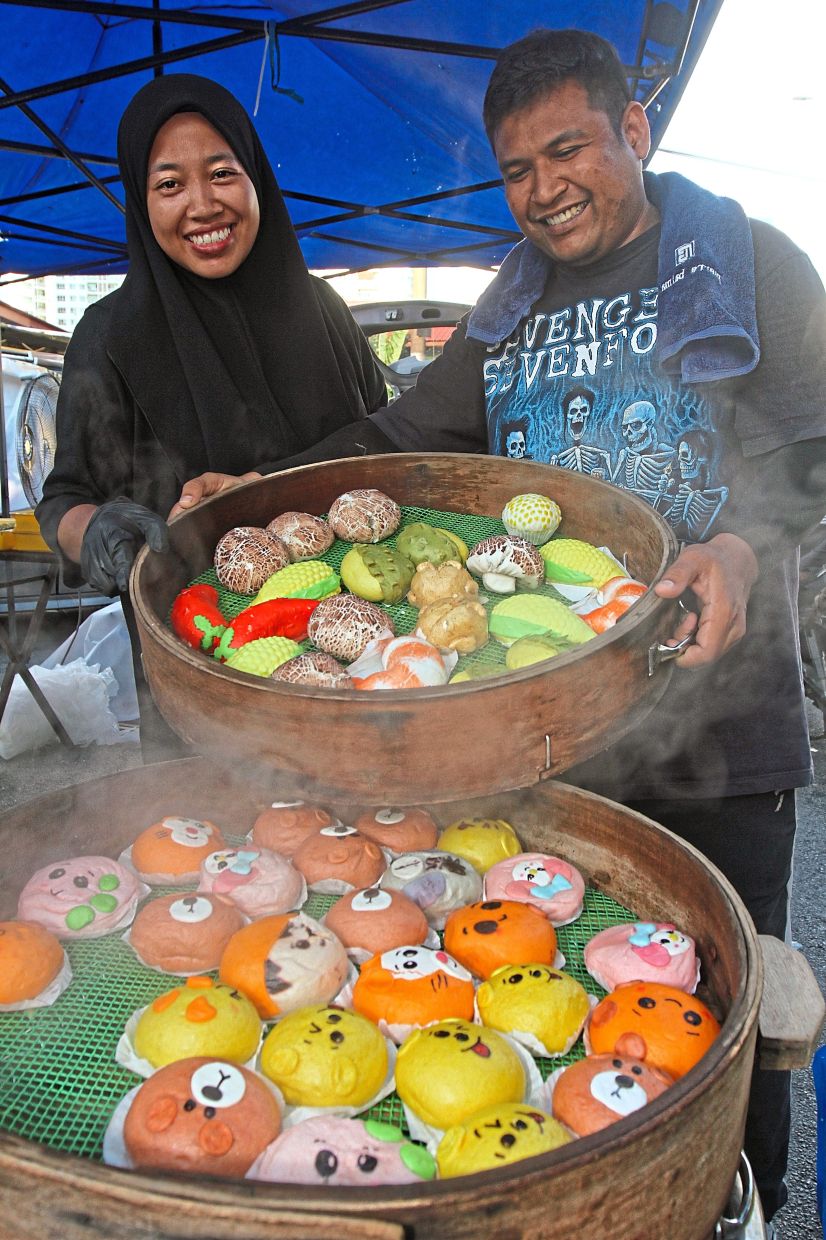
Another tiny treat with big impact is “Pau Comey” sold at a bazaar along Jalan Mahkamah in Bayan Lepas.
These cute steamed buns, proffered by Muhammad Faizul Nazreen Hamzah, 33, and wife Nuramalina Ahim, 31, are only available during the fasting month.
Traditional taste
Another crowd-puller is kuih tepung pelita featuring two distinct layers – fragrant pandan custard topped with santan.
Steamed in small cups and best served chilled, its smooth texture and harmonious blend of sweet and savoury flavours make it a perennial favourite during the fasting month.
For many, it is more than just dessert; it is a tradition.
“Tepung pelita is synonymous with the fasting month,” said Nur Balqis Md Sharif, 24, when met at a stall selling trays of the neatly arranged green-and-white kuih.
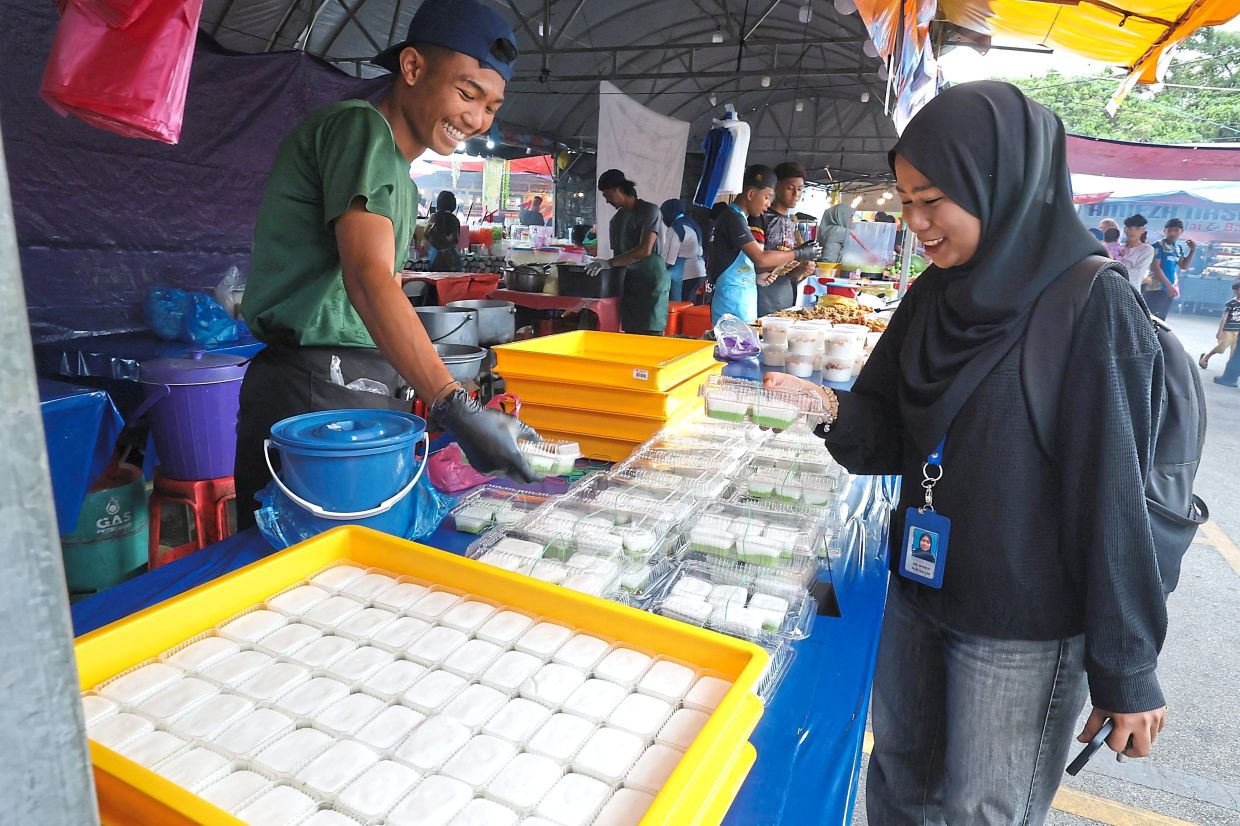
“It is actually quite hard to find it outside of the fasting month.”
Another visitor said he was drawn to the soft colour combination for the kuih sold at the stall.
“Some places make it darker, but the one here looks lighter and more natural,” Muhammad Zulhakim Mohammad Hazim, 26, said.
For Fahmi Nazri, 25, the attraction is in the taste and texture.
“It is soft and smooth. I love the pandan layer at the bottom and the richness of the santan on top,” he said, adding that kuih tepung pelita was one of his must-buy items.
Hard work pays off
Together with seven family members and two helpers, Aisyah Johar, 33, prepares around 50 types of local kuih and desserts for sale at bustling Prangin Mall Ramadan bazaar.
Among the colourful spread are kuih talam, kuih bengkang and her bestseller – kuih tepung pelita.
Her day begins long before sunrise. She wakes up at 4.30am and starts preparation before sahur.
Together with her team, they work until 10am, or until all the items are ready.
The family has been operating at the Ramadan bazaar for the last five years, steadily building a loyal following among office workers and families.
Aisyah, who runs a Western food stall at Jelutong hawker centre, only sells kuih during the fasting month.
Despite the long hours, she finds the routine rewarding.
In her kitchen, workers are assigned tasks to make the workflow efficient, such as making coconut custard, cutting banana leaves and attending to the kuih tepung pelita layering process.
For Aisyah, business is not just about profit.
“Whatever items I fail to sell, I donate to the poor and homeless at nearby mosques,” she said, emphasising her family’s commitment to reducing food waste.
Just a few stalls away, the clatter of plastic cups signals another thriving Ramadan venture.
Firdaus Amin Mohd Azmin, 26, his brother Faris, 28, and Faris’ wife Fazira Usnah, 29, are selling five types of iced drinks as a seasonal trade option.
Firdaus works in road construction while Faris is a mechanic.
“We only sell drinks during this period to earn extra money.
“Business has been brisk, as we sell an average of 150 drink packets daily and hope to continue until March 20,” Firdaus said.
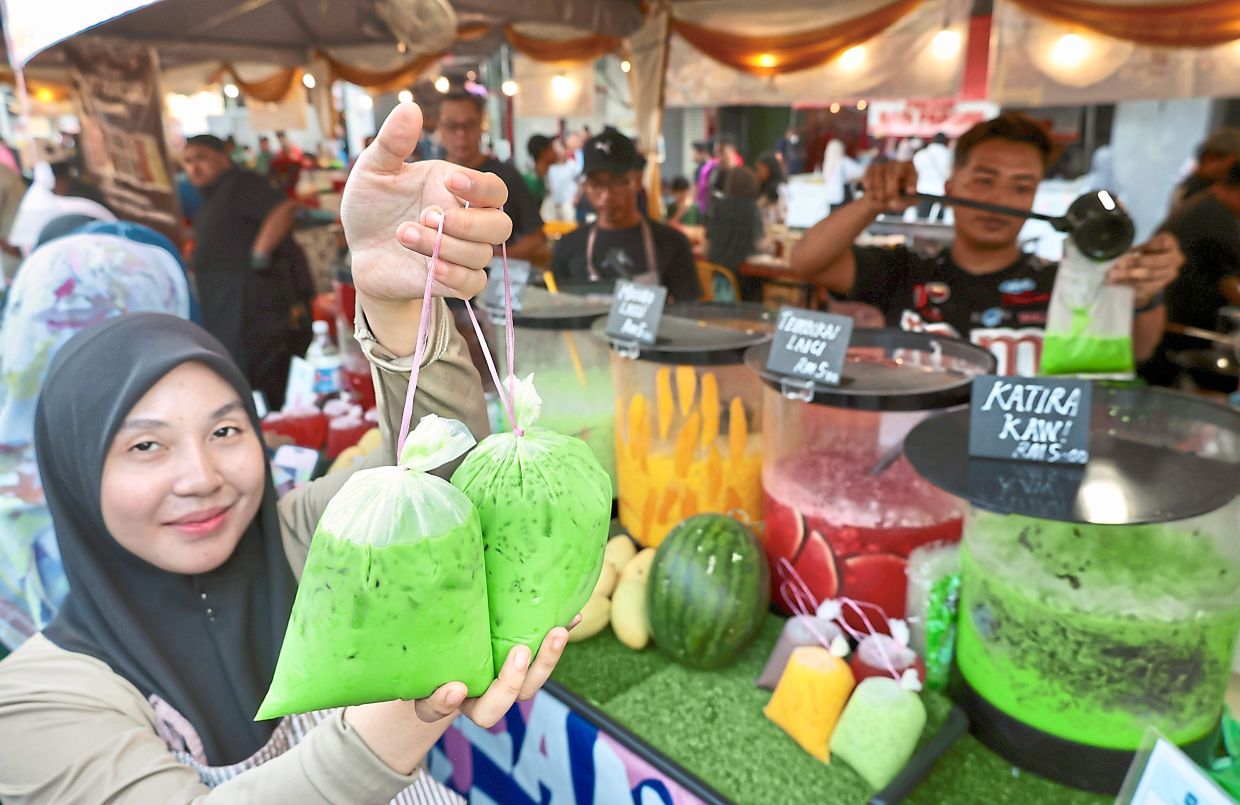
Their strawberry “mojito” is the crowd favourite, while katira – a fragrant mix of pandan, basil seeds and grass jelly – continues to enjoy steady demand.
In the spirit of Ramadan, Firdaus said unsold drinks were shared with fellow traders who reciprocate with leftover food, creating a small but meaningful circle of goodwill.