
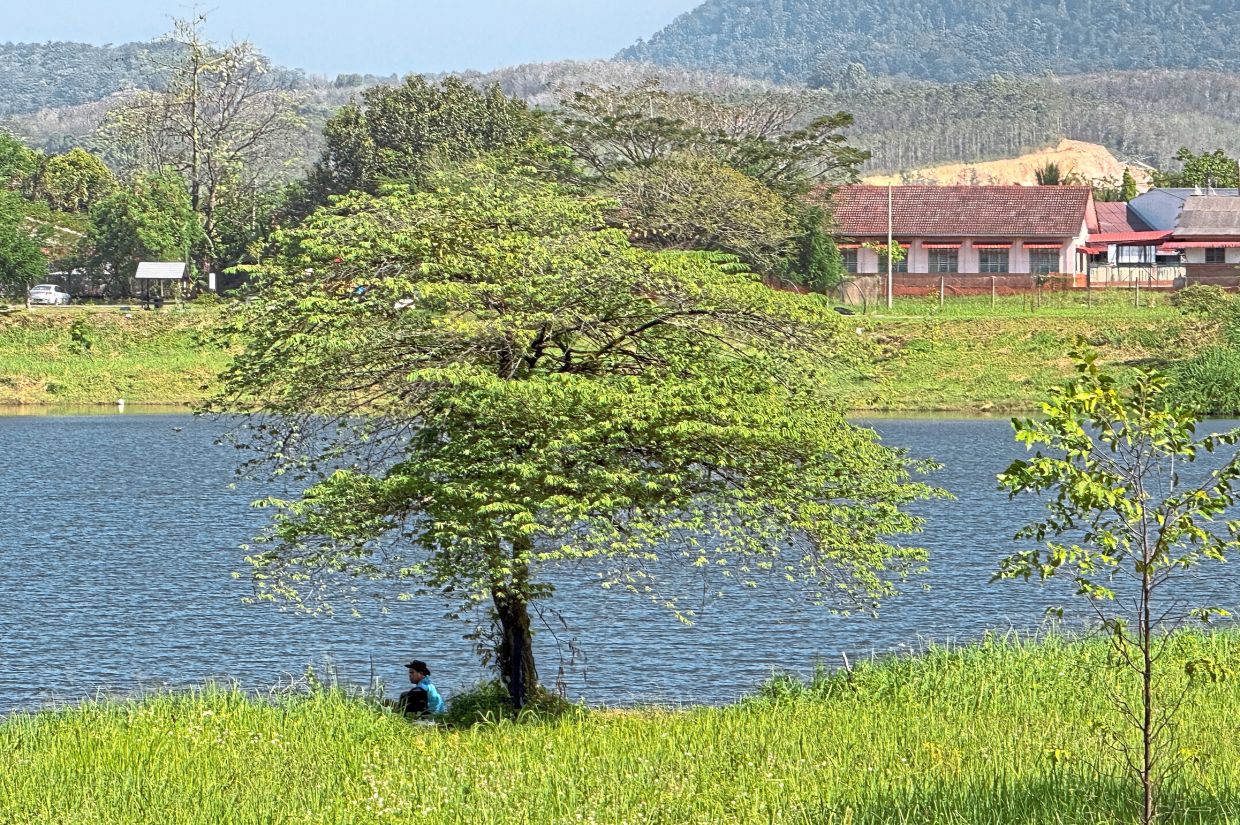
Sungai Pinji Madani Recreational Park in Tambun, Perak, has become a popular place for nearby residents.
The park which opened last year features a 2km track encircling a pond.
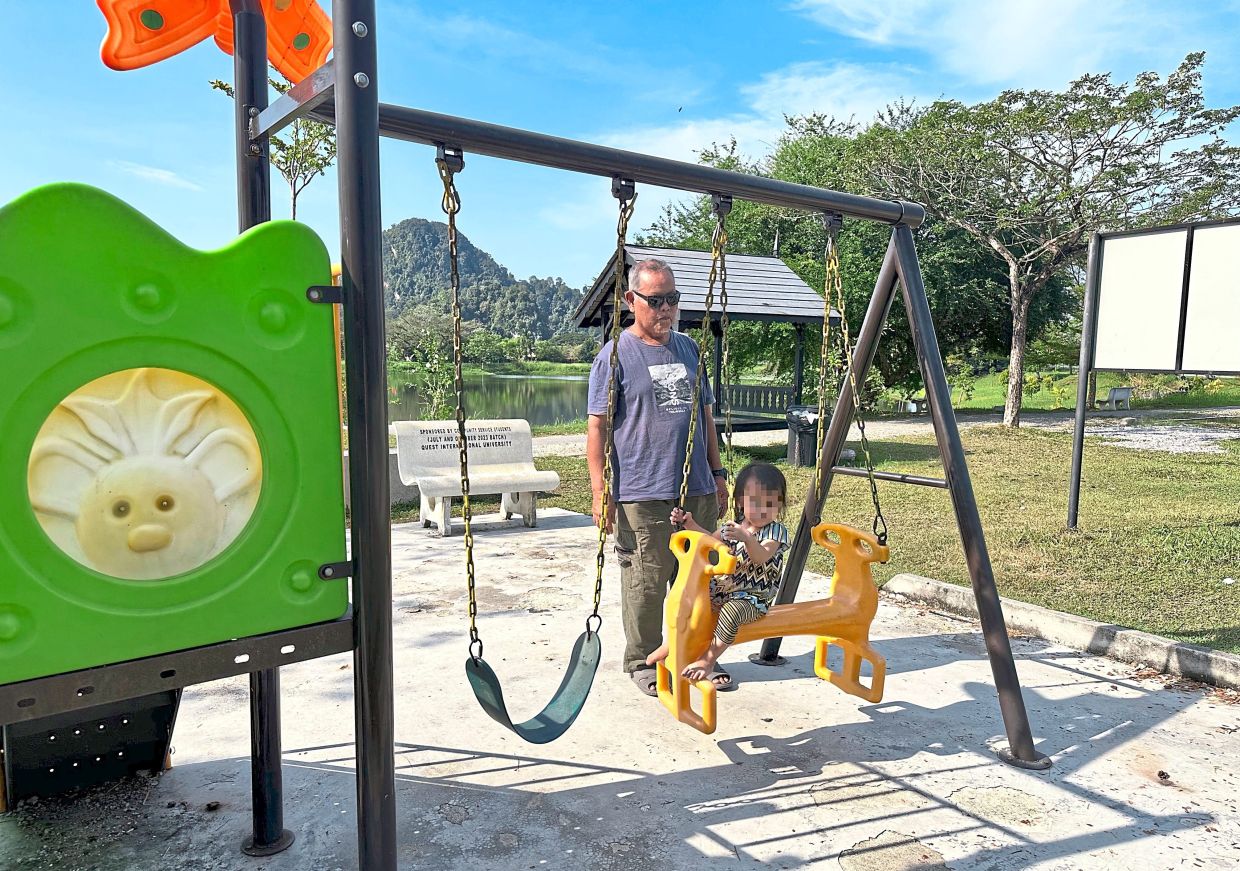
Among the regulars is Ahmad Ramli Razali, who takes his granddaughter to the park for her to enjoy the playground amid the greenery.
However, he questioned: “If the grass is this long, who will want to come here?”
His concern is familiar to two people closely involved in the park’s design and planning: Meor Abdullah Zaidi Meor Razali, a researcher at Institute of Landscape Architects Malaysia (Ilam) and Ivan Fong Jeng Jong, owner of Hijau Biru Landscape Architecture and the project’s lead landscape architect.
For them, the overgrown grass is not a sign of neglect.
“The public expects everything to be neat, with trimmed lawns and orderly landscapes.
“But for this kind of concept, we allow the grass to grow taller, as naturally as possible,” Meor Abdullah said in a Bernama report.
The concept is Nature-based Solutions (NbS), using natural processes to work with the climate, including preventing and mitigating floods.
That decision puts them at odds with many visitors accustomed to manicured greenery.
It also places the park at the centre of a larger question: How do they convince people that going back to nature works best even when the benefits are not immediately visible?
Once a tin mine, the area also known as Sungai Pinji Retention Pond functions as living infrastructure that doubles as a sponge basin − to manage stormwater − and a community park.
As Perak’s first floodable park, Sungai Pinji Retention Pond lies in the Kinta Valley, a low-lying basin cradled between the Titiwangsa and Keledang mountain ranges.
Its geography makes the valley prone to heat and heavy rainfall.
When storms hit, steep gradients in the surrounding hills funnel rainwater rapidly downhill.
Environmentalists say this funnel effect causes the water in Sungai Kinta and its tributaries to rise alarmingly fast, turning heavy rain into flash floods.
Historically, authorities have responded with measures that once seemed logical, such as concrete drains, straightened channels and deeper riverbeds.
The idea is to move water away as quickly as possible.
While these interventions offered moderate short-term relief, they created new problems over time.
Society of Environmental Activists Malaysia (Kuasa) secretary Hafizudin Nasarudin said river dredging would not solve flooding because it changed riverbeds for the worse.
“There is turbulence in natural rivers because of rocks. When water hits these obstacles, it slows down and that is good.
“If the water is too calm, it usually means the riverbed is mainly sand and sediment.
“The rocks help prevent the river from flowing too fast.”
He explained that deepening and straightening channels accelerated water flow, reducing opportunities for rivers to overflow naturally and for surrounding soil to absorb the excess.
Faster currents also erode riverbanks, sending more sediment downstream, which can choke drainage systems further along.
NbS takes a different approach.
Instead of rushing water away, it tries to slow it down.
Tall grass, for example, help anchor the soil and reduce erosion during floods.
“If erosion happens, there is another cost. You have to build retaining walls and so on,” said Meor Abdullah.
Instead, he said, “Let nature through plants hold the earth.”
Another benefit of going natural is low maintenance costs, which experts say is crucial for long-term sustainability.
“We expect this to be more sustainable in terms of reduced maintenance.
“That is an important distinction between conventional engineering solutions and NbS,” said Assoc Prof Dr Sapura Mohamad, an ethnobotanist at Universiti Teknologi Malaysia (UTM) in Johor.
She said another aspect of NbS was having many native trees and plants to help mitigate heat, a growing concern as global temperatures rise.
According to Berkeley Earth, global temperatures have been climbing steadily, with 2025 coming in as the third hottest year on record since 1850.
The hottest was 2024, which saw a global mean temperature of 1.62˚C, followed by 2023 at 1.54˚C.
The numbers are compared to average temperatures in the pre-industrial period from 1850 to 1900.
Sapura, who is also deputy dean of the Built Environment and Surveying Faculty, stressed that such parks needed an interconnected green network to fulfil its purpose.
Against this backdrop, Sungai Pinji Retention Pond is intended to be more than a standalone project.
“Most green areas in Malaysian cities are isolated.
“That is why we are proposing to connect parks and green spaces,” said Fong, adding he often visited the day after a heavy rainfall to see how the park was holding up.
“The floodable part is already in effect. So far, after heavy rain, we see the water seeping into the ground,” he said.
Success stories of using NbS for flood mitigation include Bangkok’s Benjakitti Forest Park and Hoboken, New Jersey in the US.
In 2022, when Bangkok faced a “10-year rainfall event”, the park absorbed the surge, keeping the surrounding central business district dry while other parts of the city flooded.
Yet despite mounting evidence and repeated government pledges toward sustainability, Sungai Pinji Retention Pond risks becoming what planners call stranded infrastructure – a promising idea that never reaches its full potential.
Phase Two of the project is slated for completion by 2030, but work has yet to begin.
“The sponge basin is not reducing floods in other areas because it is not connected yet,” said Fong, highlighting that funding was a challenge.
“Without further investment, the basin is unlikely to utilise its storage capacity or fully integrate with the surrounding river system.”
Replying to a query, Ipoh City Council (MBI) said via WhatsApp that current implementation still lacked NbS elements.
Sapura said with NbS, plant selection was crucial as it created biodiversity.
However, residents want cooler temperatures, cleaner air and protection from floods – not snakes, lizards, long grass and insect pests.
Hafizudin said community engagement was crucial if projects like Sungai Pinji were to succeed.
“People need to understand why the park looks the way it does.”
He suggested installing signboards explaining the park’s features and function of the pond and sponge basin, including how water entered, was stored and released and how animals, plants and soil contributed to the process.
This report is part of the Panas! Climate Change Stories in Malaysia initiative by Science Media Centre Malaysia.