AFFORDABLE books, free clothing and repurposed fabrics are proving that saving money does not have to mean sacrificing quality or dignity.
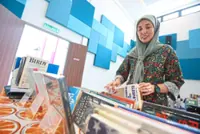
Baca, a used book initiative run by Khaleena Khalid, prices most titles between RM5 and RM20.
This makes reading accessible at a time when imported fiction can cost more than RM70, she said.
Khaleena said she began the initiative 11 years ago as a passion project and it has since grown into a movement promoting affordable reading.
With a collection of 1,500 books split between her home in Larkin and a cafe in Jalan Tan Hiok Nee, Johor Baru, she sources titles through bulk purchases and donations to keep prices low.
“There are not many secondhand bookstores in Johor Baru; I want to make books accessible to as many people as possible,” she told StarMetro.

Khaleena said customers at the cafe could freely browse the shelves and read while enjoying their coffee.
“About 70% of my customers are Singaporeans visiting Johor Baru for cafe-hopping.
“Many of them gravitate towards non-fiction, while locals tend to prefer fiction,” she said.
Beyond the cafe, she runs free book exchange drives with non-governmental organisations to extend her reach.
“I also do this to discourage people from buying pirated books, because piracy kills the industry and discredits the author’s hard work,” said Khaleena.
She prefers preloved clothes and furniture over buying new, for their value and unique designs.
Over at Taman Pulai Indah in Iskandar Puteri, a community initiative called Kraf Hibiscus combines cost savings with creative upcycling.
Led by Universiti Teknologi Malaysia senior lecturer and resident Dr Norfhairna Baharulrazi, the project was inspired by the Japanese kuru kuru concept of recirculating goods to minimise waste.
It began last July with a focus on school uniforms.
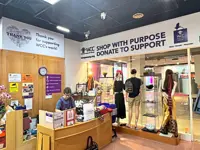
“We gathered preloved school uniforms and school supplies for those in need to take for free.
“We later expanded to include adult and children’s clothing, headscarves and traditional wear,” said Norfhairna.
The response has been heartening, she said.
“About one tonne of clothing was collected during our first drive last August, with around 700kg distributed to the community.
“At a second collection, in November 2025, more than two tonnes were gathered.
“We also organised a back-to-school drive in early January.
“Many of the 500kg of donated items were snapped up quickly as families prepared for the new school year,” she said.
She added that unclaimed items were either upcycled or sent to fabric recyclers.
The initiative transforms old clothes into practical items such as tote bags, pouches and bookmarks.
This effort is powered by a core team of 10 women from the neighbourhood, who gather daily at the Rukun Tetangga centre to sew.
Norfhairna said that beyond easing household expenses, Kraf Hibiscus created income opportunities for homemakers by turning sewing skills into small-scale entrepreneurship.
Some of the items were recently used as door gifts at an event in Kuala Lumpur, she added.
The project is supported by the Iskandar Puteri City Council’s low-carbon community grant.

Southern University College’s Business and Management Faculty senior lecturer Suthan Dalinayodo said buying secondhand items helped families protect their disposable income.
“When households spend less on items like books, clothes or furniture, they free up money for essentials such as food, utilities and transport.
“Buying preloved is no longer associated with hardship.
“It reflects financial wisdom and resilience,” he said.
He added that stretching every ringgit was increasingly about practicality, not compromise.
Suthan noted that the growing acceptance of secondhand goods signalled a move away from status-driven consumption towards value-based decision-making.
“Extending the life cycle of goods creates economic, environmental and social value simultaneously,” he said.
Suthan’s advice to consumers is simple: “Question whether something needs to be new.
“If the item only needs to function well, buying preloved fits naturally into a smarter budgeting strategy,” he said. — By YEE XIANG YUN