Community effort turns rubbish-filled land into thriving garden, fish farm in Taman Sri Serdang
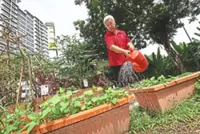
What was once a neglected, rubbish-strewn corner of Flat Sri Serdang in Taman Sri Serdang, Selangor, has been transformed into a thriving community garden dubbed Flat Ikan.
Spanning 0.2ha behind the flats, the garden features vegetable plots, composting facilities and small fish tanks.
It serves as both a food source and an educational space for sustainable urban farming.
ALSO READ: Selangor scales up urban farming to bolster food resilience
A group of six residents saw the land’s potential and moved to create a community garden.
With the help of the joint management body (JMB), they cleared piles of waste from the area.
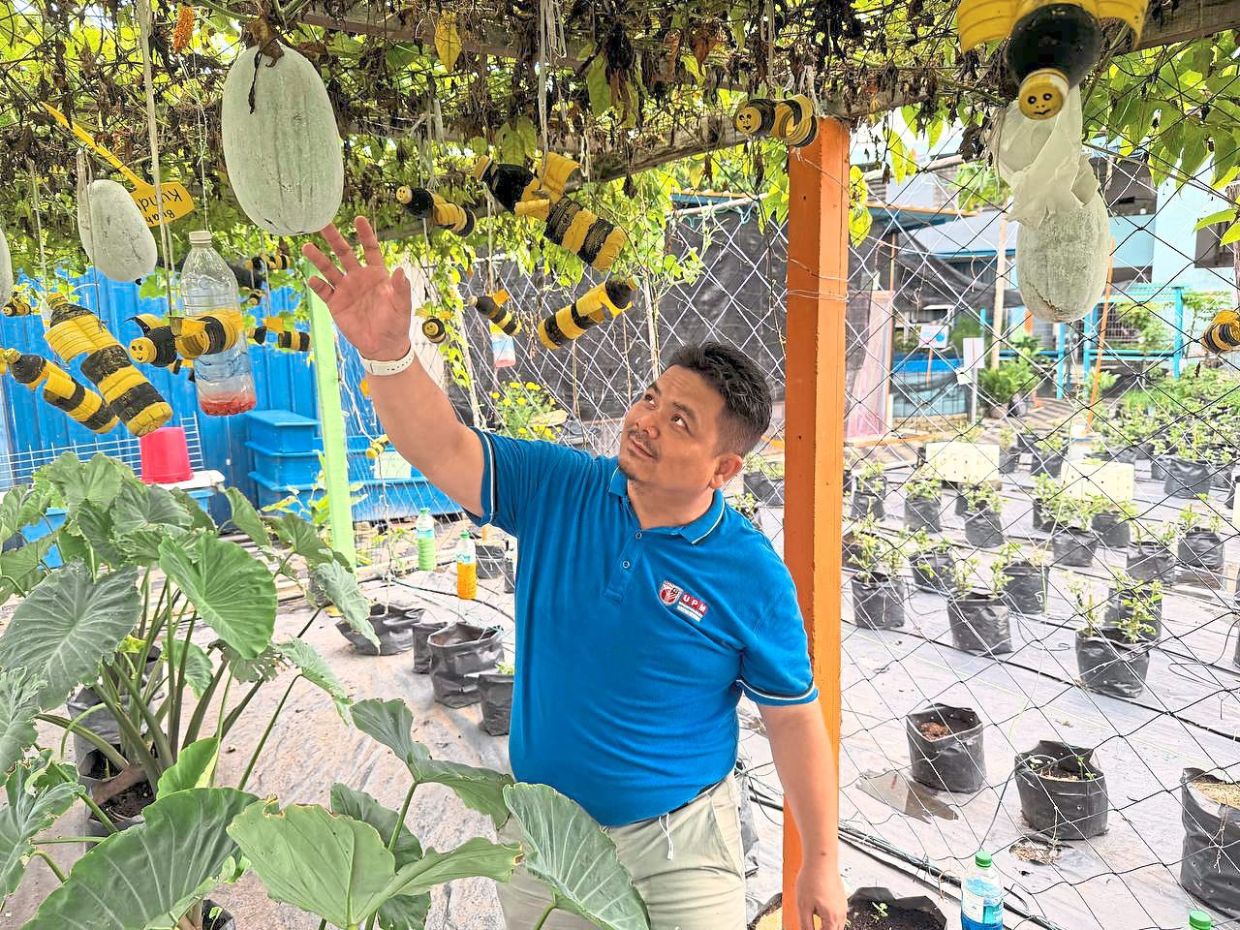
In addition to rubbish, the open area had pests, including rats and snakes.
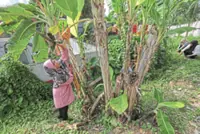
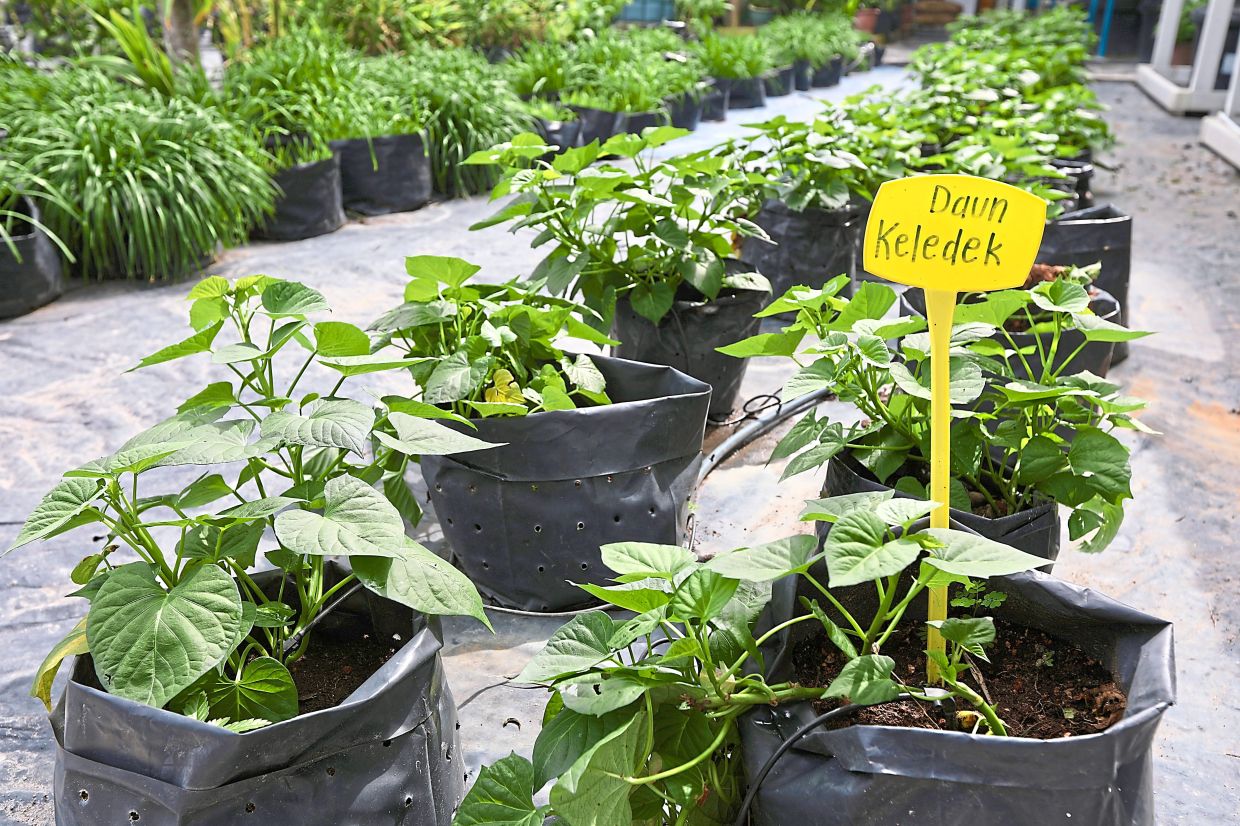
Today, the urban garden is home to more than 20 types of plants.
These can be seen on a Subang Jaya City Council (MBSJ) educational banner identifying the site – Flat Ikan Community Garden – as an educational hub.
The community garden is not confined to soil-based farming, it also features aquaculture and shaded growing systems.
According to residents, the most productive crop is the high-yielding okra.
Feeding a community
Chinnatamby Addakan, 66, said a pack of ladies’ fingers (okra) costing RM5 could help feed a family for one or two meals.
Each pack has around 15 okra pods, he said.
“The flat has more than 400 housing units, and it is useful to have fresh vegetables growing nearby,” Chinnatamby said.
Residents prefer buying from their very own farm because the vegetables are fresher and cheaper than those from the market.
To manage pests, the community gardeners use organic inputs like neem extract and wood vinegar supplied by Malaysian Agricultural Research and Development Institute (Mardi).
“We prefer keeping it natural and we know the vegetables are safe for consumption and tasty,” said Chinnatamby.
He said the revenue from the gardening activities was channelled back into operations for the purchase of fertiliser, composting materials and basic tools.
The residents also rear tilapia in blue tanks, hence the “Flat Ikan” moniker.
Fish farming began about two years ago, with guidance from Universiti Putra Malaysia’s (UPM) aquaculture experts after an earlier biofloc system (recycling waste into feed) failed.
“Now we know how to weigh the fish, calculate feed and monitor pH and oxygen,” Chinnatamby added.
The tanks have around 100 tilapia per cycle and the fish are fed 5% of their total body weight daily.
He said when oxygen levels dropped, residents would follow UPM’s advice to replace part of the water, add a small amount of salt and top up the fish tanks with stored rainwater.
The fish, he said, were sold at between RM13 and RM15 per kg, roughly half the market price.
Residents are notified through a chat group whenever fresh produce or fish are available.
Chinnatamby said during busy periods, everything would sell out within half an hour.
At a shaded corner stands a 2.78sqm house, growing oyster mushrooms, built under a Sejahtera Komuniti Madani grant.
“The residents manage the mushroom cultivation themselves, harvesting every two to three days before letting the substrate rest for about a month before the next production cycle.
“They grow well even in small spaces and we sell them for RM2.50 per 150g,” said 67-year-old resident Norela Omar.
Input from experts
UPM has been lending scientific backing to the community garden.
UPM senior lecturer Dr Muhammad Heikal Ismail began working with Flat Sri Serdang residents in 2019 under the university’s community-engagement initiative, focusing on food-waste management and composting.
“During our first visit, the soil was hard and infertile. But the residents were committed, so we supported them with technical advice and knowledge,” he said.
UPM then introduced a rainwater-harvesting system and composting facilities, turning the site into a small-scale research and demonstration garden.
Residents were trained to separate food and garden waste for bio-compost, experimenting with several techniques of vermicomposting using red worms, black soldier fly larvae composting and trench composting before settling on simpler systems suited to Flat Ikan’s capacity.
“The best mix is about 60% garden waste and 40% food waste,” said Muhammad Heikal.
“This produces healthy compost that improves soil quality while reducing waste at landfills.”
UPM also continued supporting the group virtually during the Covid-19 movement restrictions.
Muhammad Heikal said together with his students, four online sessions on waste segregation and composting were held.
This was followed by on-site workshops once movement restrictions eased, he added.
The project later evolved into a “living laboratory”, where UPM students observed composting and plant-growth processes directly, collecting data for academic research.
The collaboration has produced one master’s thesis and two peer-review journal papers as well as new studies focusing on “bokashi” (Japanese for fermented organic matter) composting.
Heikal said the “bokashi” method was suitable for flat and PPR communities due to its low odour, compact setup, and ability to be managed indoors without attracting pests.
“The community’s passion is the main reason this works. They’ve maintained the garden for years without losing momentum.
“I’ve worked with other groups before, and many projects fail due to lack of commitment, but not here though,” said Muhammad Heikal.
The project also received technical and moral support from MBSJ and Selangor Agriculture Department, with Universiti Kebangsaan Malaysia (UKM) later coming on board to assist with improving footpaths and site access.
Urban educational hub
Flat Sri Serdang’s community garden is one of several recognised by MBSJ as an educational hub for urban agriculture.
To educate residents, the banner at the farm lists the types of herbs and vegetables, their scientific names and brief descriptions.
Among the plants grown here are salad greens, okra, bitter gourd, sweet potato leaves, bottle gourd, lemongrass, garlic chives, green chilli and spring onion.
According to the visitors’ logbook, more than 320 people have visited since 2021, including UPM and UKM students, MBSJ staff, school groups and residents from neighbouring flats eager to learn about urban farming methods.
Resident Susan Chong Siew Chin, 65, said the site frequently hosted educational visits and hands-on sessions.
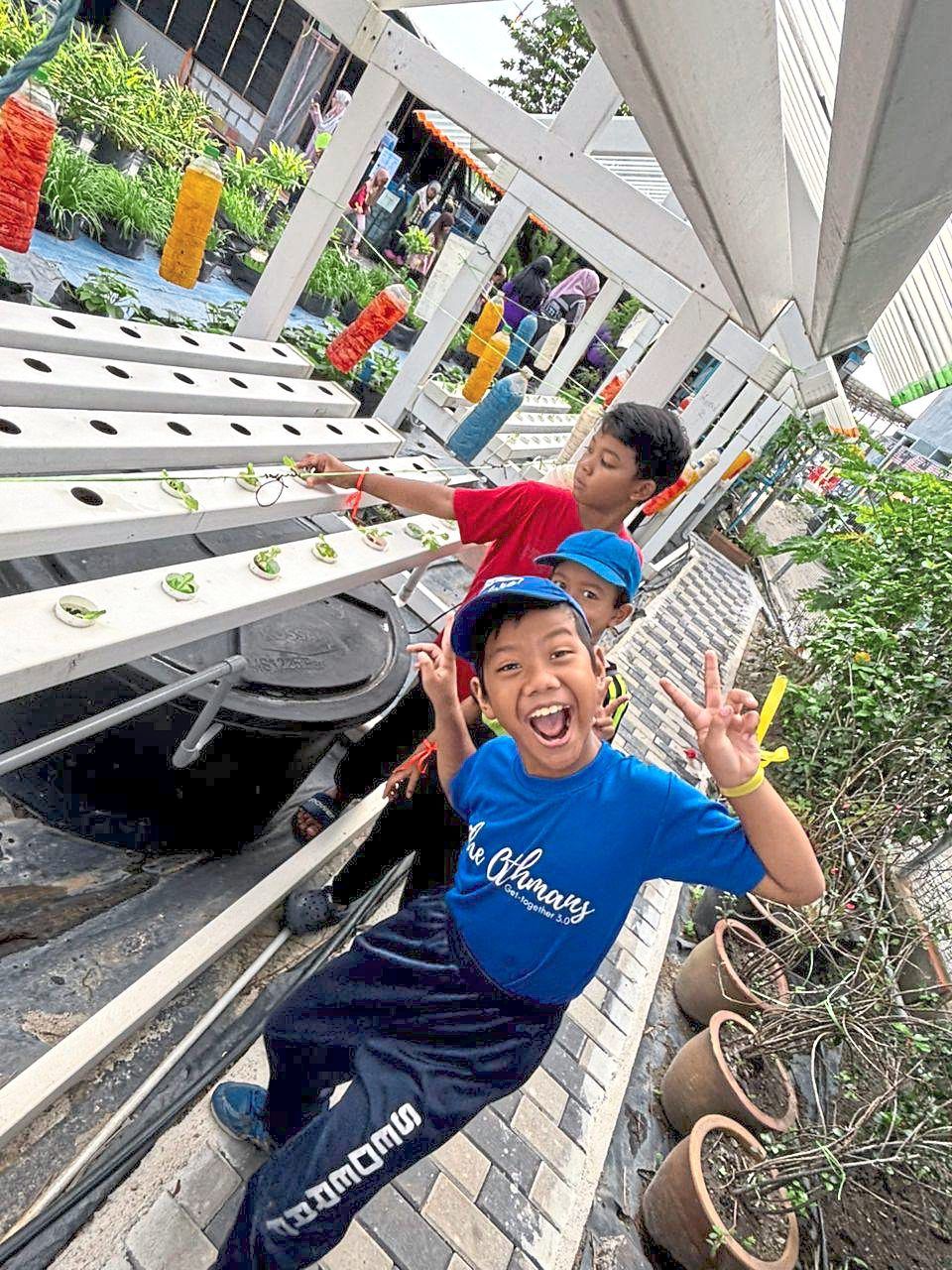
“Our community garden is one of those under MBSJ where schoolchildren come to learn how to grow vegetables, make compost, practise hydroponics and raise fish,” she said.
Another active member of the garden community, Chong Kwai Wing, 57, said residents also learned from UPM’s on-site sessions, where its students were taught various composting and planting methods.
“When the university came to teach their students, we joined in to learn too,” she said.
“That is one of the ways we are able to pick up many of the techniques we use today.”
The garden’s educational role underpins UPM’s ongoing collaboration with residents, focusing on composting and aquaponics research.