
IN THE digital age, Malaysia’s rural areas have not been left behind.
To ensure that technological progress benefits everyone, various initiatives have been introduced, including efforts to address long-standing issues faced by rural communities such as the absence of a proper address.
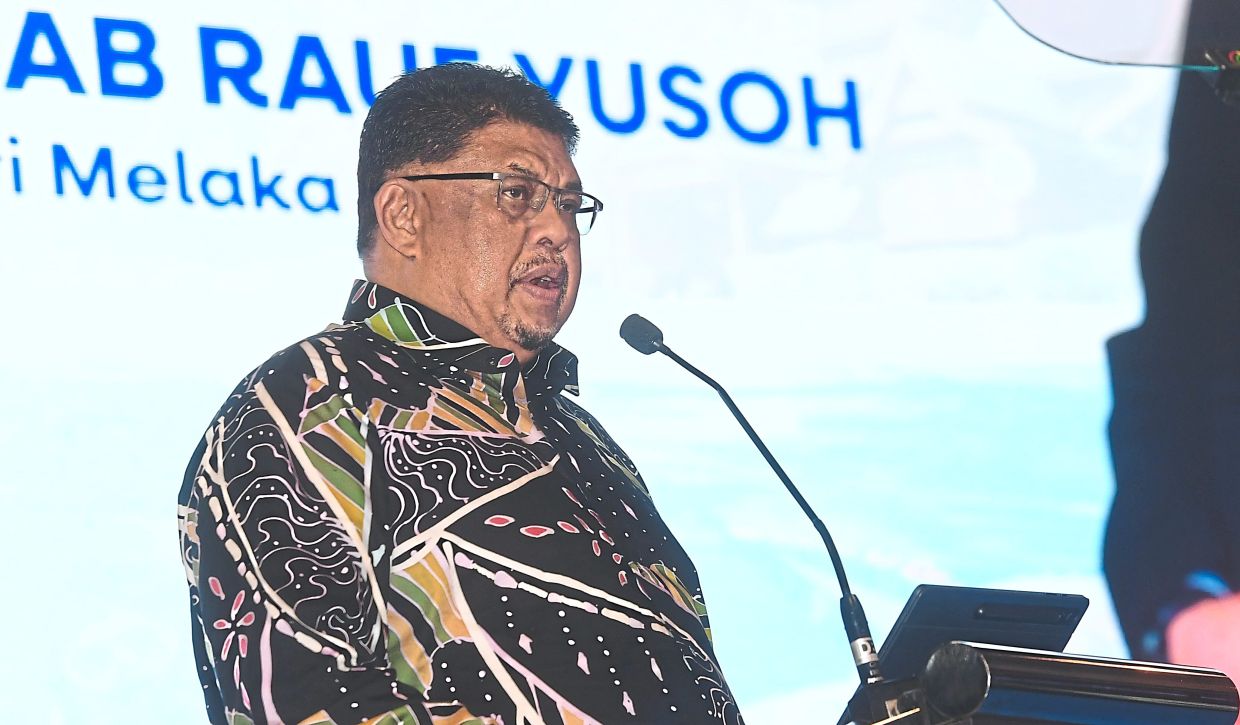
In Melaka, the Digital Village initiative introduced by Chief Minister Datuk Seri Ab Rauf Yusoh has emerged as a game- changer, streamlining administrative processes for rural residents who have long grappled with address-related challenges despite living in the same homes for decades.
State science, technology, innovation and digital communications committee chairman Datuk Fairul Nizam Roslan said the initiative was in line with the state government’s goal of empowering rural residents through social, economic and technological advancement.
“The Digital Village initiative is introduced to resolve issues of unclear and unstructured home addresses, providing great benefits in terms of management, delivery and other related services,” he told Bernama.
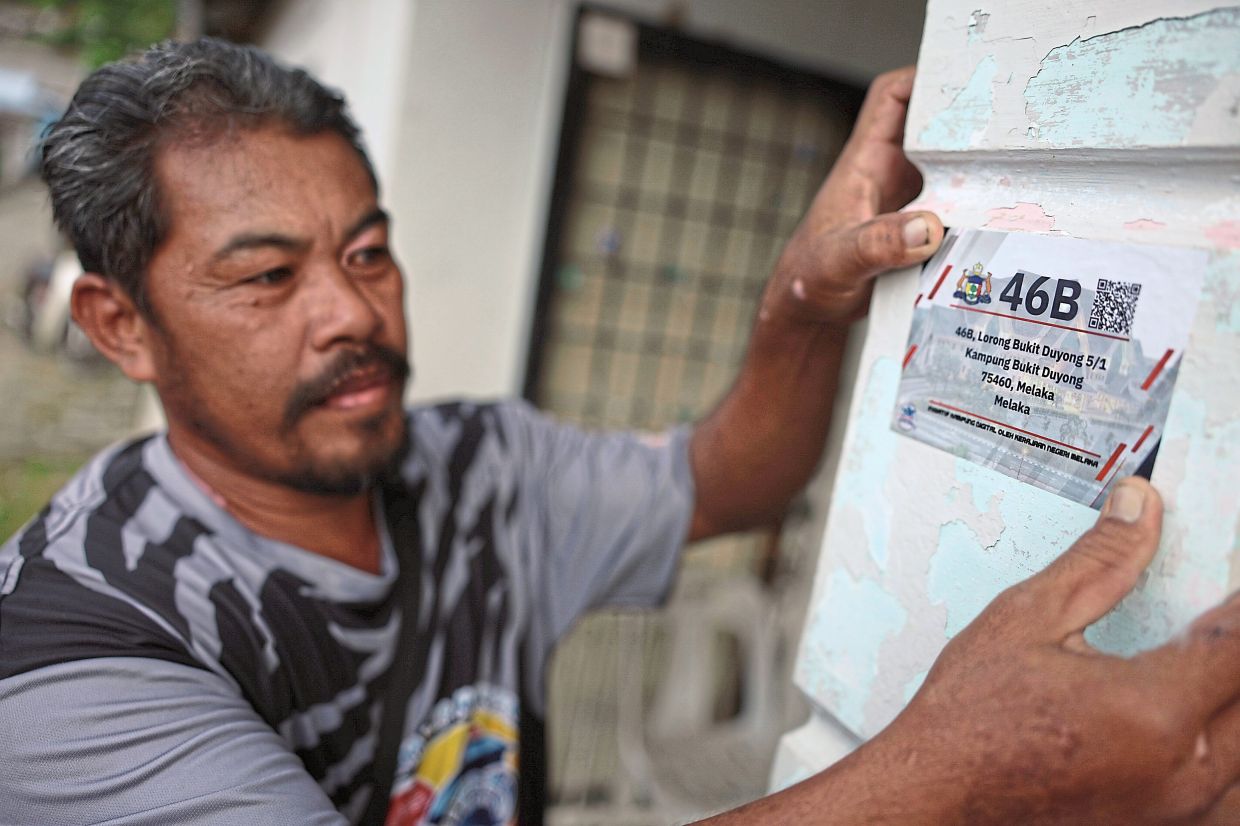
Under the initiative, each household is assigned a Quick Response (QR) code serving as its digital address, which can be scanned with a smartphone to access the home’s details via the Digital Village portal, Fairul Nizam said.
It enables the accurate recording of housing data and village boundaries, creating a structured database that can be utilised by government agencies for targeted and efficient management of aid distribution, disaster reporting, development planning and public service delivery.
The initiative is being implemented in phases through collaboration between the State Economic Planning Unit, Melaka Chief Minister’s Information and Communication Technology Division, district and land offices, Village Development and Security Committees (JPKK), Survey and Mapping Department, Malaysian Communications and Multimedia Commission (MCMC) and Town and Country Planning Department (PLANMalaysia).
“All information is integrated into a centralised system that supports systematic location analysis and address management.
“It uses the Sirim Home Address Standard (MS2039:2016) and Geographic Information System (GIS) data for integration with the National Address System,” Fairul Nizam explained.
He said the state government had also registered a trademark for the Digital Village logo, approved on Oct 9, 2024, thereby granting it intellectual property protection for 10 years.
The initiative is also supported by the MCMC, which has allocated RM3.4mil for the development of the Digital Village system.
Version 2.0 is currently being developed for full integration with the National Address System.
As of July, 250 villages in Melaka had received Digital Village QR code stickers, involving 36,778 buildings and 143,434 residents.
Kampung Bukit Duyong JPKK chairman Jafri Mamat said the initiative had facilitated clearer demarcation of village boundaries and local administration, while ensuring aid distribution was carried out more accurately without overlaps.

“As of August, 227 houses involving about 800 residents in Kampung Bukit Duyong have received QR code stickers, and 130 residents have updated their addresses on their identification cards,” he said.
One resident, carpenter Mohamad Rizal Husin said the initiative had helped homeowners sharing the same land lot to obtain individual addresses, avoiding confusion in utility bills and other registrations that were previously tied to a single name.
“With the Digital Village initiative, this issue has been resolved as each homeowner now has a personal address,” he said.