




While some families prefer making these at home, there are those who rely on expert hands for their festive treats.
Home-based cooks, who preserve time-honoured recipes, are the people many turn to for traditional delicacies.
The women, who toil for hours on end to bring festive cheer to others, operate small businesses from their homes.
One of them is Sander Kumari Perumal, 55, who has been making festive delights for over two decades from her home in Jalan Mahsuri, Bayan Baru in Penang.
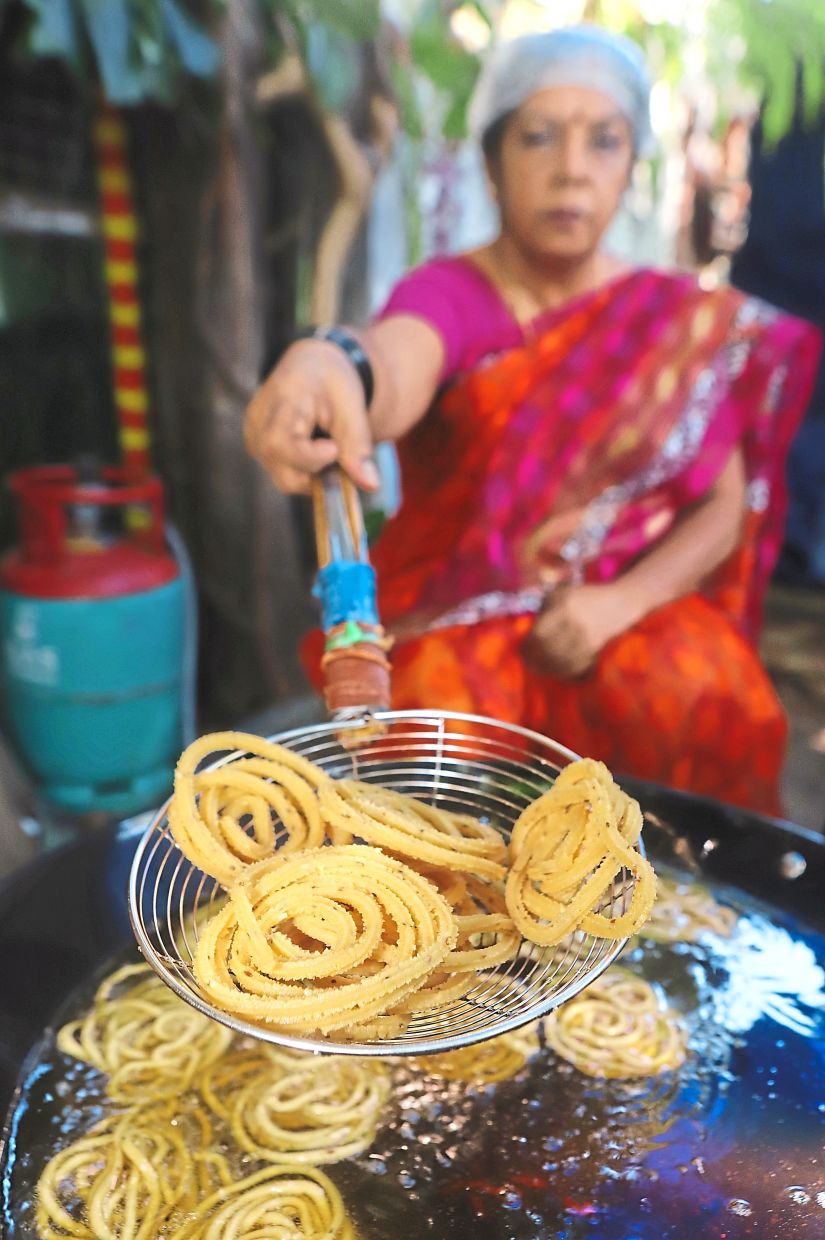
A rich aroma of freshly fried murukku is to be expected when paying her a visit.
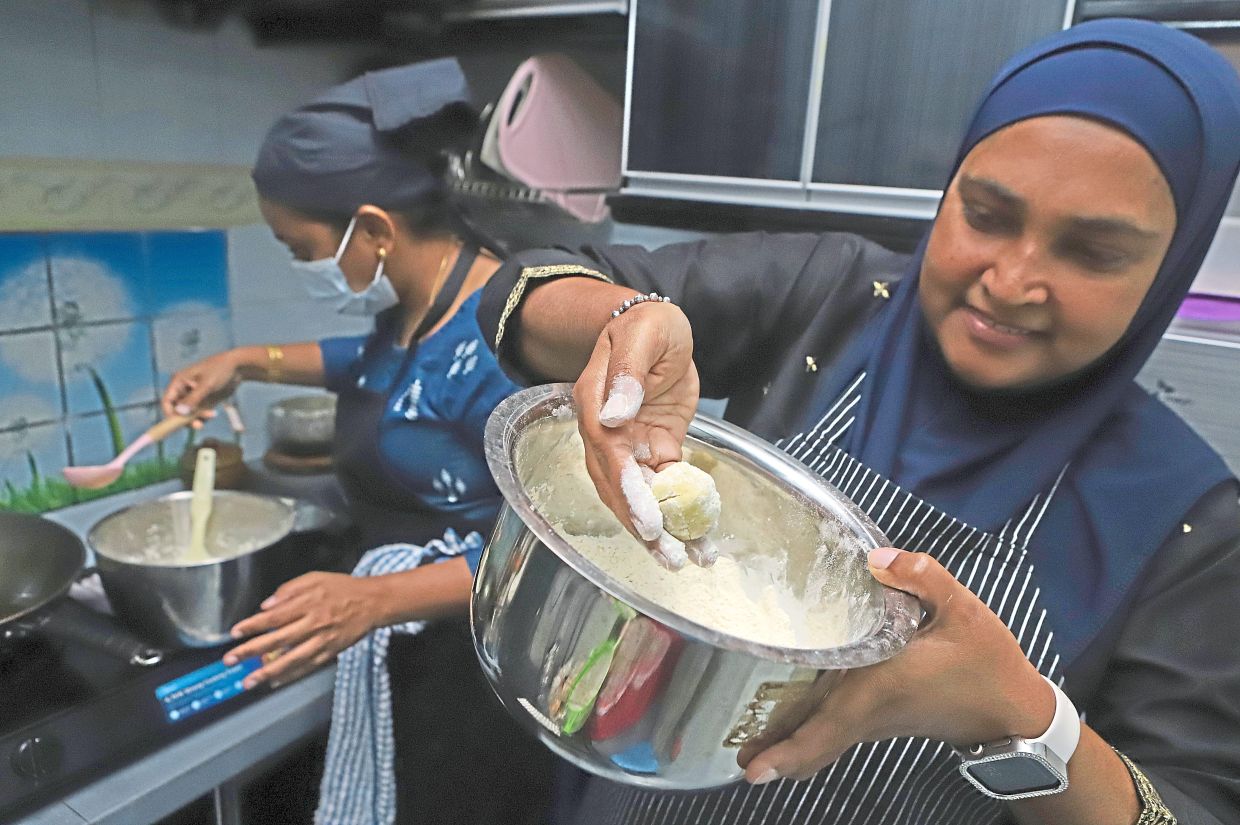
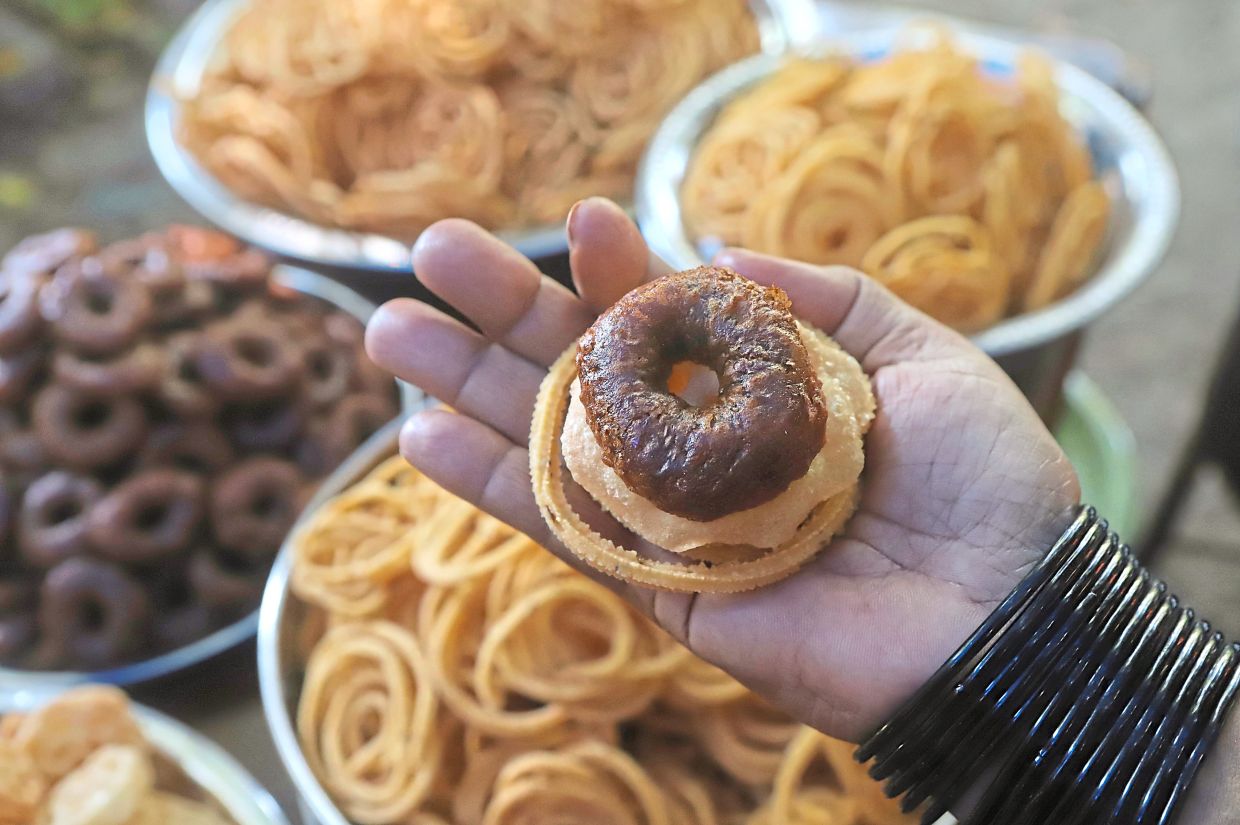
Among her sought-after items are achi murukku (kuih ros), adhirasam (kuih denderam), kallu urundai (kuih batu), nei urundai (ghee balls) and chittu urundai also known as payatham urundai.
“These are festive snacks one should prepare for Deepavali,” she said.
In the days leading up to Deepavali, Sander’s kitchen transforms into a hive of activity.
The air is filled with the scent of ghee and the sight of flour- dusted floors, trays stacked with neatly coiled murukku from dawn until late at night.
“I usually wake up at 6am and start work by 7am,” she said.
“Orders don’t wait. Once I begin, I don’t stop until evening. It is tiring but also rewarding.”
Sander’s speciality is chittu urundai, which is made with a mix of ingredients that can last for six months to a year – without the use of preservatives.
“That is the wisdom of our elders.
“None of our traditional foods go to waste. But when we stop making them, we will lose that knowledge,” she said.
Over the years, Sander has built a loyal customer base.
Even those who have moved away still buy from her, often asking their relatives back home to collect the ordered foodstuff.
“It makes me happy that they still think of my snacks as part of their Deepavali celebrations,” she said.
As a young girl growing up in Cameron Highlands, Pahang, Sander remembers helping her mother and grandmother during the festive period – shaping murukku and stirring jaggery syrup to make adhirasam.
She learned by watching and pitching in to help, picking up the skills passed down through the generations.
When her mother passed away, Sander felt a strong sense of responsibility to keep the family recipes alive.
As she got older, finding work became increasingly difficult.
“No one wants to hire us once we age. So, this is what keeps me going,” said Sander.
“It is about survival but also something I take pride in.”
She has seen demand rise and fall over the years.
Her business has never been a large-scale operation, but it is enough for her.
For Sander, tradition is both practical and cultural.
Her snacks are affordably priced, with a jar of murukku priced at RM30 containing 50 pieces.
Adhirasam is tagged at RM1.50 each, while her nei urundai and chittu urundai go for RM25 a jar.
“I only increase prices slightly when the cost of ingredients goes up. But I try to keep it within reach,” she said.
“Otherwise, people won’t buy and the tradition will die.
“These are not just food items. They are part of our identity. Deepavali without murukku and adhirasam is incomplete.
“As long as I have the strength, I will continue making them.”
Blending old and new
If Sander’s journey is one of endurance, then Sha Nanthini Daruman’s began out of circumstance.
It all started with just RM100 during the Covid-19 pandemic.
At the time, everything was closed, and she wanted to earn some extra income.
From her home in Desa Mawar, Bandar Baru Air Itam, she decided to start a cottage enterprise.
Sha Nanthini took online baking classes and began making brownies and biscuits.
She gave out free samples and built a customer base of 40 to 50 people.
“That was during the Covid-19 pandemic. People were stuck at home and craved homemade food. Their orders gave me the confidence to continue,” she said.
As demand grew, Sha Nanthini, 39, wanted to improve her skills.
She enrolled in a baking academy in Penang – six months of classes followed by six months of hands-on training, which she completed just after Deepavali last year.
“I wanted to have certification for what I do,” she said.
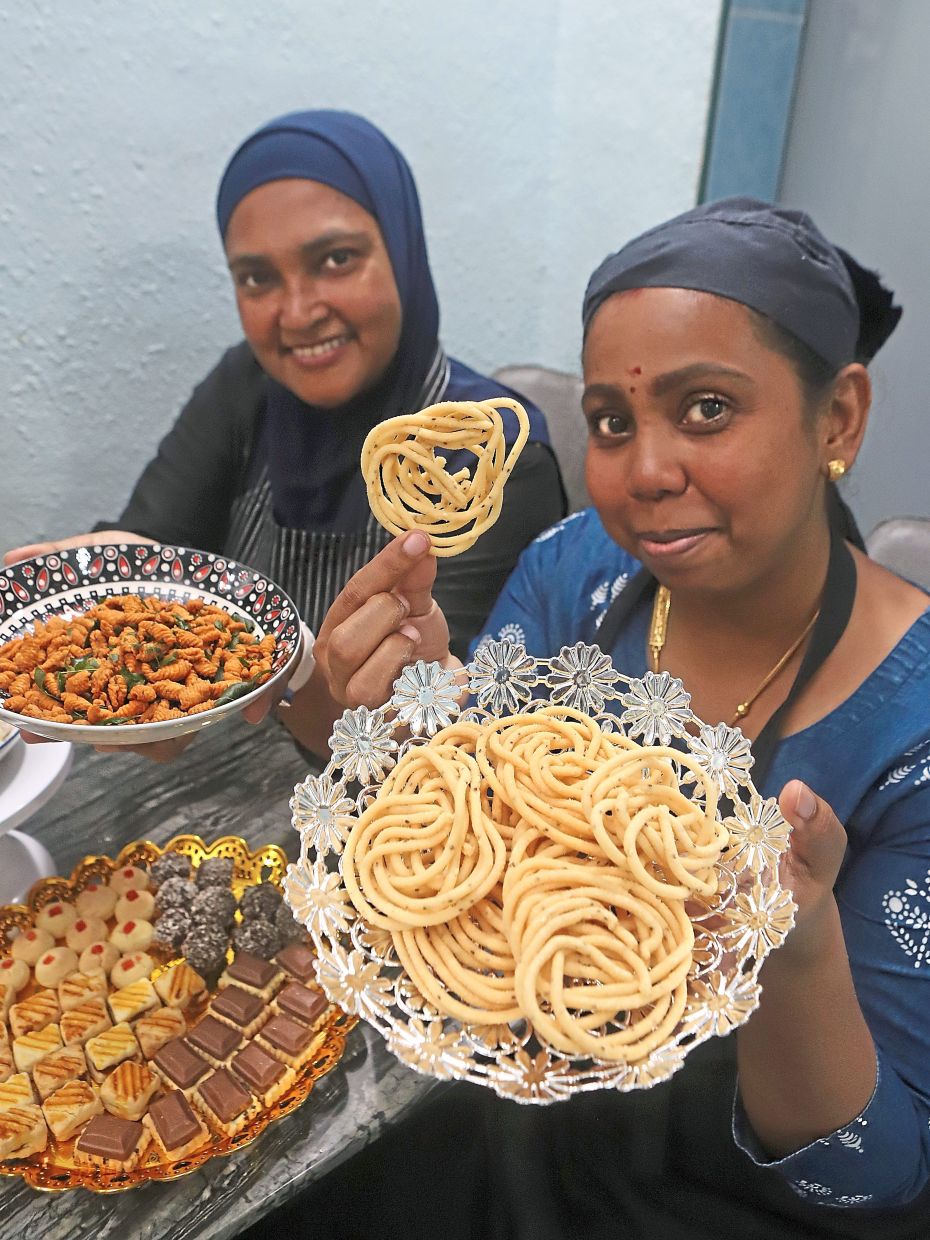
Today, her kitchen is her workshop. Trays of unbaked biscuits line one side, while a mixer buzzes on the other.
“Sometimes I bake until midnight, especially during the festive rush,” she said.
“The orders do not stop, and I have to juggle between the kitchen and my household chores.”
With her mother Selvarani Kumar, 69, helping her make murukku, nei urundai and achi murukku, Sha Nanthini can focus on biscuits and cakes.
“Most people can make murukku at home, but biscuits are not something they usually prepare themselves. That is why there is demand,” she said.
Almond london, peanut makmur, semperit, jam tarts, snowballs and Cadbury tarts are some of the biscuits she sells.
Prices for her biscuits range from RM36 to RM42 per 50-piece jar or box.
Traditional items like murukku or sippi (kuih siput) are priced between RM27 and RM40 per bottle.
“I use butter, ghee and sunflower oil. That makes a difference. Store-bought ones may be cheaper but customers who value quality will keep coming back to me,” she said.
Though there is growing competition, she believes there is still a place for quality homemade treats.
Sha Nanthini’s younger customers often asked for chocolate-dipped biscuits and brownies.
“They like to see something modern on the table for Deepavali,” she said.
“So, I try to offer balance – a bit of tradition from my mother, and something new from me to keep both the old and young happy,” she added.
Sha Nanthini is hoping to expand her business in future.
“Maybe a small cafe, or supplying to shops.
“For now, I am happy doing this from home. It gives me freedom and keeps me close to my family,” she said.
Friends to rely on P. Krishnaveni, 65, focuses on just three staples – murukku, achi murukku and nei urundai.
She does not go beyond these, as they represent Deepavali for her and are what her regular customers request for year after year.
She has two close friends lending a hand at her home in Tanjung Bungah to meet orders.
Their routine has become a cherished tradition.
One friend handles the kneading of dough, another does the frying, while Krishnaveni shapes the murukku with steady hands after decades of practice.
“They come over before Deepavali. We sit together, chat and work. Without them, I cannot manage.
“It is tiring at my age, but with friends, the work becomes lighter.
“We tease each other, laugh and sometimes share old stories. It does not feel like work when you do it together,” she added.
Krishnaveni is insistent on making everything by hand.
“Machines make work faster, but the taste is not the same.
“With handmade food, you can feel the dough and know if it is the right texture,” she said.
Most of her loyal customers are families, but she enjoys welcoming younger and new clients.
“Some customers send their children to collect, so it feels like the tradition is passing from one generation to another,” she said.
“When the children of my old customers come and say they want the same murukku their parents used to buy, that is when I feel my work has meaning.”
Krishnaveni is hoping that one day her grandchildren may take an interest in her business.
“For now, they are still young and busy with their studies. But maybe one day, they will realise this is worth keeping alive.
“These recipes are not just food – they are part of who we are,” she said.

