Hindu celebration’s rituals strengthen connections, fosters togetherness
THERE is a Hindu celebration that fosters closeness among siblings.
Raksha Bandhan (which translates to “the bond of protection” in Sanskrit) is also known as Rakhi and celebrated on Aug 9 this year by Hindu communities worldwide.
It has a symbolic ritual where sisters tie a thread that functions as a talisman (known as rakhi) on their brothers’ wrists.
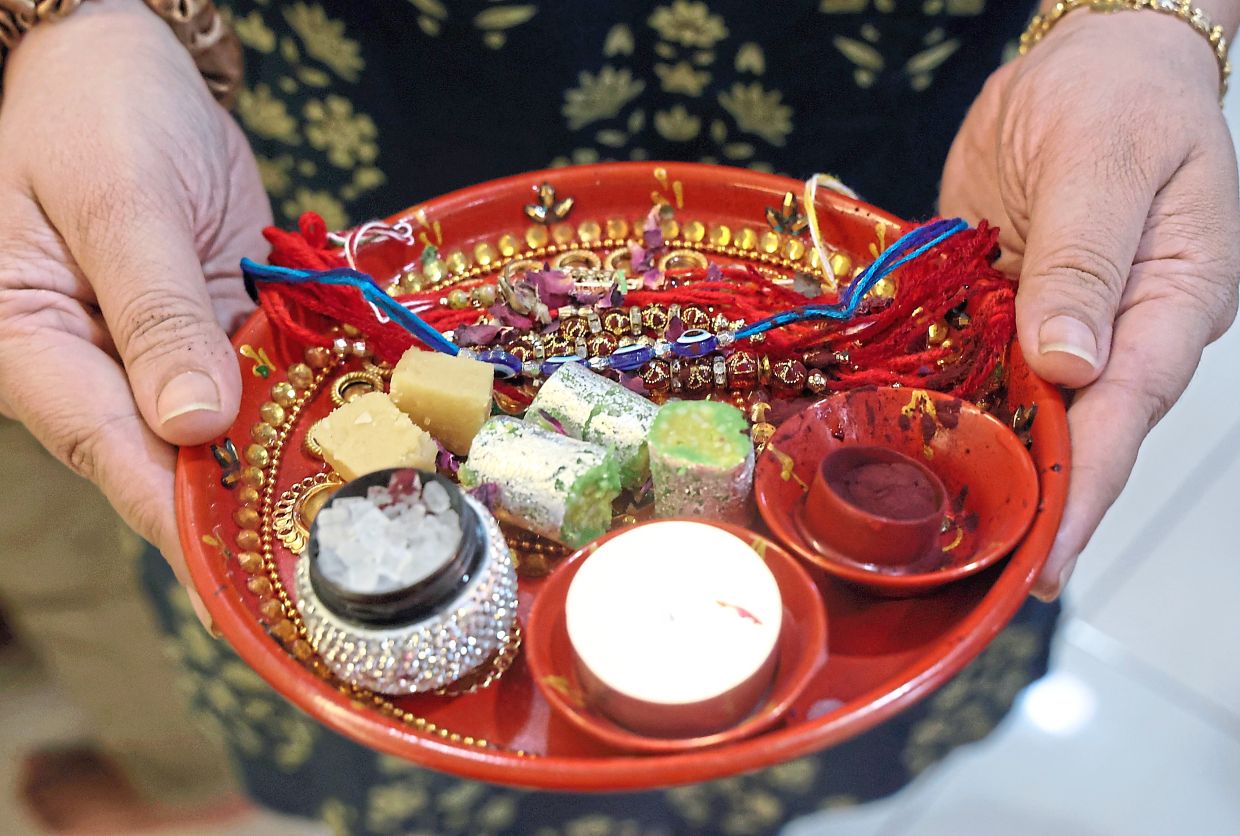
The sister then performs the aarti ritual using a tray with sweets and lamps before applying a pottu mark on her brother’s forehead.
For 78-year-old Gangaram Pursumal Sawlani, the celebration is one he looks forward to each year as it brings back fond memories of his sisters and the bond they share.
He’s proud that the tradition has been kept alive in his family over the years and is being continued by the younger generation.
Gangaram’s fondest memory of the celebration is from when he was 19 and pursuing his tertiary education in Japan.

“My sisters mailed me a rakhi and I asked a Japanese girl whom I was tutoring there – she was like a sister to me – to tie the rakhi on my wrist,” said Gangaram, the former head of the Malaysian Fisheries Academy.
He migrated to Malaysia from the state of Sindh, now a province of Pakistan, with his parents in 1947.
“In the old days, filial piety was very important. I had four sisters and three brothers. We took good care of our sisters.”
“I am left with one sister now, as the rest have passed away,” said the grandfather of two.
His sister, Beena Bakshani, 67, said the celebration was a meaningful one that she has looked forward to since she was young.
She recalled how Gangaram would reward her with 50sen after she tied the rakhi on him, while her mother would ensure there were traditional sweets for the occasion.
“My dad passed away when I was 15, so my brothers cared for us. Gangaram was strict – he would not allow us to wear short skirts.
“When I was in Year One, he used to wait outside the school for me. He would sometimes take me to school by bicycle. We have always had a good bond.”
Beena said that while she still looked forward to the celebration each year, it would be an emotional affair because of their siblings’ absence.
Gangaram’s son, Raviraj Sawlani, 41, said that no matter where he was, he always ensured he was home for the celebration.
“I grew up being close to my family and relatives. My cousins are more like my close friends,” said the social entrepreneur.
“In the past seven years, many older relatives have passed away, and my dad is now the oldest family member.
“We have had quieter Rakhi celebrations, but we still continue practising the rituals.
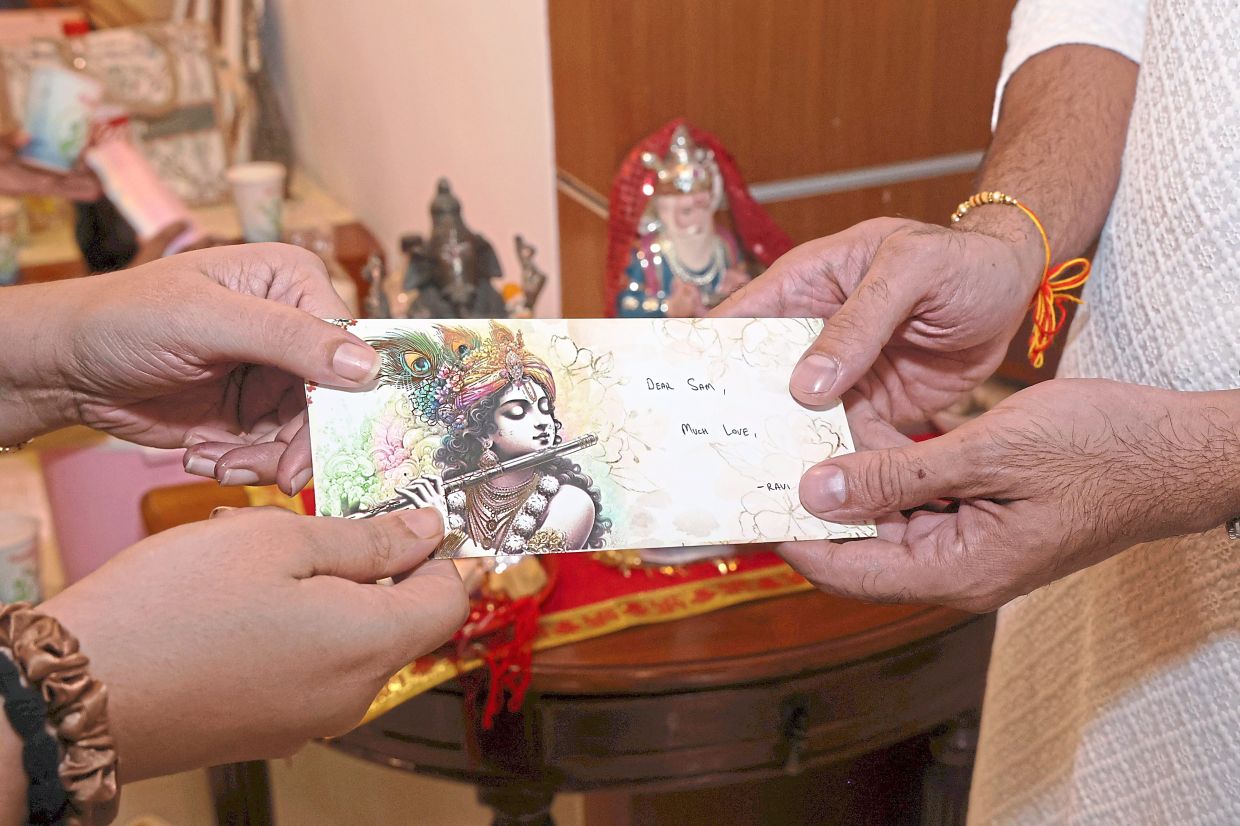
“It helps us stay connected and fosters close bonds.”
Raviraj’s unforgettable memory of the celebration was during the Covid-19 pandemic in 2020.
“We couldn’t be there physically due to the restrictions, so we gathered online and had a good time catching up. It was special.”
On Aug 9, his older sister tied the rakhi for him and he gave her an angpow in return.
“I am also glad to see my nieces and nephews continuing to celebrate this tradition.
Being the only child in her family, Gangaram’s niece, Lajreena Sawlani, 32, would tie the rakhi on her cousins.
She said that when she was in secondary school, she would prepare about 10 rakhi and begin the preparations a week in advance.
“I would buy the strings from a craft shop and bring along my friends to pick the colours,” said the speech therapist.
Lajreena has a male cousin in Dubai, UAE, and has been mailing him his rakhi for three years.
“I have never felt left out (of this celebration) despite being an only child.
“We all grew up together and lived nearby, so we would meet almost every week, especially when my grandmother was around,” she said.
Occasions like Rakhi, she said, also help foster togetherness in the family.