
A NATIONAL blueprint for pig farming is being drawn up to address environmental, social and supply concerns following Selangor’s decision to halt pig farming in the state.
Deputy Agriculture and Food Security Minister Datuk Chan Foong Hin said the blueprint would provide comprehensive guidelines for industry players, with an emphasis on environmental management and waste treatment.
“The pig farming issue, at its core, concerns the environment. If we do not manage it properly, it could lead to various issues,” he said after launching the Kampung Valdor centralised biogas facility in Jawi, Seberang Perai.
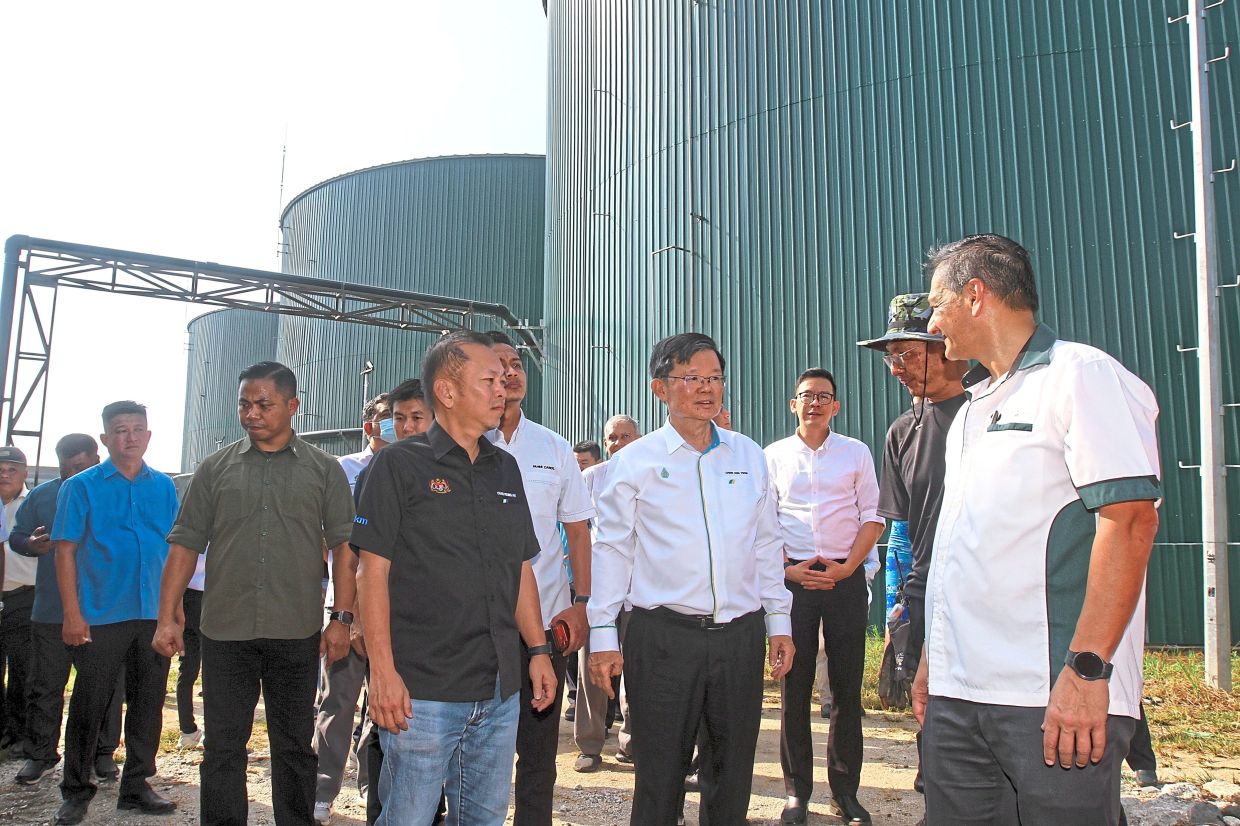
Chan said the blueprint would promote waste-to-energy facilities such as the one in Valdor, which centralises pig farm waste treatment while generating renewable energy.
“It is important for other pig farmers and industry players to learn from Penang’s model.
“The state has provided a workable solution through the biogas facility,” he said.
On pork supply, Chan said Malaysia’s self-sufficiency currently stands at about 65%.
“The ban on pig farms in Selangor may affect the self-sufficiency level, but the impact will not be severe as we can supplement supply with imports for the time being.
“We will ensure a stable pork supply in the domestic market,” he added.
Earlier, Penang Chief Minister Chow Kon Yeow said the Valdor facility, which had been operational since March 2024, centralised livestock waste treatment and converted it into renewable energy.
Penang has 113 swine farms with some 89,857 pigs; Valdor has 44 farms with around 42,277 pigs.
“Effective waste management is fundamental to safeguard air quality, protect water systems and preserve community well-being,” he said.
Currently, only 20 farms are involved in the conversion of livestock waste treatment to renewable energy, with about 30,000 pigs.
At full capacity, it can handle waste from up to 90,000 pigs.
Last year, it processed 120 metric tonnes of waste daily and generated up to 0.6 megawatts under intermittent operation – enough to power around 9,000 standard ceiling fans for an hour.
At full capacity, it can generate up to 1.2 megawatts, with 1.0 megawatt exported to the national grid.
Designed to process up to 226,000 metric tonnes of livestock waste annually, the plant can produce about 10.5 gigawatt-hours of renewable energy each year.
The RM25.9mil privately- funded project has reduced odour and improved environmental conditions in the surrounding area, Chow said.
A similar centralised waste-to-energy facility is planned for Kampung Selamat in Tasek Gelugor with operations targeted to begin by 2029.