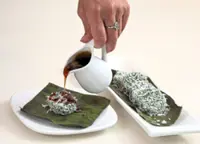

Known as kue lupis in the Indonesian archipelago – particularly Java, where it is believed to have originated – this humble kuih travelled across the region through migration and trade before becoming rooted in Malay food culture in Malaysia, Singapore and southern Thailand.
There are two common shapes for this kuih – triangular and round.
It is said that the triangular shape is the older and more recognised form while the cylindrical log evolved later in Malaysia.
When my mum moved from Kedah to Johor, she was exposed to triangular shaped kuih lopes whereas my maternal grandmother made the round ones.
The shape, however, has no bearing on flavour as it boils down to regional preference, convenience and the cook’s personal style rather than any fixed culinary rule.
A long-standing favourite at my family tea parties, kuih lopes is also practical.
It is can be made in advance and refrigerated ahead of time.
Reheat it by throwing the banana-wrapped kuih logs into boiling water for a few minutes to warm them through.
I recall once reaching for a knife to slice the kuih lopes, only to be stopped by my mother.
Using a nylon thread – alternatively cotton thread – she deftly cut neat and clean sticky rice discs.
A knife, she explained, is not ideal as sticky rice clings stubbornly to the blade, turning what should be a simple task rather cumbersome.
Kuih lopes
Ingredients
150g glutinous rice
3 cups water
15 pandan leaves
½ tsp lye solution
¼ tsp green colouring
Banana leaves (20cm x 30cm)
Two tbsp cooking oil
A bowl of water (to wet hands)
50cm-long raffia
50g grated coconut + ½ tsp salt
Directions
Soak the glutinous rice in two cups of water overnight.
Drain, rinse well, and transfer the rice to a round eight-inch tray.
Next, cut 15 pandan leaves into shorter lengths and place in a blender with one cup of water. Blend until smooth.
Strain the mixture through a tea sock, squeezing well to extract the juice. Discard the pulp.
Pour the pandan juice over the uncooked rice.
Add ½ teaspoon of lye solution and one to two drops of green colouring, mix to combine.
Place the tray in the steamer once the water is at a rolling boil, steam the glutinous rice for 20 minutes, or until cooked through.
Remove the tray from the steamer and cool for about one hour.
Next, divide the rice into three equal portions.
Cut banana leaves into 22cm × 30cm sheets.
Briefly pass them over a flame or heat source to wilt and soften.
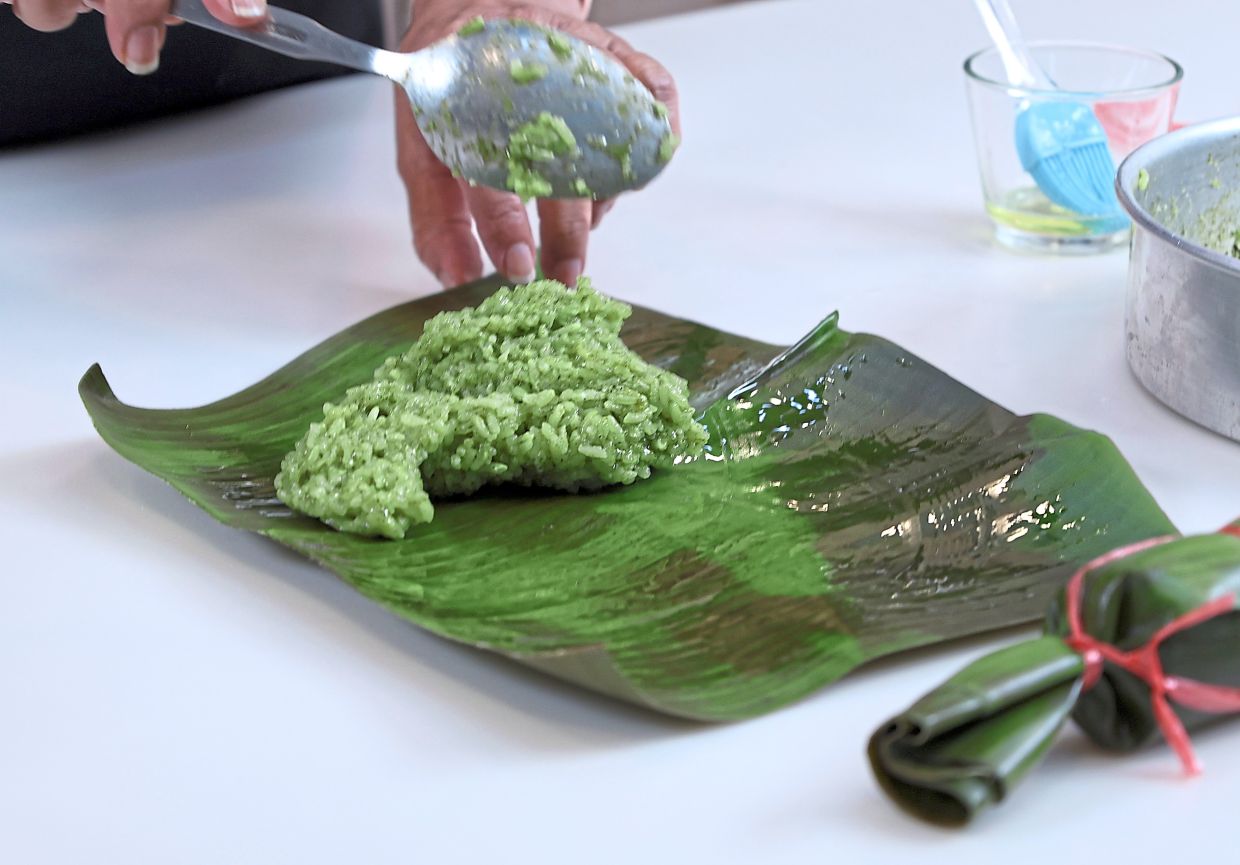
Set aside to cool down. Lightly brush one side with cooking oil.
Moisten your hands with water to prevent the rice from sticking.
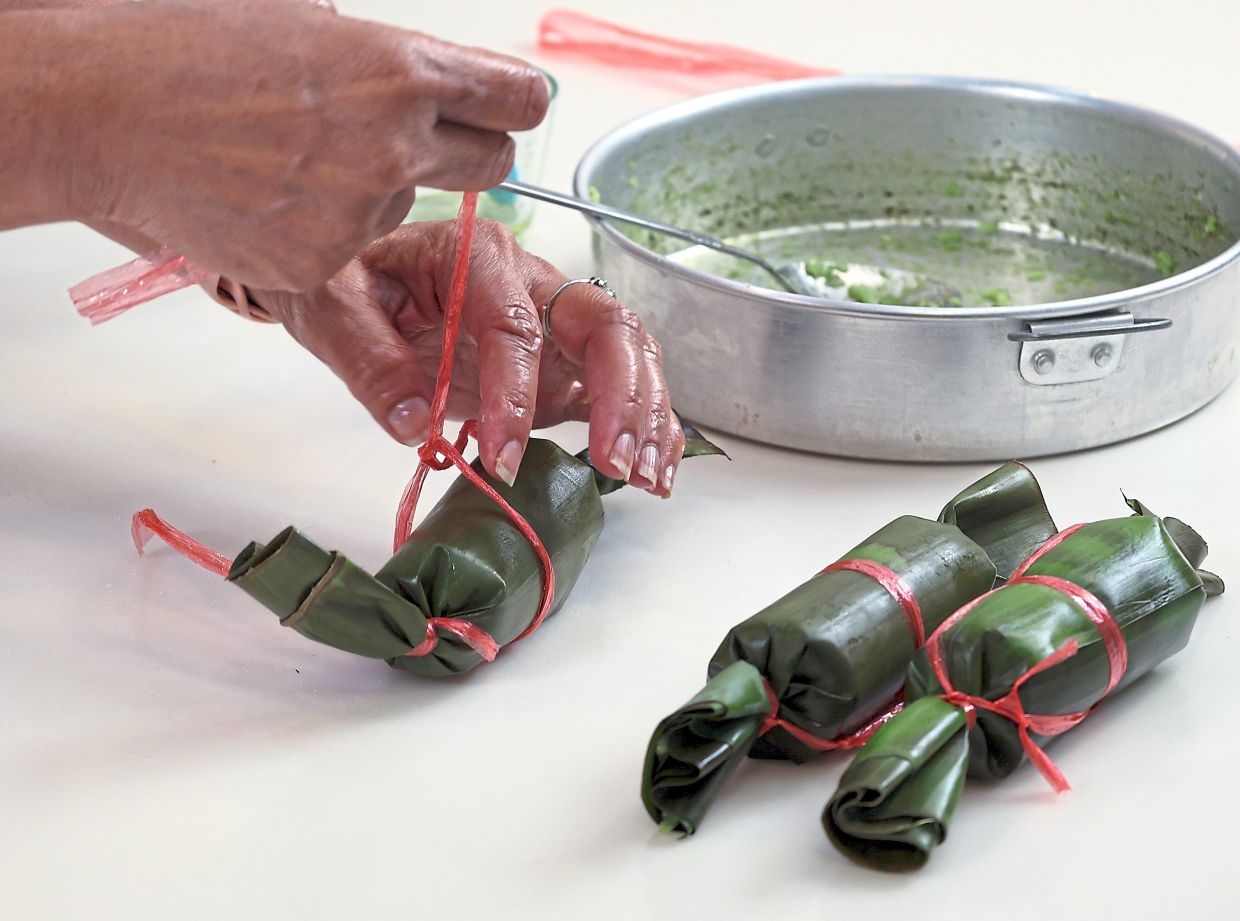
Place one portion of rice at the leaf’s narrower end and roll tightly to form a neat log-shape.
For stability, fold one end of the leaf inward so the cylindrical parcel stands upright.
Insert a wooden spoon or rolling pin into the open end, pressing gently to compact the rice.
Fold the banana leaf snugly over the opening and secure with a raffia string.
Ensure the string is long enough to extend to the base of the parcel and tie firmly.
Loop the raffia string through the middle of the log, pull tight, then return to the original knot and secure so the cylindrical parcel holds shape.
Place the logs into boiling water for 10 minutes. Remove and cool down.
Unwrap the parcels and slice the kuih lopes logs into one-centimetre discs using a nylon or cotton thread.
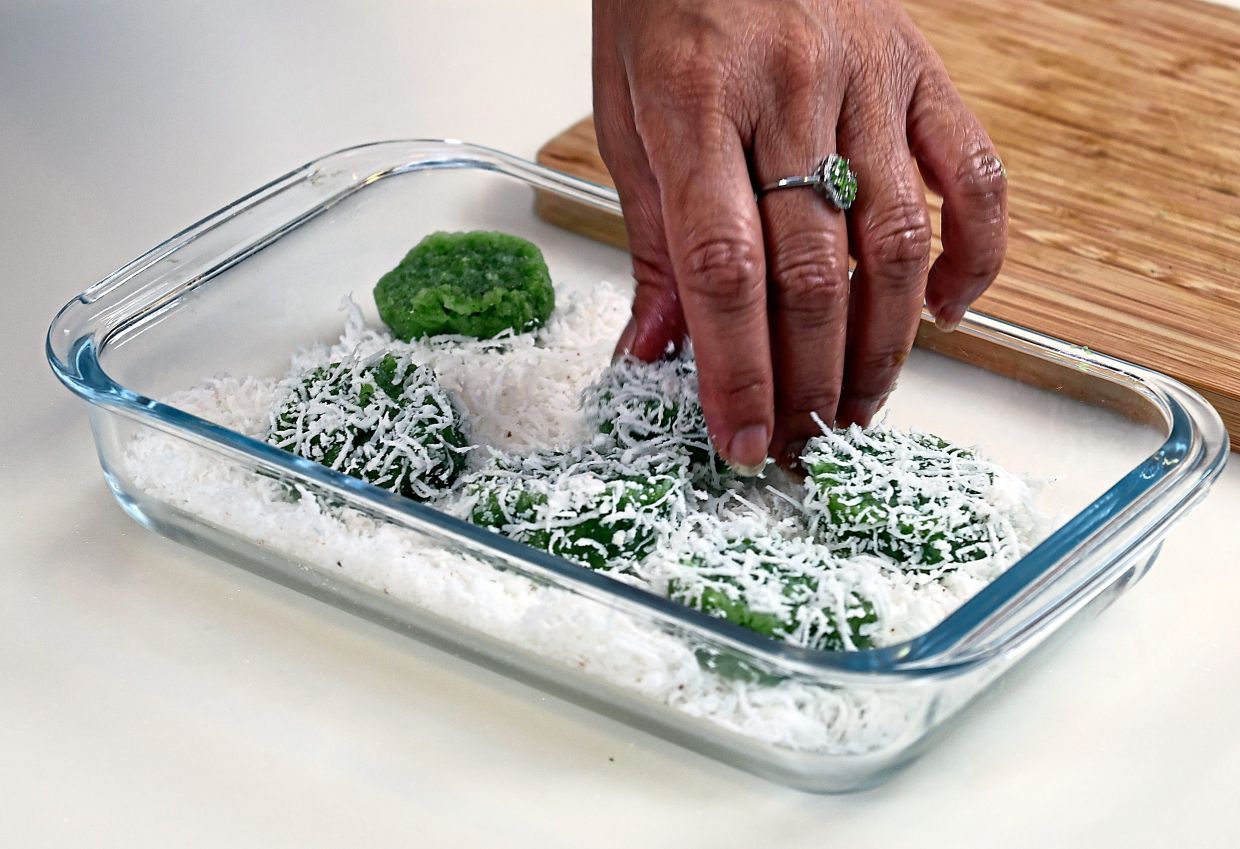
Roll the rice cakes in salted grated coconut until evenly coated.
Meanwhile, dissolve 150g palm sugar in one cup of water over medium heat.
Bring to a boil. Cook syrup until it thickens, for about 15 minutes.
Serve the kuih lopes with palm sugar syrup.