




SOIL scientist Dr Jeyanny Vijayanathan has achieved a significant milestone as the first in her field to win the Outstanding Young Chemist Award (OYCA).
The 43-year-old chemist from Forest Research Institute Malaysia (FRIM) was recognised in the industry category for her contribution to soil research and rehabilitation.
“I feel happy that my contribution to soil science have been recognised.
“This award also highlights the importance of soil chemistry in our daily lives.
“Every day, we step on soil; we fail to realise that we only have one planet, so we must care for it. It takes 300 to 400 years to form just 1cm of soil,” said Jeyanny.
Launched in 2021, OYCA is a flagship initiative by Malaysia Young Chemist Network under Malaysian Institute of Chemistry (IKM).
It provides a platform for young Malaysian chemists to advance in chemistry and professionalism.
The award has two categories: industry and academic.
The industry category considers professional training, industrial innovation, leadership and entrepreneurship, while the academic category evaluates research output, including publications, grants, postgraduate supervision, awards and intellectual property.
Jeyanny joined FRIM in 2005 and conducts soil chemistry analysis and research, while also analysing soil and plant tissue samples from private and government establishments for various applications in the FRIM Soil Chemistry Laboratory.
“For example, we study how soil enhances tree productivity and examine the nutrient compounds that act as natural fertiliser.
“We also focus on conservation efforts, such as soil pollution remediation, reforestation, rehabilitation of marginal soils and assess how much water can be stored in forests for the future,” she said.
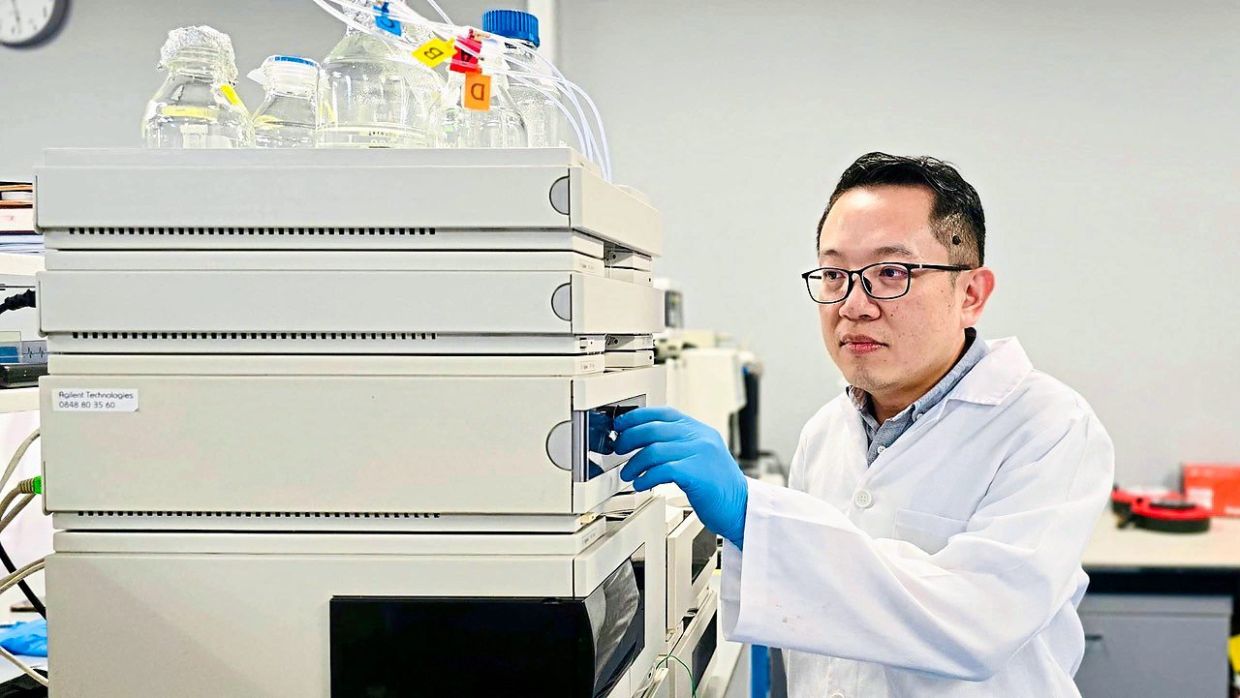
Jeyanny credits her passion for chemistry to her teacher at SMK Sri Aman in Petaling Jaya, Selangor.
“Mrs Lim made chemistry classes enjoyable; our lab sessions were exciting and memorable,” she said.
After joining FRIM and with a government scholarship, Jeyanny pursued a doctorate in soil science at Universiti Putra Malaysia.
This led to her research on plant nutrition deficiencies, productivity and their role in timber production.
Another key study examined how mountainous forests contributed to carbon sequestration potential compared to lowlands.
“This research assessed how much carbon is stored in the soil, which is important for climate change mitigation studies,” she said.
Jeyanny also participated in a community project in Kampung Kuantan, Kuala Selangor, converting organic waste from rivers into biochar through pyrolysis.
(Biochar is a form of charcoal, sometimes modified, that is intended for organic use, as in soil.)
The project, which ended last year, not only reduced pollution but also improved soil quality and enhanced moisture retention for plant productivity.
Moving forward, Jeyanny plans to explore biochar’s potential in mangrove reforestation and its role in soil remediation in various ecosystems.
“My advice to young chemists is to stay passionate and return to the fundamentals, just as our predecessors did.
“Chemistry is everywhere in our daily lives, and I hope more young people pursue careers in this field,” she said.
Meanwhile, this year’s OYCA academic category award went to Dr See Hong Heng, associate professor at Universiti Teknologi Malaysia’s Faculty of Science, Chemistry Department.
“It’s both exciting and humbling to win. The award is recognition of the hard work, challenges and passion that have shaped my journey in chemistry.
“I hope this inspires young scientists to pursue their curiosity and make an impact,” said the 44-year-old.
An analytical chemist by training, See’s interest in chemistry began with a curiosity about science’s role in everyday life.
“This passion grew during my undergraduate years and led me to pursue a PhD in Analytical Chemistry.
“I was fortunate to receive a Swiss National Science Foundation Fellowship, which took me to the University of Basel, Switzerland.
“Later, I expanded my expertise at University of Tasmania, Australia.
“These experiences reinforced my decision to pursue chemistry as a career, recognising its potential for meaningful change.”
See developed a key innovation: a solid-state electrophoresis technique redesigned as a portable, solvent-free diagnostic tool. This advancement could lead to faster and more convenient health monitoring, eliminating the need for complex laboratory equipment.
“One of the toughest challenges was simplifying a complex lab technique into something portable and practical.
“But through persistence, creative problem-solving and teamwork, my team and I refined the design until we got it right,” he said.
See’s team is also developing advanced methods to detect microplastics in water, food and other everyday environments.
Looking ahead, See aims to create simple, practical and eco-friendly “sample-in, answer-out” devices for healthcare, environmental monitoring and food safety.
OYCA applications for this year are open for IKM members aged 45 and below with at least five years of experience in chemistry or related fields.
Application deadline is July 31.


